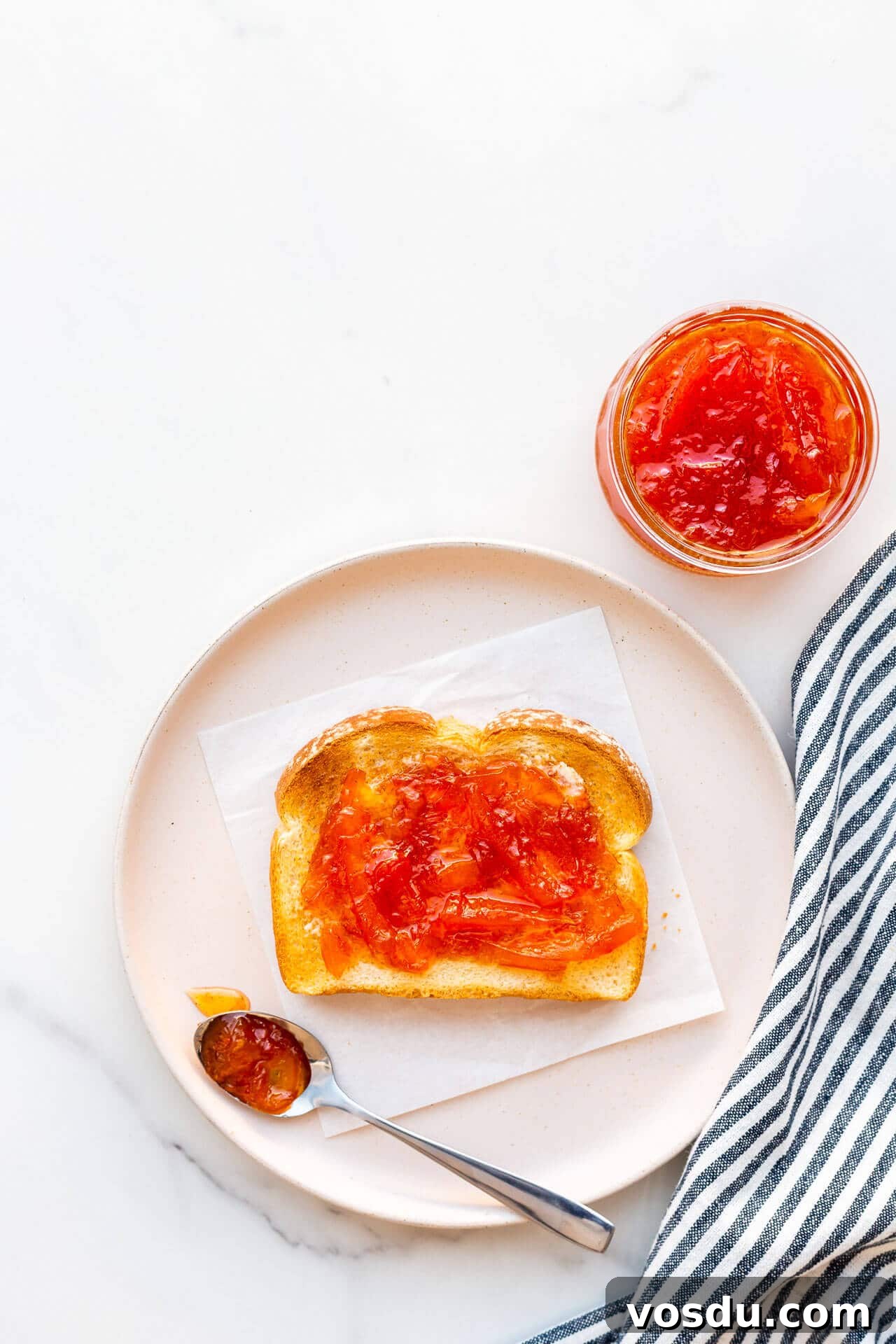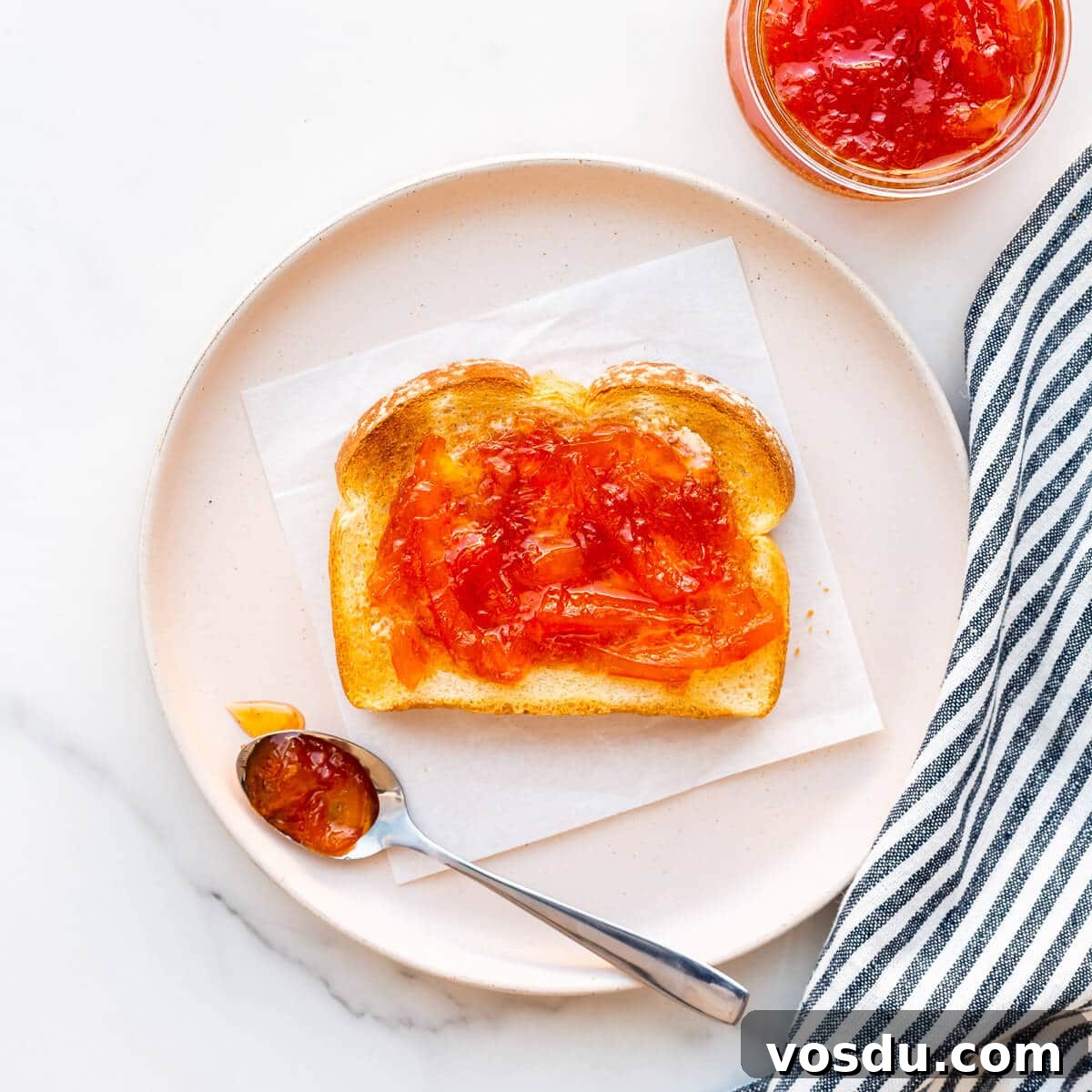
When winter brings the best citrus, it’s the perfect time to make this homemade grapefruit marmalade. This simple whole-fruit method avoids hours of peeling and chopping: you cook the fruit until soft, then chop and cook again with sugar and lemon juice until the marmalade reaches its setting point.
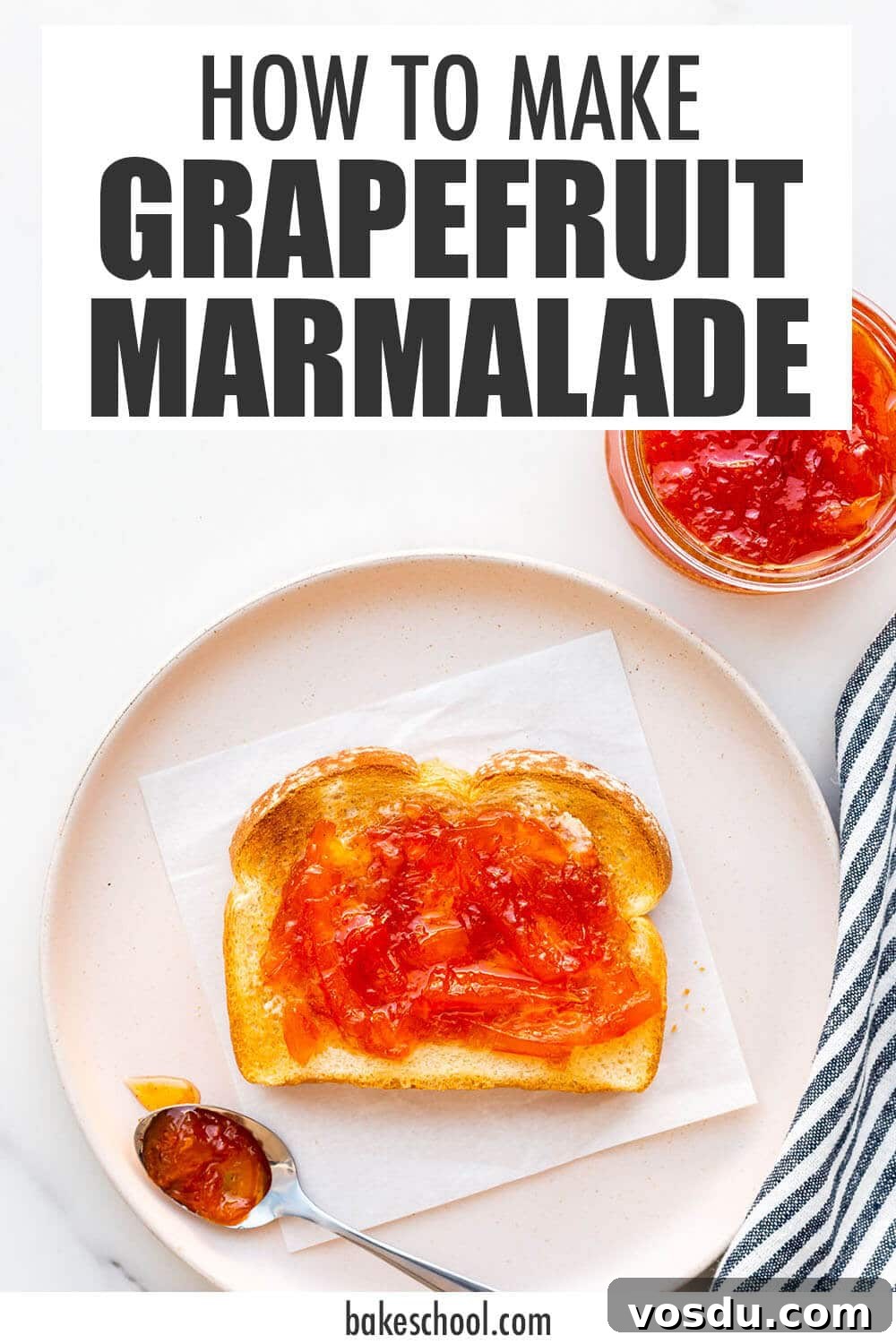
If you enjoy pink or Ruby Red grapefruit, this marmalade highlights their bright flavour. Using the whole-fruit method means you don’t need added pectin — the natural pectin in the fruit will gellify the mixture if you cook it to the correct temperature.
Ingredients to make grapefruit marmalade
You only need a few ingredients for this marmalade. Aim for a near 1:1 ratio of fruit to sugar by weight for a reliable set. The ingredients are:
- Whole grapefruit, washed thoroughly to remove any surface waxes
- White grapefruit are more bitter and lean toward a pronounced peel flavour.
- Ruby Red are the sweetest variety.
- Pink grapefruit strike a good balance of sweet and bitter and are ideal here.
- Granulated sugar — balances bitterness and helps the marmalade set.
- Fresh lemon juice — lowers pH to activate pectin and helps prevent sugar crystallization.
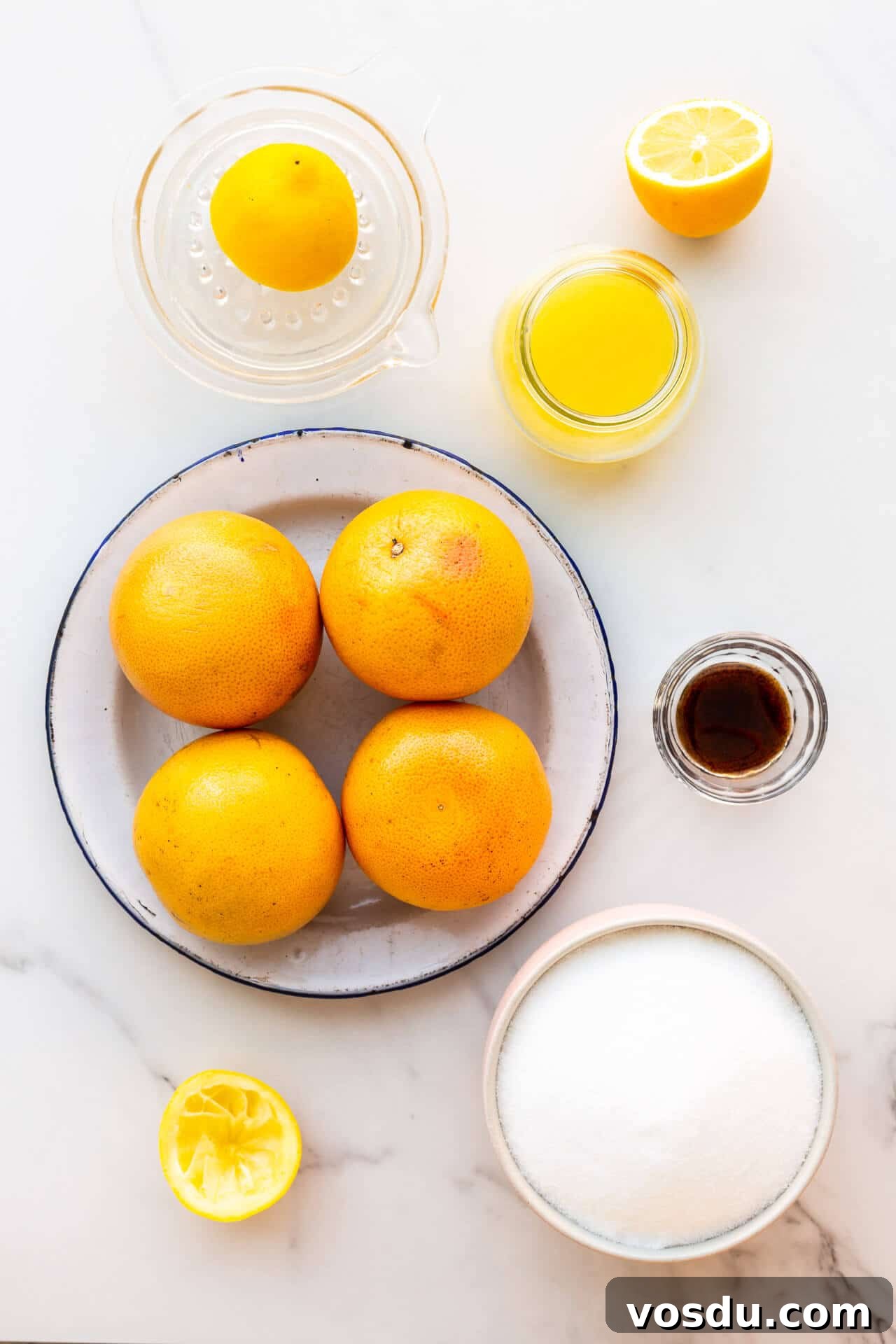
For this recipe we use roughly equal weights of fruit and sugar. If your fruit weight differs slightly, adjust the sugar to stay close to that 1:1 ratio to ensure proper setting.
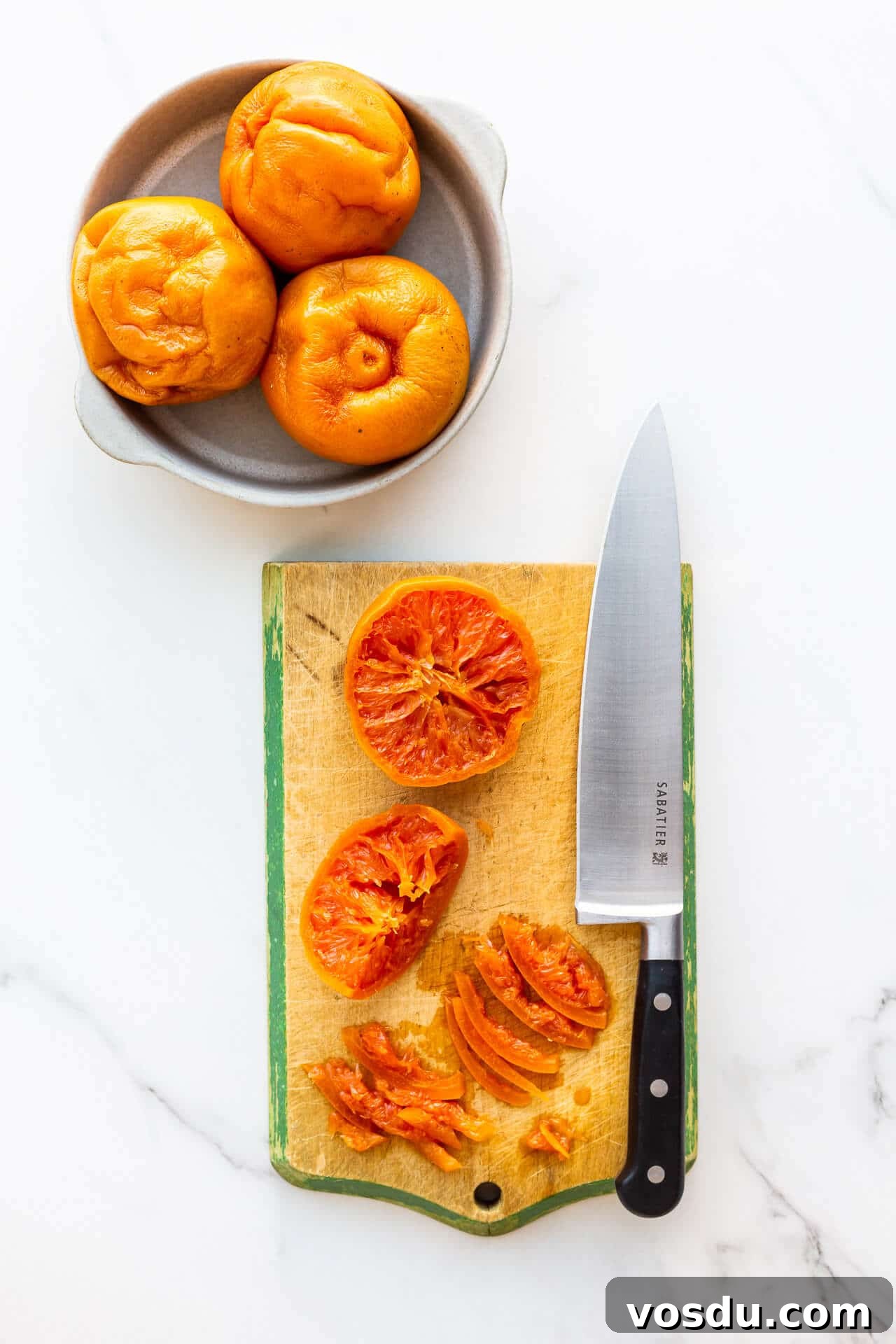
Making marmalade from whole citrus fruit
The whole-fruit method uses every part of the grapefruit and is straightforward:
- Place whole fruit in a large covered pot of water and simmer until very soft (about 2–2.5 hours for grapefruit).
- Drain and let the fruit cool enough to handle.
- Slice each grapefruit in half, remove seeds, then quarter each half into smaller sections.
- Separate the flesh from the softened peel using a knife; remove seeds as you go.
- Chop the flesh fairly finely; remove any tough membranes if needed.
- Slice the peel into thin strips.
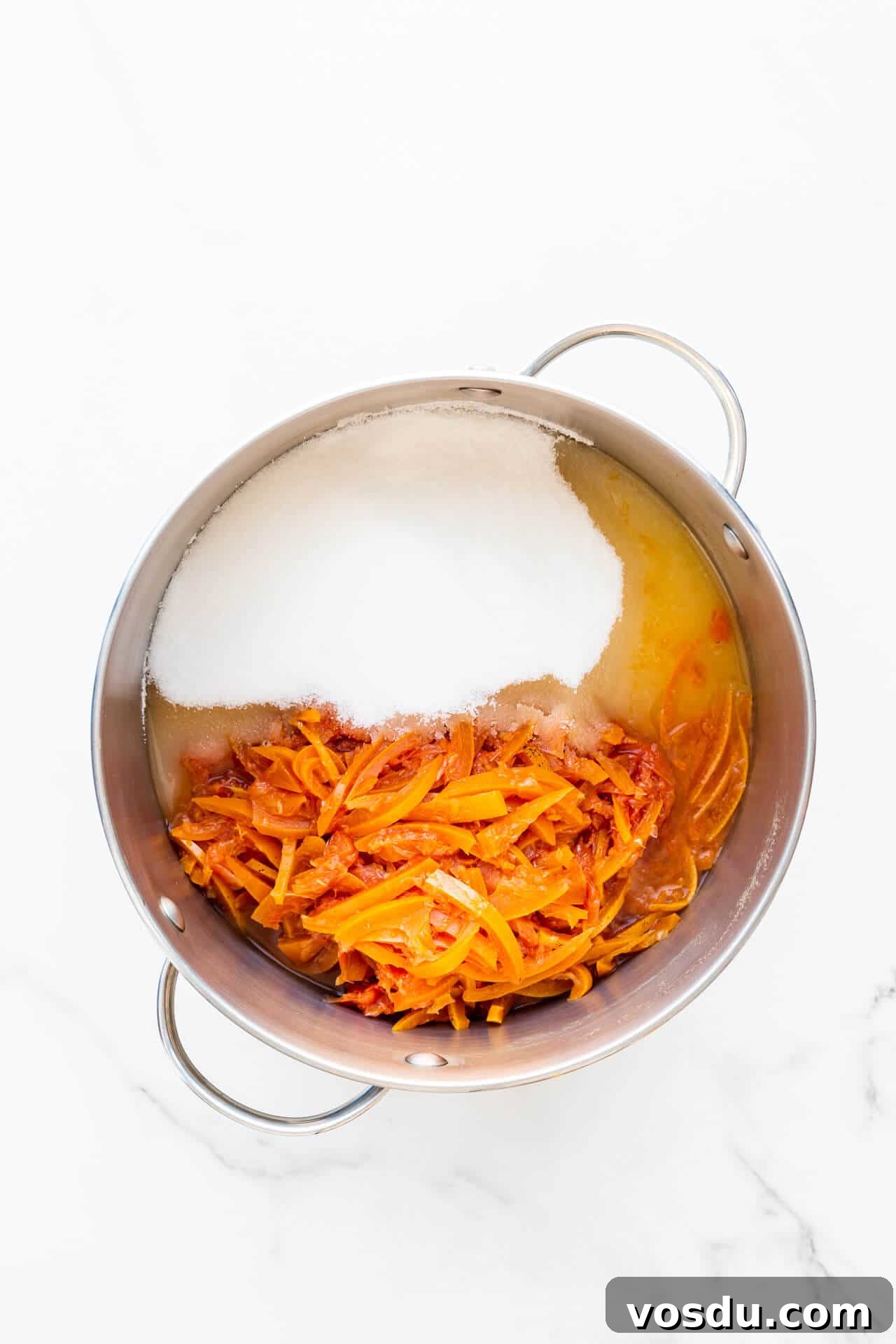
- Return the chopped flesh, sliced peel and any juices to a large clean pot. Add sugar and lemon juice and stir to combine.
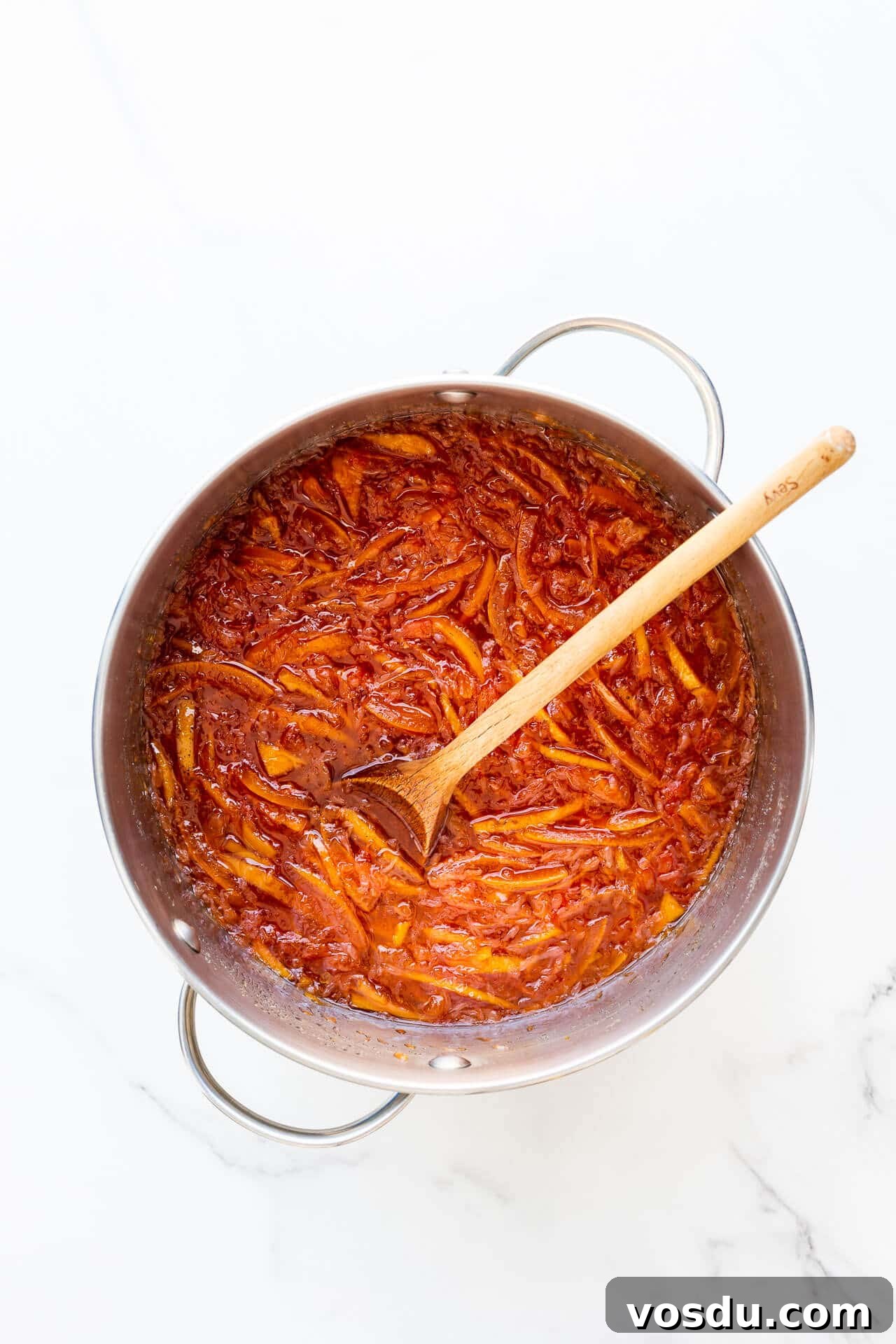
- Bring the mixture to a steady boil and cook until it reaches the marmalade setting point, about 104–105 °C (220 °F).
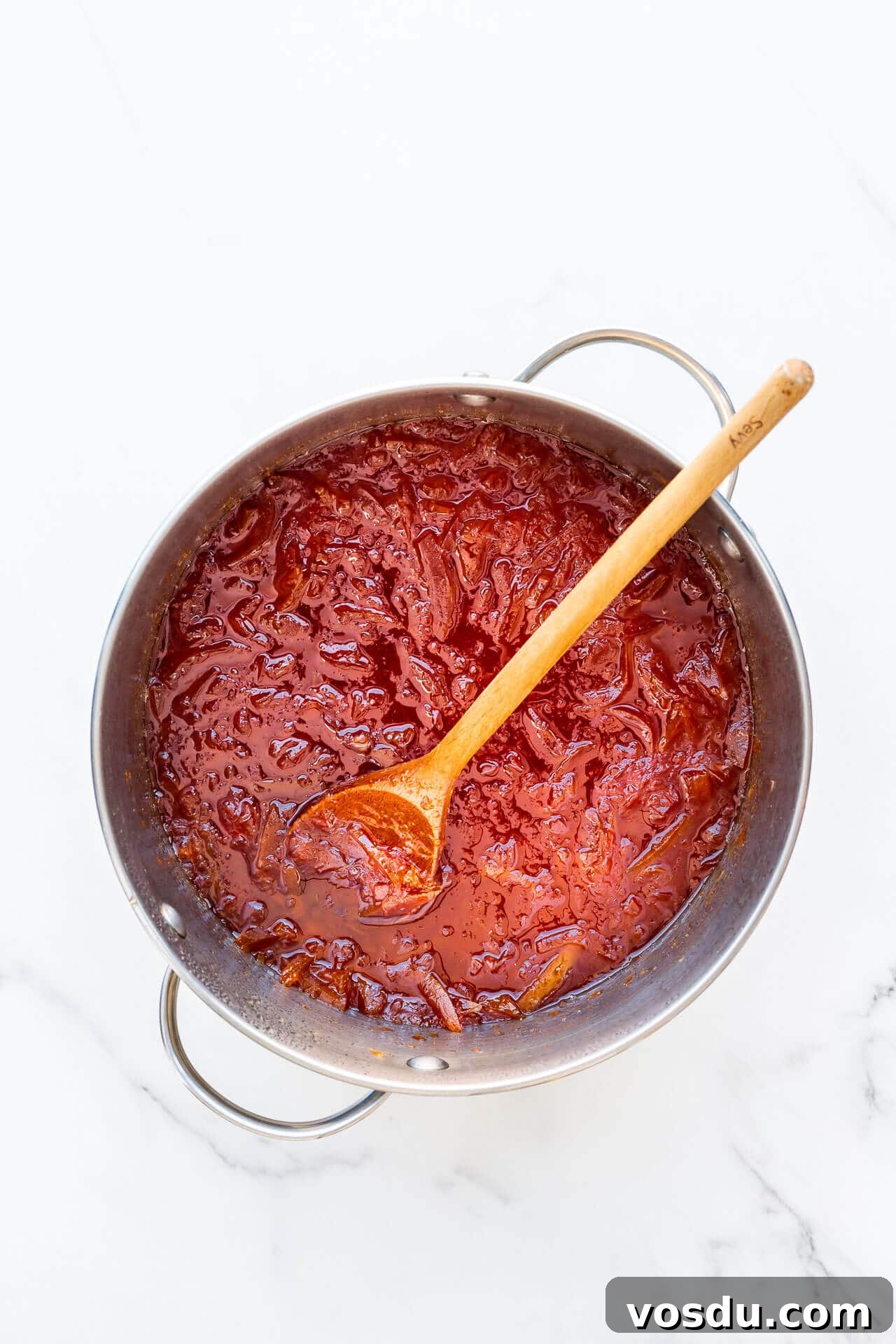
- Remove the pot from the heat, let it sit 2 minutes, then stir well. If you like, add a small amount of vanilla bean paste for extra depth.
- Ladle the marmalade into sterilized jars, leaving about 1/4 inch headspace, wipe rims, apply lids and bands, and process in a hot water bath to seal.
If you prefer a finer, more delicate rind, consider slicing citrus before cooking (as with lime marmalade). The whole-fruit approach tends to yield a more rustic texture with larger peel pieces.
Special equipment for making marmalade at home
Useful equipment:
- Mason jars with lids and a reliable canning kit (jar lifter, lid magnet, funnel, and headspace tool).
- A large non-reactive pot for cooking the fruit and a separate pot or water bath for processing jars.
- A fast-reading thermometer or probe thermometer to monitor the cooking temperature and reliably hit the setting point without overcooking.
Boil the marmalade only until it is thickened and reaches the set temperature; overcooking can toughen the peel and darken the jam through caramelization.
Storage
Properly sealed jars store well in a cool, dry place away from light for up to one year. Over time the colour may deepen but the marmalade will remain safe to eat. Once opened (or if a jar was not sealed), refrigerate and use within a few weeks.
📖 Recipe

Grapefruit Marmalade
Ingredients
- 950 grams grapefruit (about 4 grapefruit)
- 950 grams granulated sugar
- 100 mL fresh lemon juice
- 5 mL vanilla bean paste (optional)
Equipment
- Mason jars
- Large pot
- Canning kit (jar lifter, funnel, lid magnet, headspace tool)
- Fast-reading thermometer or probe thermometer
Instructions
- Place whole, washed grapefruit in a large covered pot of water and simmer until very tender, about 2–2.5 hours. Drain and cool slightly.
- On a cutting board, slice each fruit in half, remove seeds, then quarter. Separate flesh from peel and slice the peel into thin strips. Chop the flesh, removing any tough membranes.
- Return chopped flesh, sliced peel and any juices to a large clean pot. Add the sugar and lemon juice and stir to combine.
- Bring the mixture to a vigorous boil and monitor the temperature. Continue stirring and cook until it reaches 104–105 °C (220 °F).
- Remove from heat, let sit 2 minutes, then stir in vanilla if using. Taste and adjust if necessary.
- Ladle the hot marmalade into sterilized jars, leaving 1/4 inch headspace. Wipe rims, apply lids and bands finger-tight.
- Process jars in a boiling water bath for 5 minutes (adjust time for altitude). Remove jars and let stand 5 minutes, then transfer to a towel-lined tray to cool undisturbed. You should hear lids pop as they seal.
- Let jars cool and sit undisturbed for 24 hours before storing. Any jars that do not seal should be refrigerated and used first.
Notes
This recipe yields roughly 5.5 jars, so prepare six jars and lids. If a jar doesn’t have enough headspace and won’t seal, keep it refrigerated for immediate use.
Nutrition (approx. per tablespoon)
Calories: 46 kcal • Carbohydrates: 12 g • Sugar: 11 g • Fiber: 0.2 g • Protein: 0.1 g
Frequently asked questions
Check your fruit-to-sugar ratio (about 1:1 by weight is recommended) and ensure you boiled the marmalade to the set point (around 104 °C / 220 °F). Undercooking or too little sugar can prevent setting.
Yes. Overcooking past the setting point can toughen the peel, darken the marmalade and create a paste-like texture that can be less pleasant to spread. It’s still edible but won’t have the optimal texture or colour.
What to serve it with
Grapefruit marmalade’s bittersweet profile pairs beautifully with enriched breads such as brioche or buttery croissants. It also works well on toast, warm scones, or spooned over plain yogurt or ricotta for a bright finishing touch.