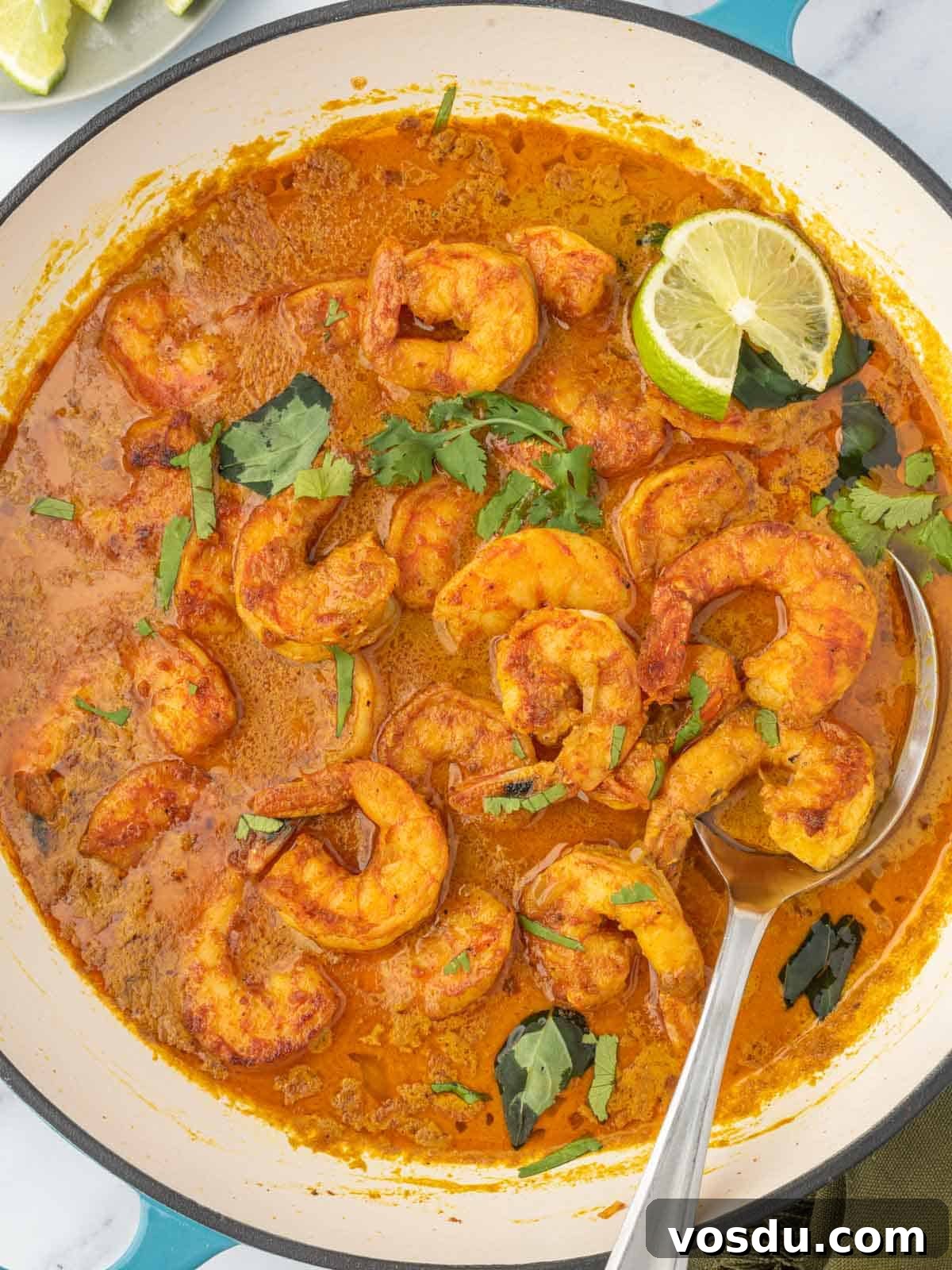
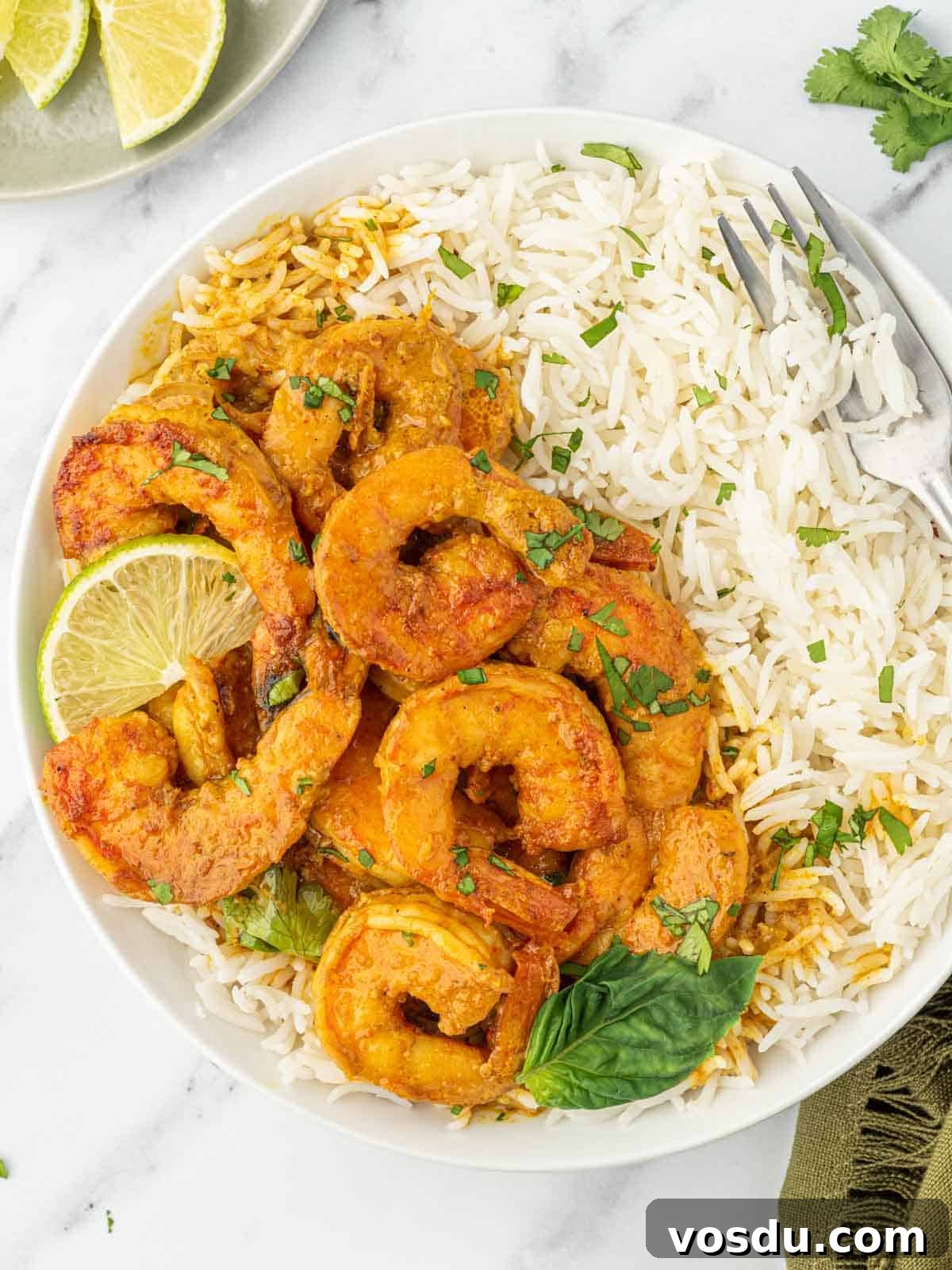
Thai coconut shrimp curry brings tender shrimp together with a fragrant red curry sauce in a quick, 30-minute meal. The Thai-inspired sauce combines full-fat coconut milk, red curry paste, soy sauce and fresh basil for vibrant flavor and color. Serve this curry over rice for an easy weeknight dinner the whole family will love.
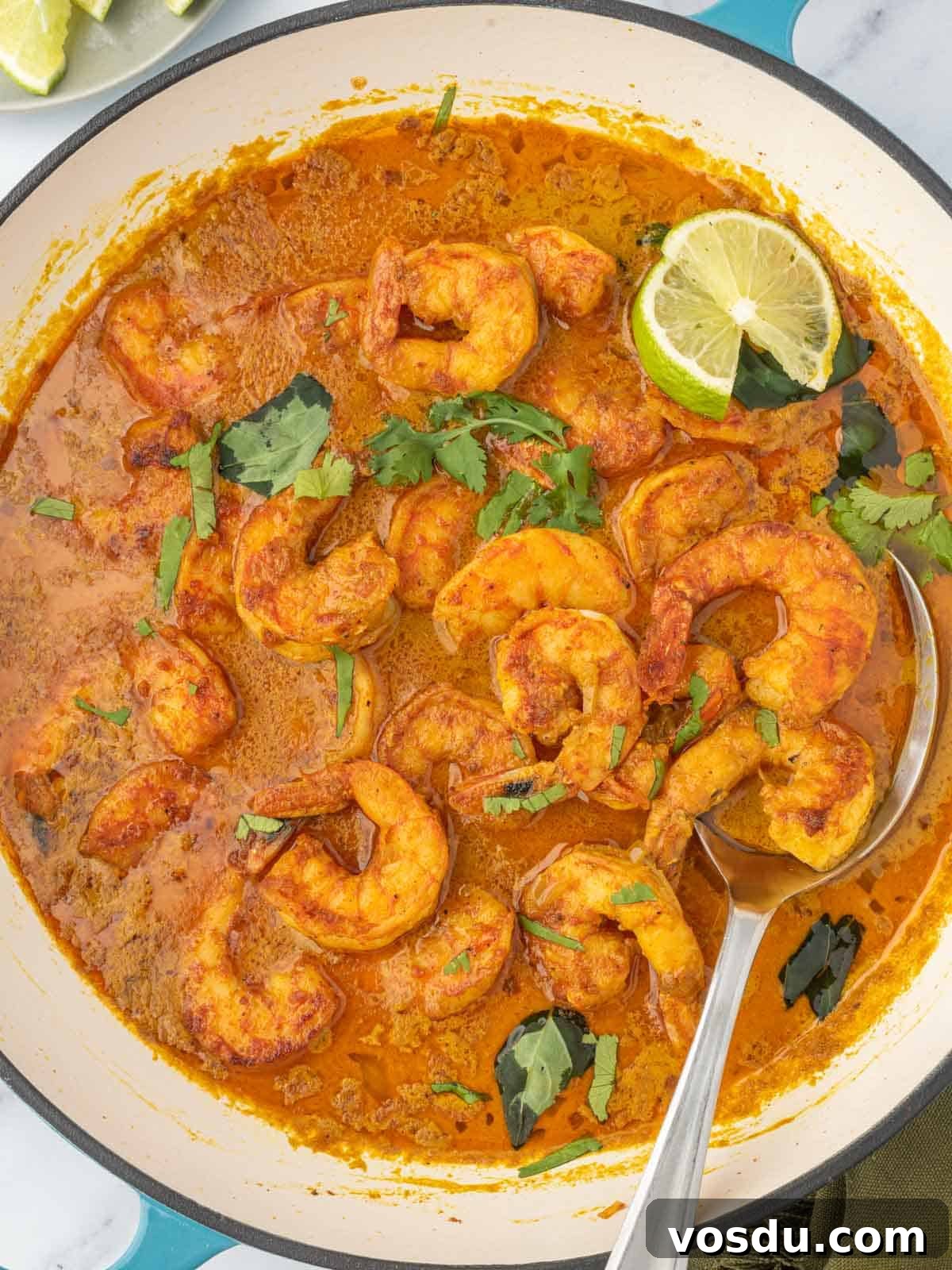
This coconut shrimp curry is creamy, mildly spicy and packed with flavor. It’s rich enough to impress guests yet simple enough for a family dinner. The bright basil and lime finish keep the dish fresh and balanced.
Why You’ll Love This Coconut Shrimp Curry
- Authentic taste. Red curry paste and coconut milk create the rich, classic Thai flavor that defines this dish.
- Fast to make. From prep to table in about 30 minutes—much quicker than takeout.
- A complete meal. Serve with rice for a satisfying, well-rounded dinner that isn’t heavy.
Thai Shrimp Curry Ingredients
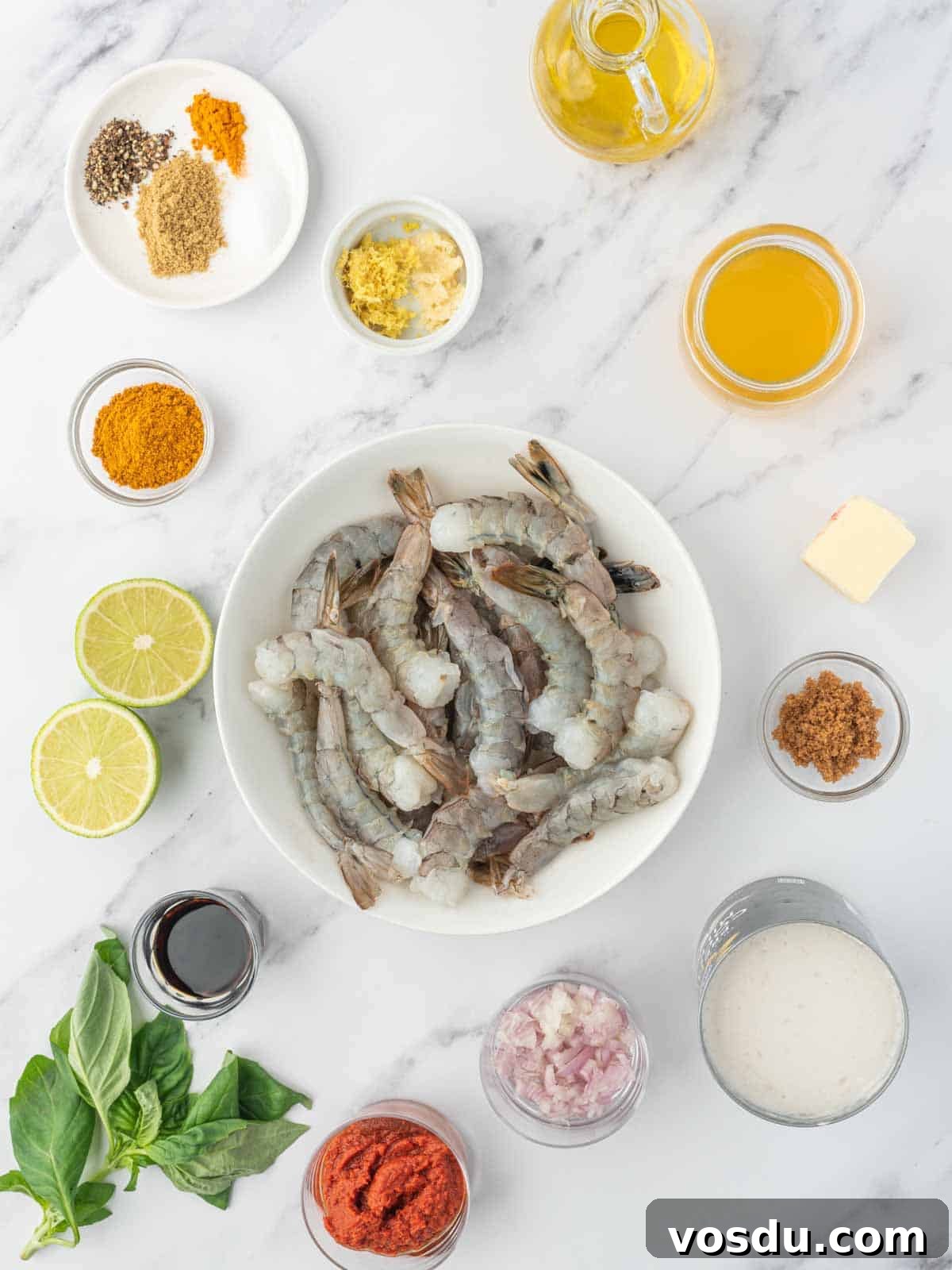
The Shrimp
- Shrimp: jumbo, peeled and deveined (tails left on for presentation if you like).
- Red curry paste: the backbone of the Thai flavor.
- Soy sauce: low-sodium preferred; tamari or liquid aminos for gluten-free.
- Curry powder: adds color and depth thanks to turmeric.
- Salt and black pepper.
- Olive oil: or another neutral, light oil.
Coconut Curry Sauce
- Unsalted butter.
- Aromatics: minced garlic, grated ginger, and finely chopped shallot.
- Chicken or vegetable broth: to deglaze and thin the sauce.
- More red curry paste and soy sauce.
- Brown sugar: or honey for a touch of sweetness.
- Dry spices: curry powder, coriander, turmeric, salt and pepper.
- Full-fat canned coconut milk: use the can, not the drinkable kind, for a creamy sauce.
- Fresh lime juice.
- Basil: Thai basil is ideal; sweet basil works as a substitute.
- Cilantro and lime wedges: for garnish and serving.
How To Make Thai Shrimp Curry
- Dry and season the shrimp. Pat shrimp dry, then toss with red curry paste, soy sauce, curry powder, salt and pepper until evenly coated.
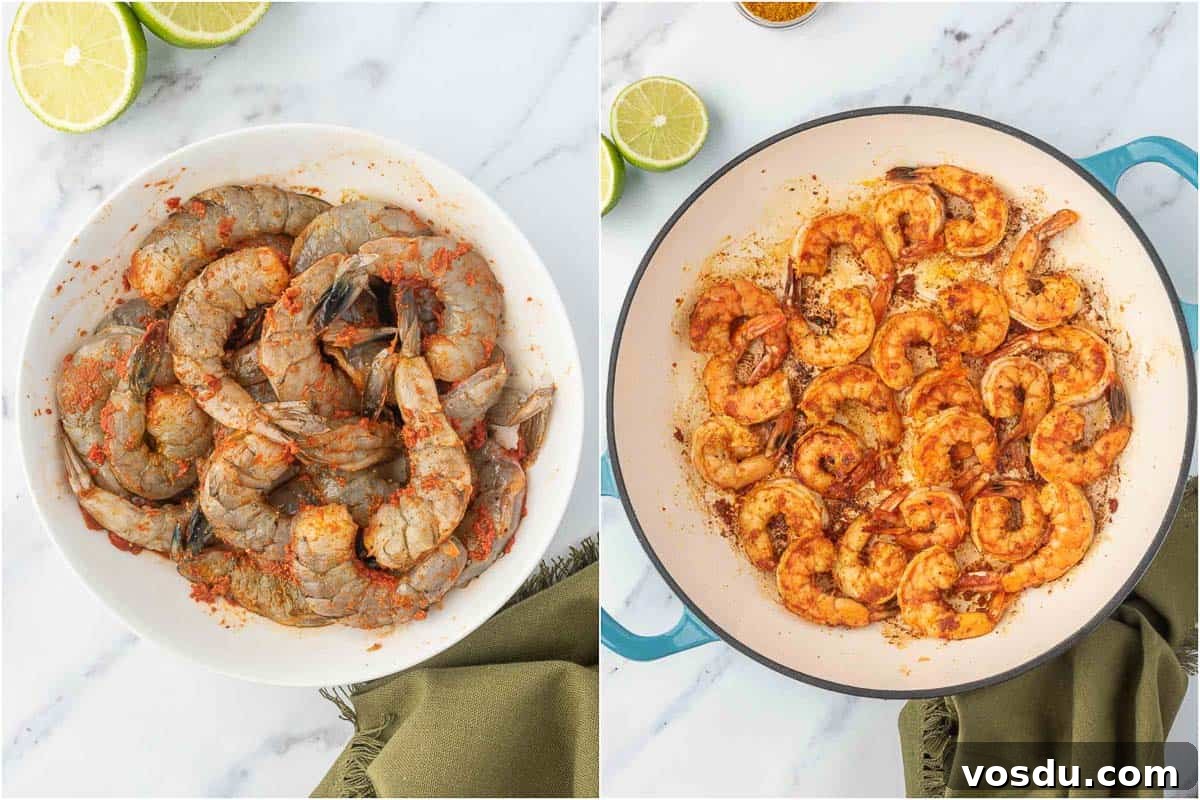
- Sauté the shrimp. Heat oil in a skillet over medium heat, cook shrimp 4–5 minutes until opaque. Remove and set aside.
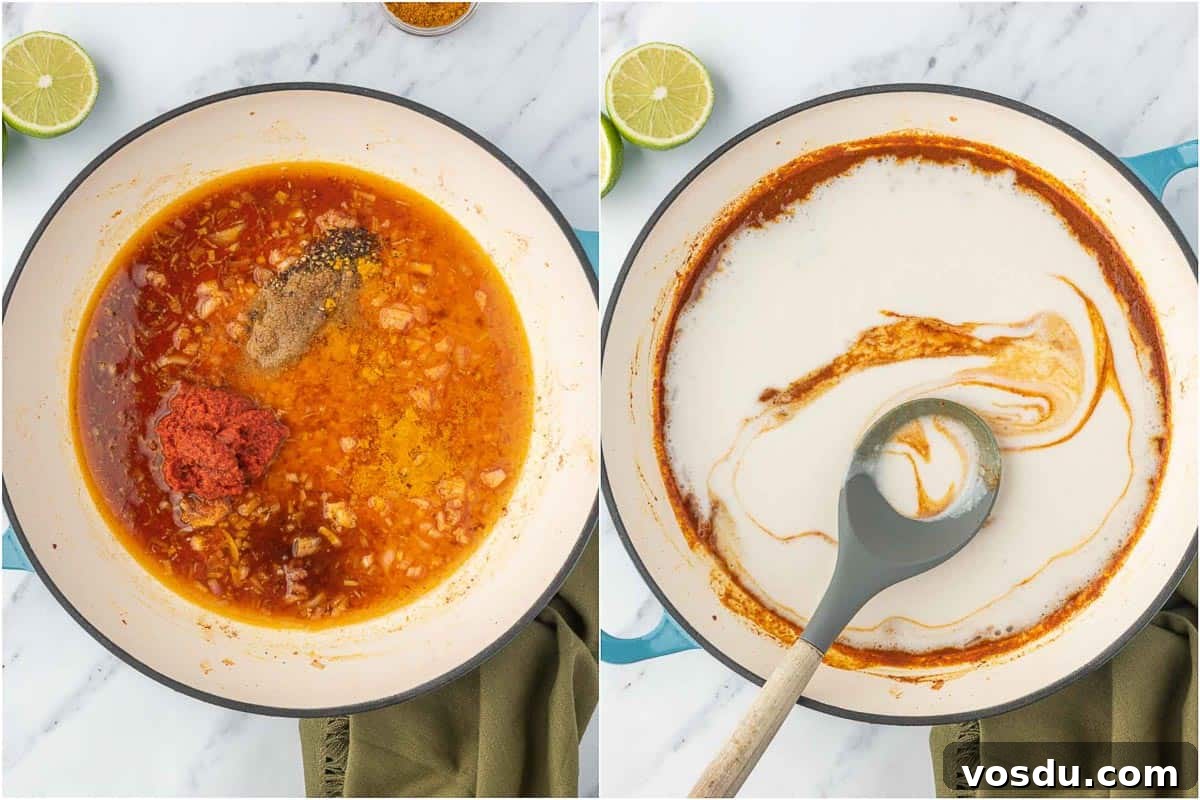
- Cook the aromatics. In the same skillet, melt butter and sauté garlic, ginger and shallot until softened, about 2 minutes.
- Deglaze and build the sauce. Add broth, stir in red curry paste and soy sauce.
- Add spices and sweetener. Stir in brown sugar, curry powder, coriander and turmeric; simmer 2–3 minutes.
- Finish with coconut milk. Pour in the coconut milk, bring to a gentle boil, then reduce heat and simmer about 5 minutes until slightly thickened.
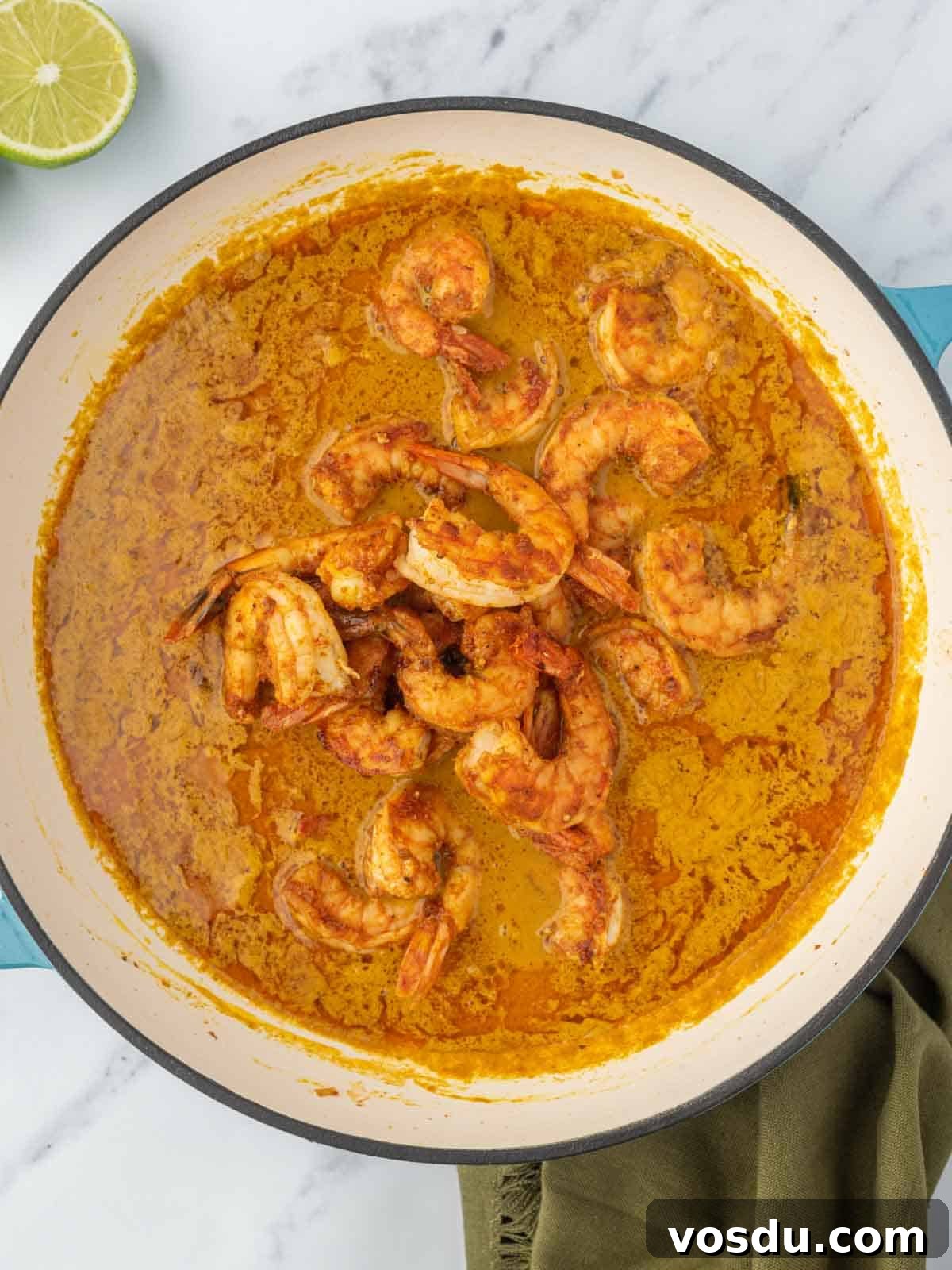
- Return the shrimp to the pan. Let them warm in the sauce for 1–2 minutes until heated through.
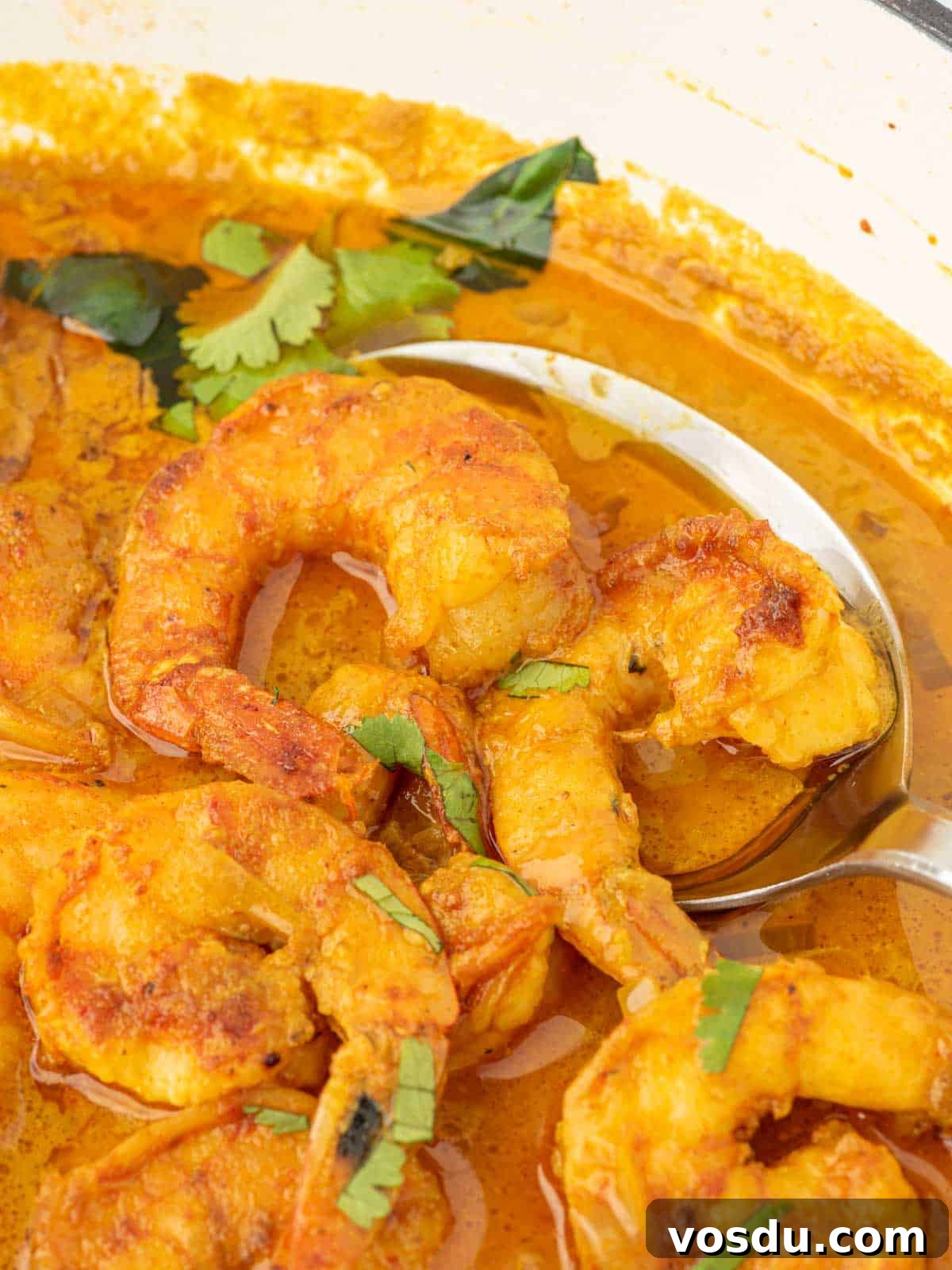
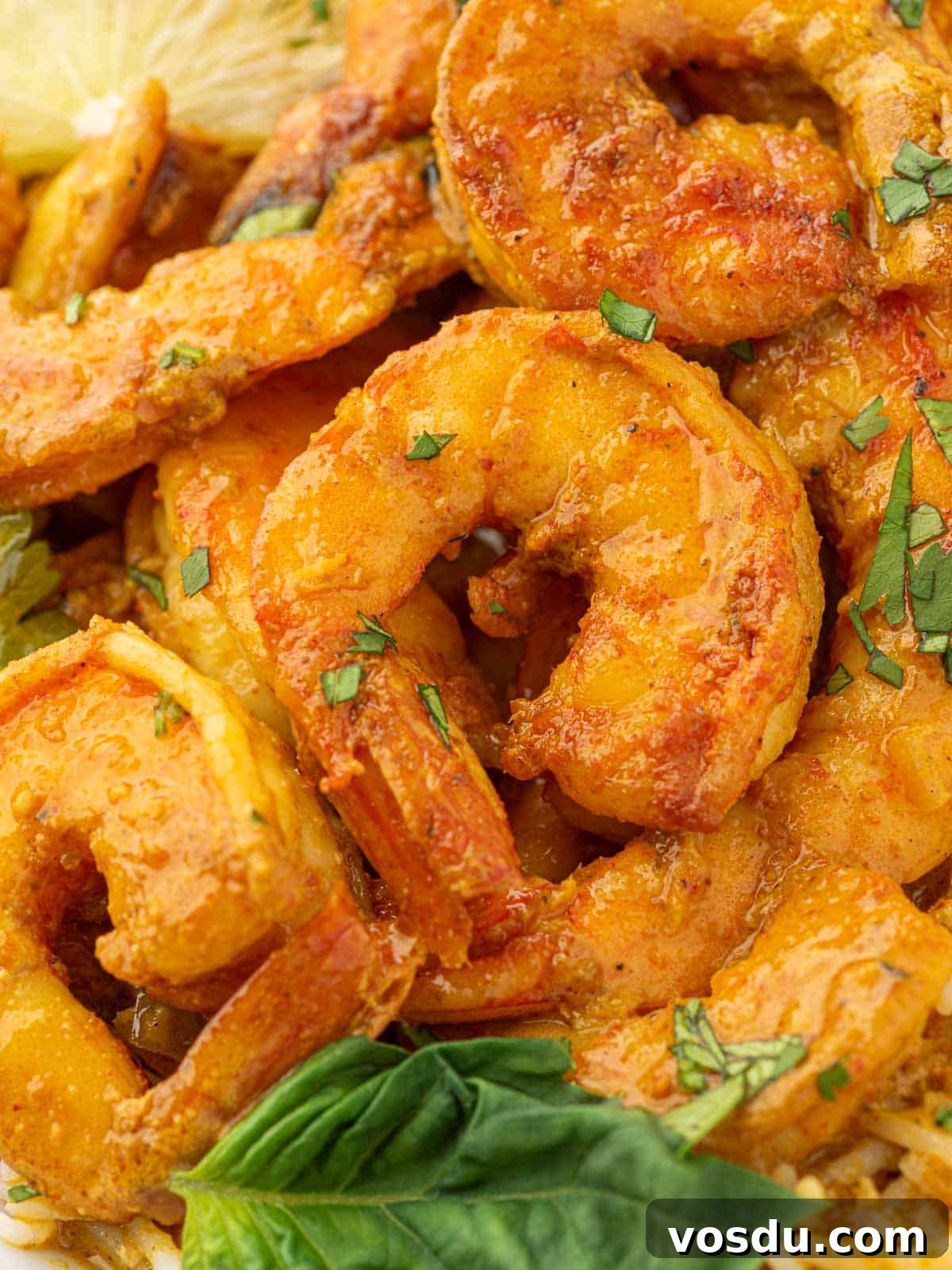
- Finish and serve. Stir in lime juice and basil, remove from heat, garnish with cilantro and serve over basmati or jasmine rice with lime wedges.
Tips To Make Shrimp Curry with Coconut Milk
- Dry shrimp thoroughly before seasoning to help them sear.
- Choose low-sodium soy sauce so you can control salt levels.
- Use full-fat coconut milk for the creamiest texture.
- Shrimp cook fast—avoid overcooking to keep them tender.
- Leave tails on for presentation or remove for easier eating.
- Add heat with red pepper flakes, sambal oelek or sriracha if you like it spicier.
- Fresh garlic and ginger make a noticeable difference in flavor.
- Add vegetables—bell pepper, zucchini, broccoli or snow peas—to bulk up the dish.
- Swap tofu for shrimp to make a vegetarian version.
Frequently Asked Questions
Use canned full-fat coconut milk. Lower-fat versions or the drinkable coconut milk can separate or be too thin for a creamy curry.
Yes. Sautéed onions, bell peppers, zucchini, broccoli, snow peas or spinach all work well either cooked into the sauce or served alongside.
Absolutely. Green, yellow and red curry pastes have different heat and flavor profiles. Choose the paste you prefer and adjust spice to taste.
Store leftovers in the refrigerator for up to 3 days. Reheat gently in a skillet or microwave until warmed through.
Yes. Cool completely, freeze in an airtight container for up to 3 months. Thaw overnight and reheat; texture may change slightly but the flavor holds up well.
Serve with rice, flatbread or a fresh green salad. Cauliflower rice is a lower-carb option that pairs nicely with the rich sauce.
More Shrimp Recipes
- Grilled Garlic Shrimp Skewers
- Kung Pao Shrimp
- Shrimp Sushi Stack
- Easy Buffalo Shrimp
- Chili Lime Shrimp
- Shrimp Lettuce Salad
- Firecracker Shrimp
I hope you enjoy this Coconut Curry Shrimp recipe. If you try it, consider leaving a rating and comment. Share it with friends and family who enjoy bold, home-cooked flavors.
Thai Coconut Shrimp Curry
Ingredients
For the shrimp
- 1.5 lb jumbo shrimp, peeled and deveined, tail ON
- 1 tablespoon red curry paste
- 1 teaspoon soy sauce
- 1 teaspoon curry powder
- ½ teaspoon salt, or more to taste
- ¾ teaspoon black pepper
- 1 tablespoon olive oil
For the curry
- 1 tablespoon unsalted butter
- 1 teaspoon minced garlic
- 1 teaspoon grated ginger
- 1 shallot, finely chopped
- ¾ cup low-sodium chicken broth
- 2½ tablespoons red curry paste
- 2 tablespoons soy sauce
- 1 tablespoon brown sugar
- 1 teaspoon curry powder
- 1 teaspoon coriander powder
- ½ teaspoon turmeric powder
- ½ teaspoon salt
- ½ teaspoon black pepper
- 1 can full-fat coconut milk (14 oz.)
- 1 tablespoon fresh lime juice
- 5–6 Thai basil leaves
- Chopped cilantro, to garnish
- Lime wedges, to serve
Instructions
- Pat dry shrimp and toss with red curry paste, soy sauce, curry powder, salt and pepper until evenly coated.
- Heat oil in a skillet over medium heat and cook shrimp 4–5 minutes until opaque. Remove and set aside.
- In the same skillet, melt butter and sauté garlic, ginger and shallot for about 2 minutes until softened.
- Deglaze with chicken broth, then stir in red curry paste and soy sauce.
- Add brown sugar, curry powder, coriander, turmeric, salt and pepper; simmer 2–3 minutes.
- Pour in coconut milk, bring to a boil, then reduce heat and simmer about 5 minutes until slightly thickened.
- Return shrimp to the skillet and cook 1–2 minutes in the sauce.
- Stir in lime juice and basil, remove from heat, garnish with cilantro and serve over rice.
Notes
- Dry the shrimp on paper towels before seasoning.
- Use low-sodium soy sauce to control salt.
- Full-fat coconut milk gives the best texture.
- Don’t overcook the shrimp; they finish quickly in the sauce.
- Use fresh garlic and ginger for best flavor.
- Add vegetables or swap in tofu to adapt the dish.
Nutrition
Carbohydrates: 13 g |
Protein: 28 g |
Fat: 30 g
Like this recipe? Rate and comment below!