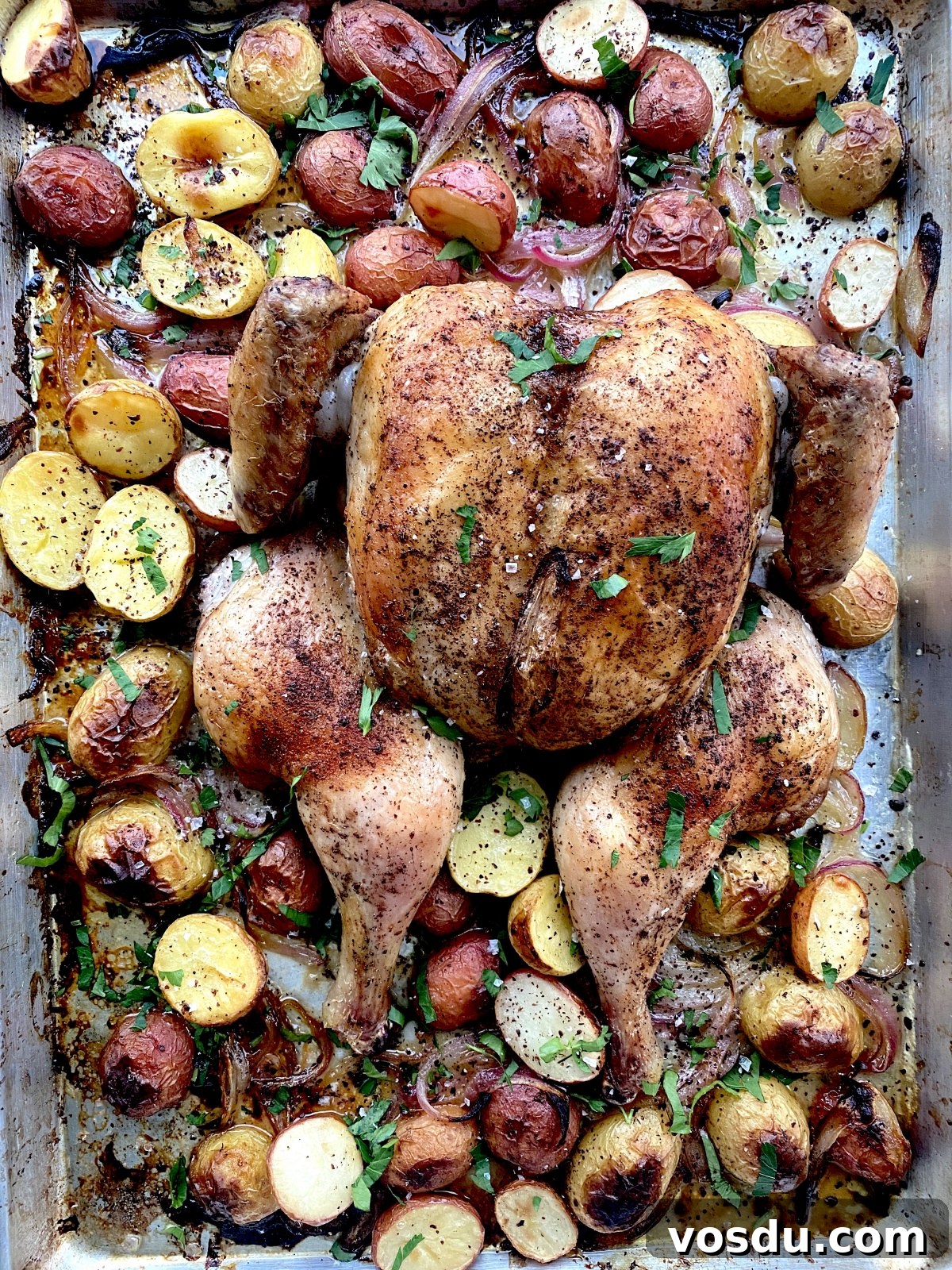
Roast chicken is a foundational recipe every home cook should master. Today I’m sharing my approach to a reliable, flavorful roast chicken and a complete sheet-pan meal of lemony roasted potatoes and caramelized onions.
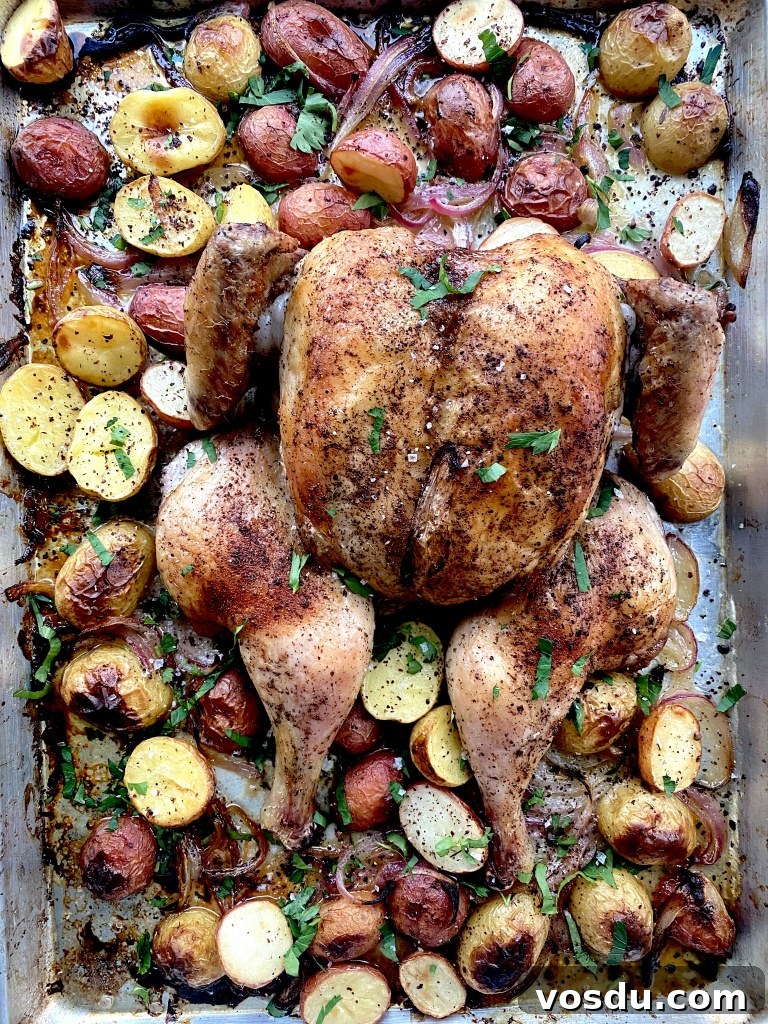
Let’s make the very best roast chicken
When people learn I’m a chef, they often ask what I like to cook. My consistent answer is roast chicken. It’s simple, versatile, and satisfying. I always keep at least one whole chicken in my freezer. Below I’ll walk through the basic method — spatchcocking and dry brining — so you can make the simplest, most dependable roast chicken. Once you’ve learned this, you can adapt it with spices and sides.
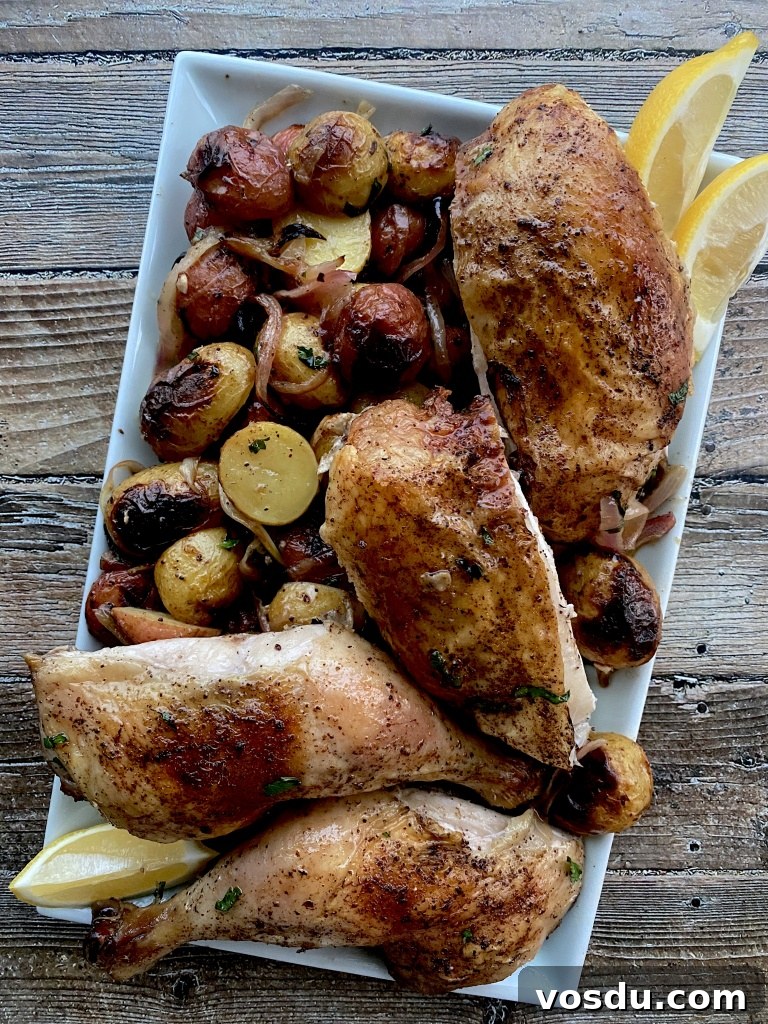
I have many roast chicken variations on this site, but the focus here is the straightforward technique that delivers juicy meat and crispy skin every time.
What makes this the best roast chicken:
Two key techniques: spatchcocking and dry brining.
What is Spatchcocking?
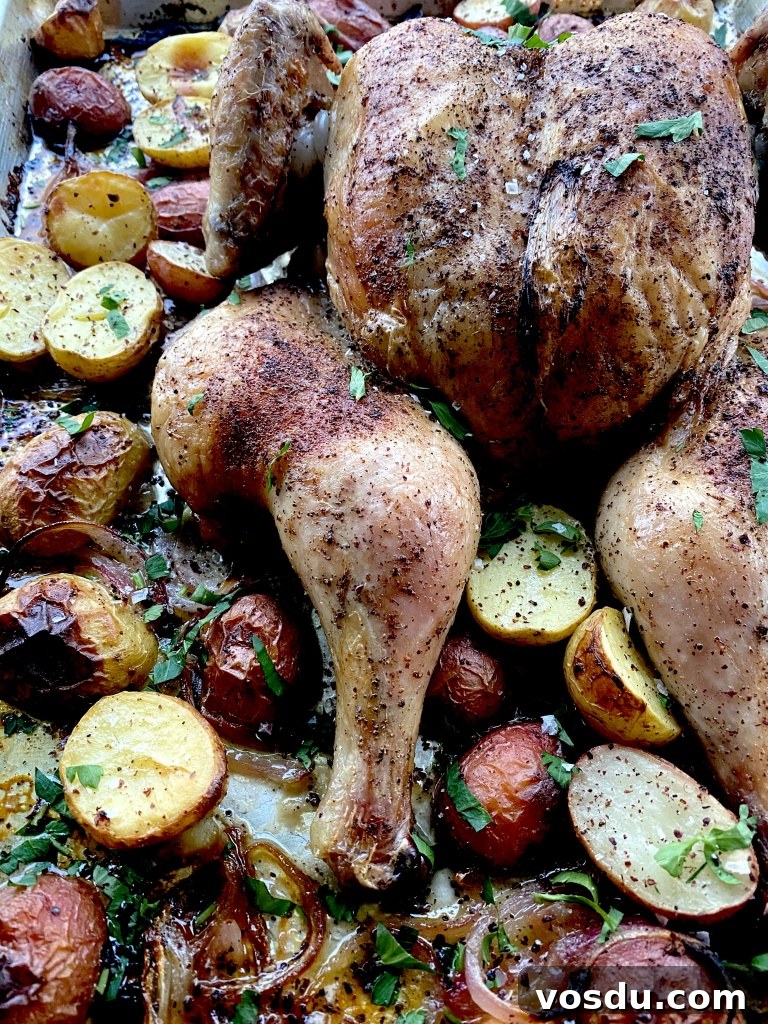
Spatchcocking means removing the backbone and flattening the bird. It speeds and evens out cooking and exposes more skin for crisping. If you prefer, ask your butcher to spatchcock the chicken for you.
What does spatchcocking accomplish?
- Quicker cooking
- More even cooking between white and dark meat
- Crispy skin across the entire bird
- Backbone reserved for broth or stock
Roasting a whole, unspatchcocked bird often exposes the breast to hotter, drier heat while thighs sit lower and retain moisture, so spatchcocking reduces that contrast and improves overall results.
What is Dry Brining?
Dry brining means salting (and sometimes lightly seasoning) the meat in advance, then refrigerating it uncovered for 1–3 days. The salt seasons the meat more deeply and helps retain moisture during cooking.
What does dry brining accomplish?
- Even seasoning throughout the meat rather than just on the surface
- Juicier meat and a more forgiving cook — less risk of drying out
- Drier skin before roasting, which promotes better browning and crispness (hello, Maillard reaction)
If you don’t have time for a multi-day dry brine, don’t worry: you can still season and roast the chicken today and get delicious results. Try dry brining next time when you can plan ahead.
My primary tip for cooking chicken is simple: use enough salt. A good guideline is about 3/4 to 1 teaspoon of salt per pound. Quality salt tastes better and the cost difference is small at home quantities.
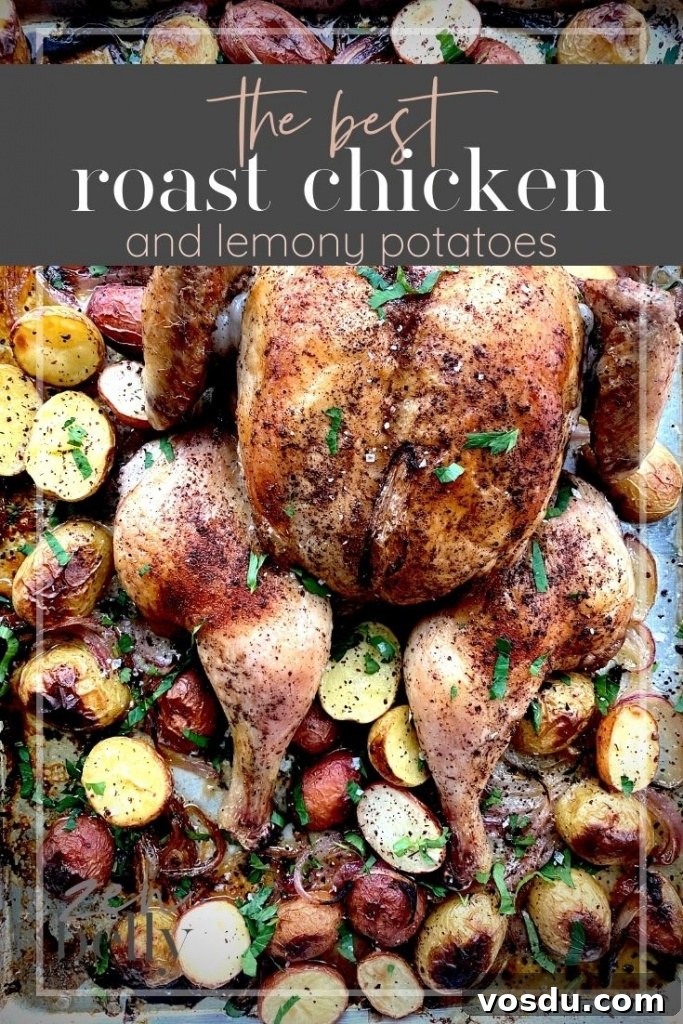
the best roast chicken and lemony potatoes

Juicy meat and crispy skin, roasted on a bed of lemony potatoes and sweet caramelized onions.
- Author: zenbelly
- Prep Time: 30 minutes plus time to brine
- Cook Time: 40-50 minutes
- Total Time: 70-80 minutes
- Yield: 4 servings
- Category: chicken
- Method: roast
Ingredients
For the chicken:
- 1 whole chicken, 4–5 pounds, spatchcocked
- 1 tablespoon salt
- 1 teaspoon sumac
- 1 teaspoon cumin
- 1/2 teaspoon garlic powder
- 1/4 teaspoon allspice
For the lemony potatoes:
- 1 pound baby potatoes, halved (or larger potatoes cut into 1-inch cubes)
- 1 medium red onion, sliced 1/4-inch thick
- 1 teaspoon salt
- 1/2 teaspoon garlic powder
- 1/4 cup lemon juice
- 4 tablespoons extra virgin olive oil, divided
Optional for serving:
- Chopped parsley or other fresh herbs
- Flaky salt
- Extra sumac
- Lemon wedges
Instructions
One to three days before roasting:
- Spatchcock the chicken and season it all over with the salt and spices.
- Place the chicken on a rack set inside a rimmed baking sheet and refrigerate uncovered.
When you’re ready to cook:
- Preheat the oven to 425°F (220°C).
- In a large bowl, toss the potatoes and sliced onion with salt, garlic powder, lemon juice, and 2 tablespoons of olive oil. Spread the mixture on a rimmed baking sheet, leaving room in the center for the chicken.
- Place the spatchcocked chicken in the center of the sheet, keeping the potatoes and onions around (not mostly under) the bird. Rub the remaining 2 tablespoons of olive oil on the chicken.
- Roast for 40–50 minutes, until the breast reaches 160°F and the thigh 175°F. If the potatoes need more time, transfer the rested chicken to a cutting board and return the potatoes to the oven until tender. Let the chicken rest loosely tented with foil for 10 minutes before carving.
- Garnish with chopped herbs, lemon slices, flaky salt, or additional sumac, if desired.
Notes
Salt is the most important element here. Feel free to use your preferred spice combinations — this method adapts well to many flavors. Sumac is a lovely, tangy spice to have on hand, but use what you enjoy.
passover
All links on zenbelly.com are provided for information. Some may be affiliate links; sponsored content is labeled. Ads on the site come from ad networks and do not necessarily reflect the author’s recommendations.