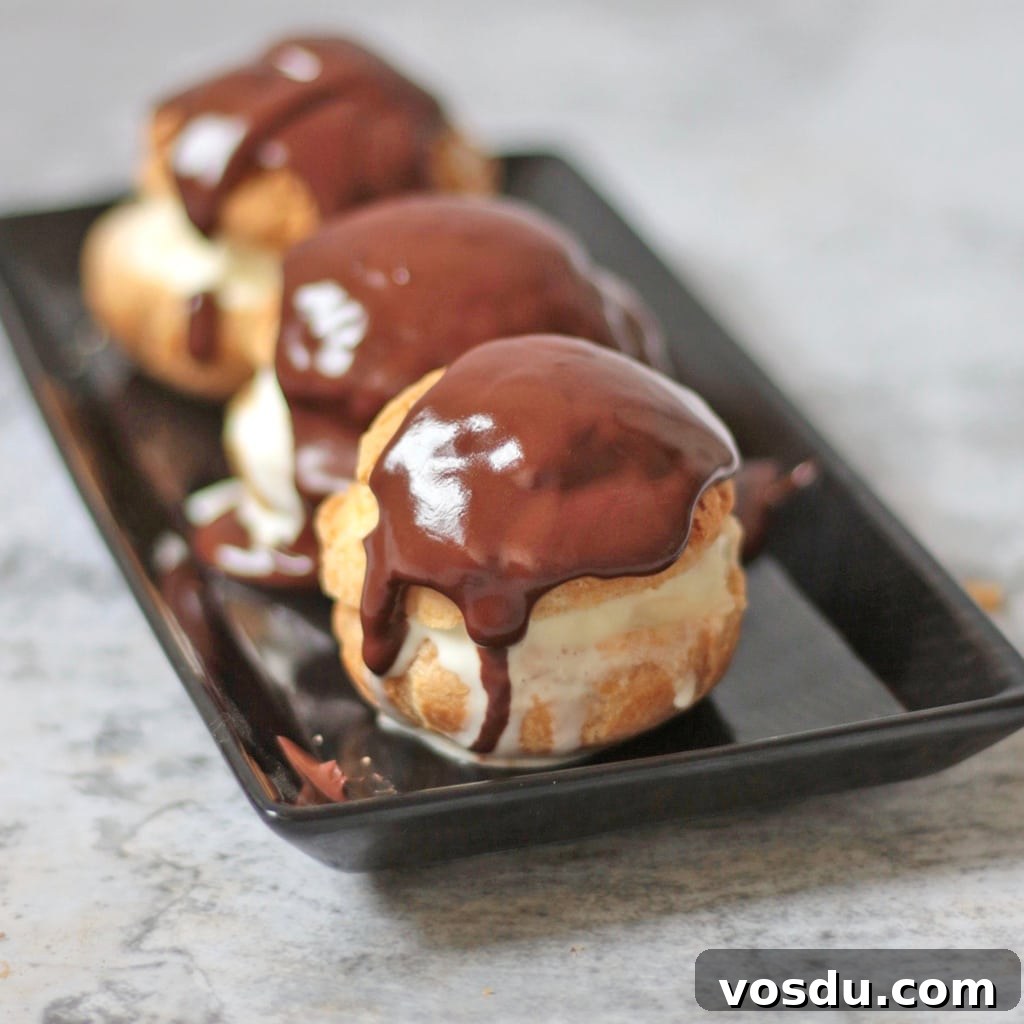
Classic French profiteroles are choux pastry buns filled with vanilla ice cream and finished with a warm chocolate sauce — just like you’d find in a traditional French restaurant. The contrast of crisp, airy pastry with cold ice cream and glossy warm chocolate makes this dessert both light and indulgent, perfect for dinner parties, holidays, or special occasions.
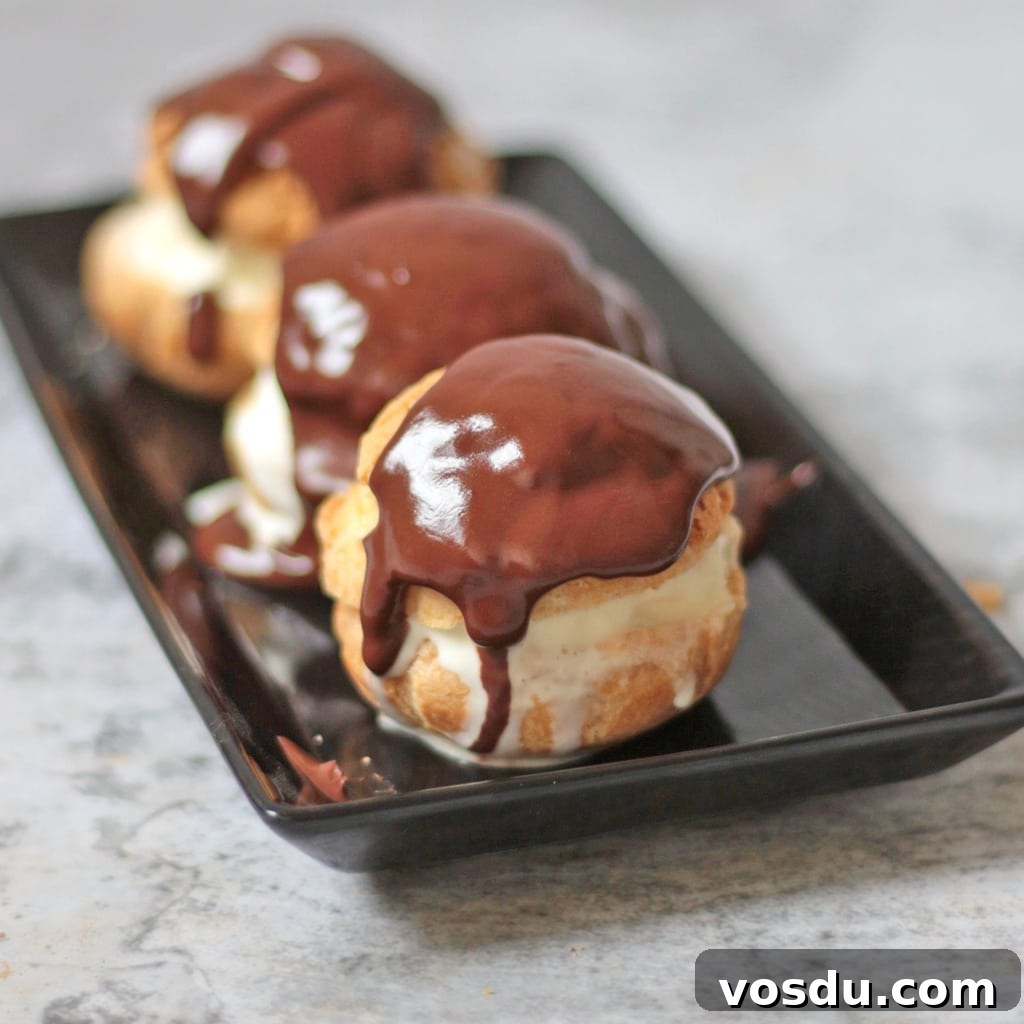
Why we love this recipe
Frozen profiteroles served with a warm chocolate sauce are one of my favourite desserts. I adore choux pastry and this recipe brings back fond childhood memories. It’s a showstopper that appeals to both kids and adults and works beautifully as a dinner-party finale or a festive treat.
While many modern versions use whipped cream or pastry cream, the classic French and Belgian way is to fill profiteroles with vanilla ice cream and pour over a hot chocolate sauce. That hot-and-cold contrast is the essence of the dish and what makes it so memorable.
This guide explains how to make profiteroles the traditional way, with clear tips to help you achieve light, well-risen choux buns and a glossy chocolate sauce.
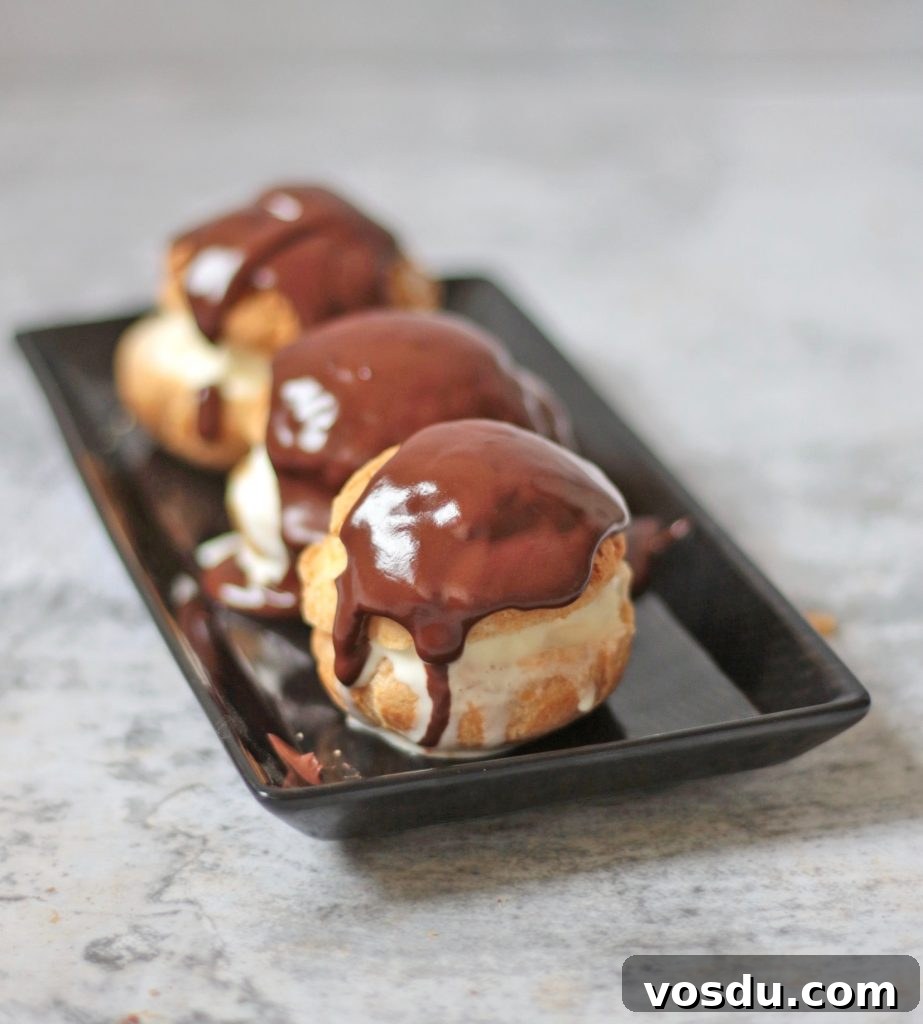
What are Profiteroles
Profiteroles are classic French pâtisserie made from choux pastry and traditionally consist of three components:
What they are made of:
- Choux pastry buns
- Filling: typically vanilla ice cream (sometimes whipped cream or pastry cream)
- Warm chocolate sauce
The choux and modern profiterole evolved from 17th-century French pastry. Originally they were sometimes served savory, but today they are most often sweet and finished with a warm chocolate topping.
In France and Belgium, profiteroles are most commonly served with vanilla ice cream rather than a cream filling; choux filled with cream are usually called choux à la crème.
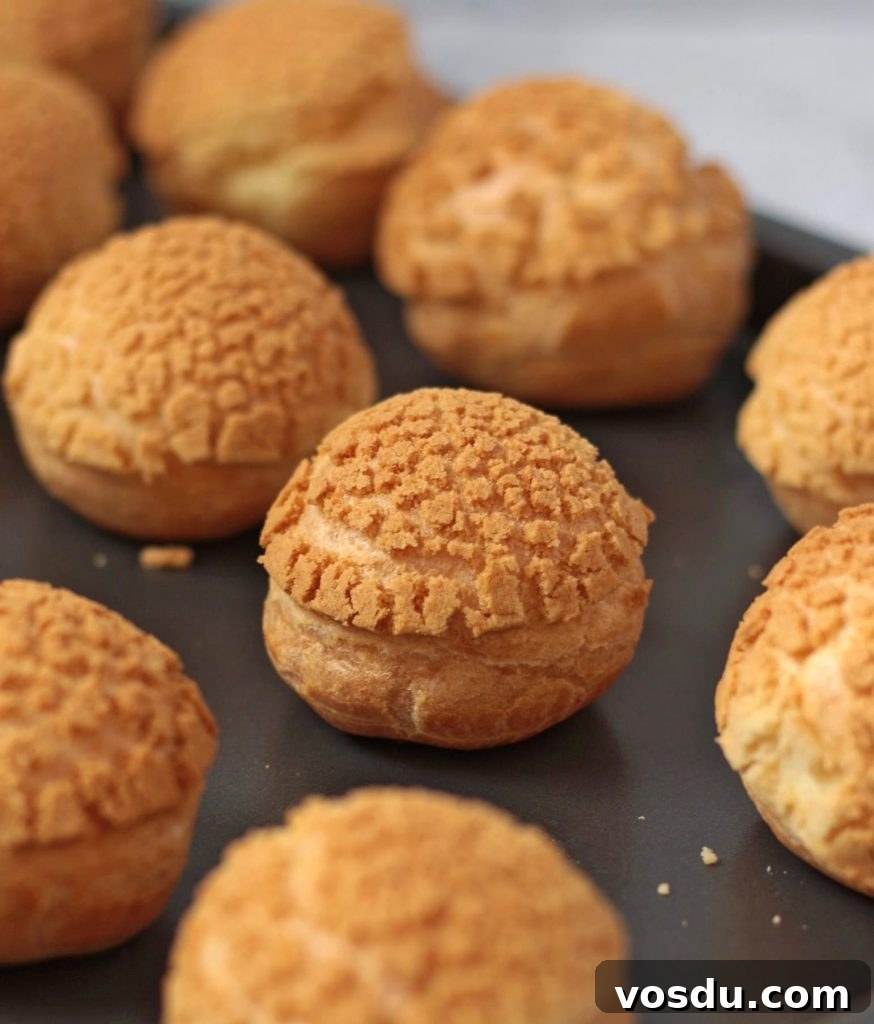
Choux Pastry Buns
Choux pastry is made by cooking flour into a liquid of water and melted butter, then beating in eggs. The cooking step removes moisture so the pastry puffs in the oven and becomes hollow inside, perfect for filling.
Ingredients
Basic ingredients for the choux:
- Water — you can substitute milk or use a mix for a richer bun, but water yields lighter results.
- Unsalted butter
- Caster sugar — a small amount to keep the buns relatively plain so the filling can shine.
- Plain (all-purpose) flour — sifted to avoid lumps.
- Eggs — room temperature. Add gradually; the exact amount needed depends on egg size and how dry the paste is.
How to make profiterole buns
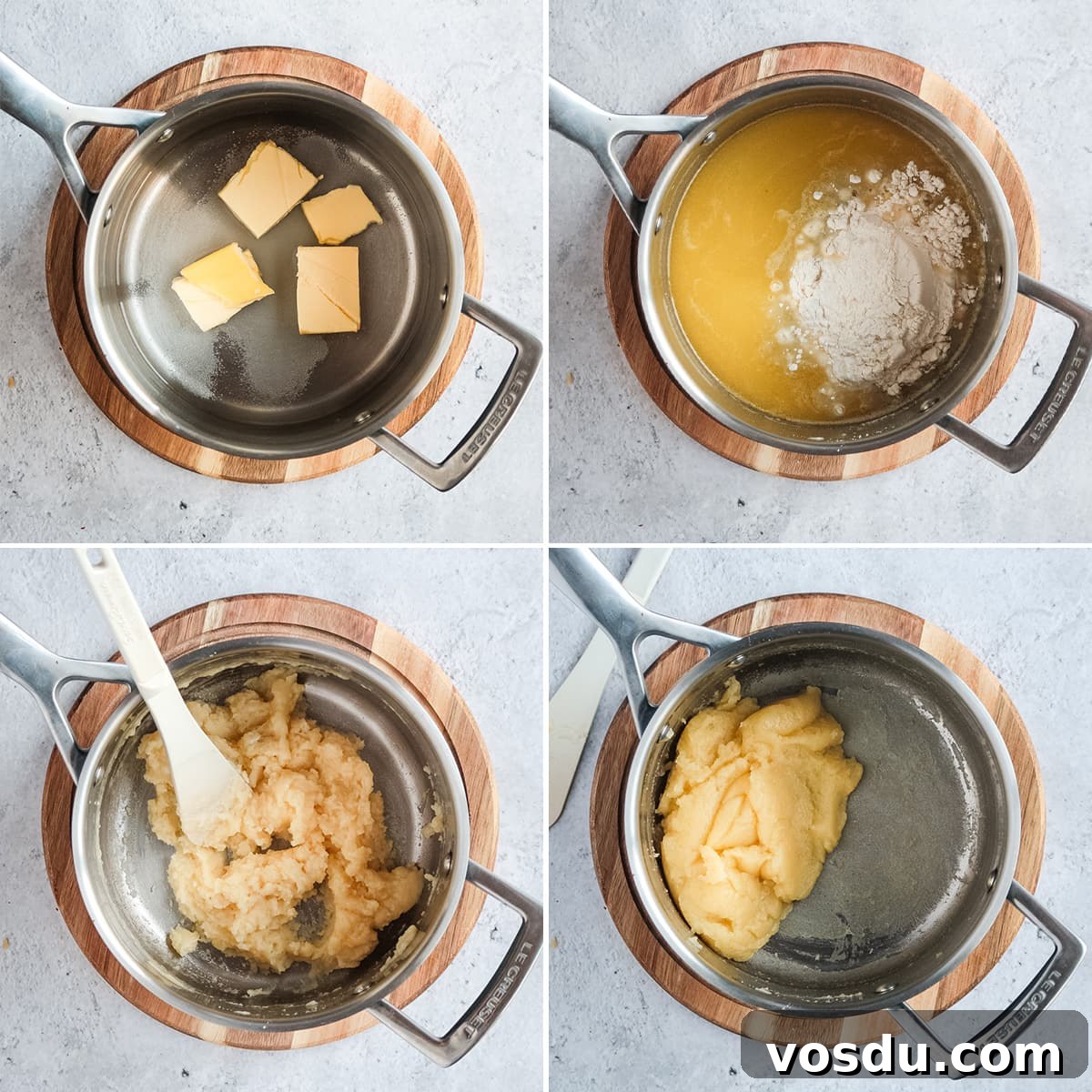
- Combine water, butter and sugar in a medium saucepan over medium heat until the butter and sugar melt.
- Remove from heat and add the flour all at once. Stir vigorously with a wooden spoon or spatula to form a thick paste.
- Return to low heat and dry the paste by pressing it against the pan sides until a thin film forms on the bottom.
- Transfer to a cool bowl or the mixer bowl and cool for 10–15 minutes. If desired, beat slowly with the paddle to speed cooling.
- Beat eggs in a separate bowl and add them gradually to the cooled paste, mixing thoroughly between additions. The final batter should be smooth, shiny and pipeable. Test by lifting batter on your finger — it should fall back slowly into a “C” shape.
- Pipe the choux into small mounds on a greased baking tray, leaving room for puffing. Optionally add a craquelin topping for extra crunch.
- Bake at 180°C (350°F) until puffed and golden (about 20 minutes), open the oven briefly to release steam, then bake another 10–15 minutes to dry them out. Cool completely on a rack.
Filling & Topping
Ice cream filling
Traditionally, profiteroles are filled with vanilla ice cream. You can use any flavour you like — chocolate for an all-chocolate indulgence or fruit sorbet for a lighter contrast. Because the ice cream is frozen, assemble the dessert at the last minute so it doesn’t melt.
Warm chocolate sauce
The chocolate sauce is simple and glossy, made from:
- Dark cooking chocolate — use cooking chocolate for reliable melting and a clean texture.
- Milk — full-cream milk for richness; you can use cream or plant-based milk if needed.
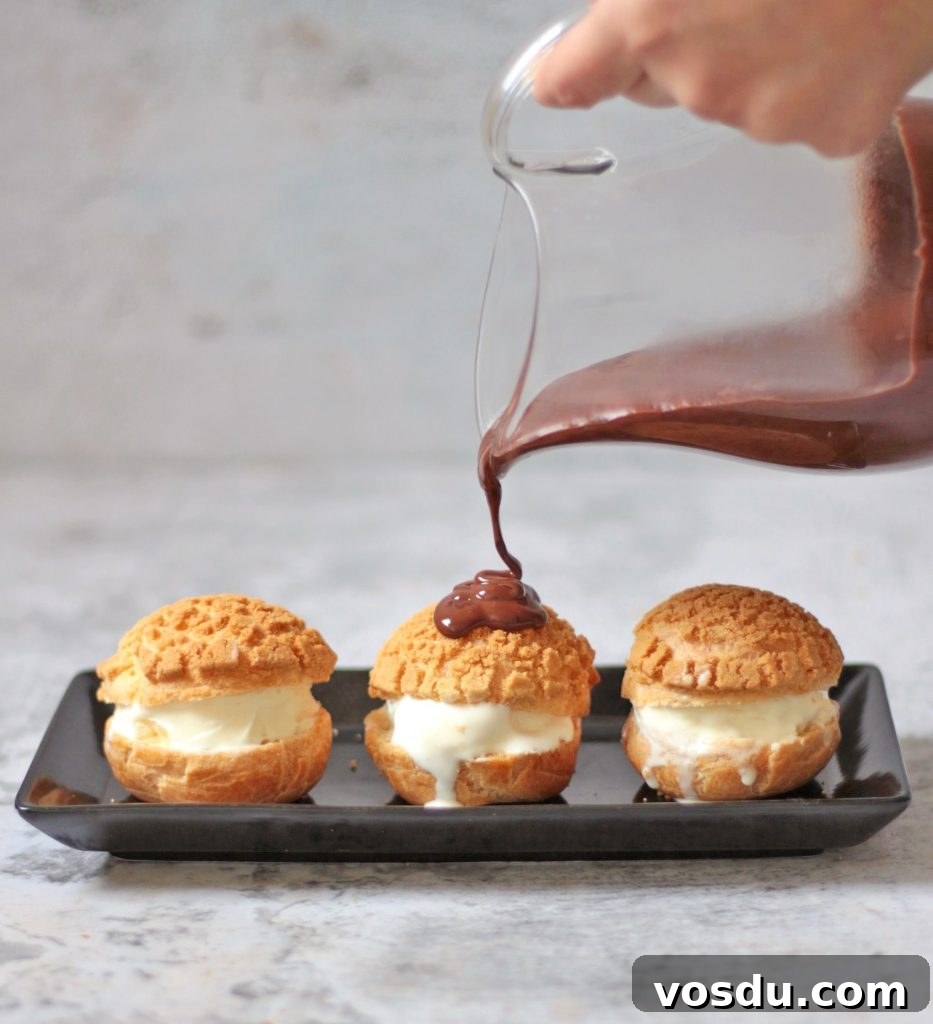
Heat the milk just to boiling, pour over chopped chocolate, wait briefly, then stir until smooth and glossy. Use a good-quality chocolate with higher cocoa content if you prefer a less sweet, more intense sauce.
Tips and troubleshooting
How do you keep profiteroles crisp?
Choux pastry is sensitive to humidity and will soften over time. They taste best within two days and can be kept in an airtight container at room temperature or refrigerated. If you need them ahead of time, bake and freeze the buns, then re-crisp briefly in a hot oven before serving.
Why did my choux buns collapse?
Collapsing choux can result from not drying the paste enough on the stove (so it contains excess moisture) or adding too many eggs, making the batter too runny. It can also happen if buns weren’t baked long enough or if the oven door was opened too soon. Getting the right egg amount and ensuring a good oven bake are key.
Recipe FAQs
The main difference is the shape: éclairs are long and filled with cream, while profiteroles are small and round and often served filled with ice cream. Éclairs are usually glazed, and profiteroles are commonly finished with a warm chocolate sauce.
They are very similar: both use choux pastry. The main practical difference is how they are served — profiteroles are frequently filled with ice cream and served with warm chocolate, while cream puffs (choux à la crème) are typically filled with cream.
You can make and freeze the choux buns in advance, but assemble the final dessert at the last minute so the ice cream stays frozen and the chocolate sauce remains warm and glossy.
Yes. You can freeze piped, uncooked choux and bake from frozen (adding a few extra minutes), or bake, cool and freeze baked choux then reheat briefly to re-crisp. Do not freeze profiteroles already filled with cream or ice cream — fill them after thawing or assemble them right before serving.
More Classic French Desserts
- Strawberry custard tartlets
- French buckwheat crêpes
- French apple cake
- Classic French crêpes
- Easy French apple tart
- Pear frangipane tartlets
- Chocolate fondant cake
- Cannelés de Bordeaux
- Coffee crème brûlée
Made this recipe?
Let us know if you liked it by leaving a comment below and tag us on Instagram @a.baking.journey with a photo of your creation!
Recipe

Classic French Profiteroles
Ingredients
Craquelin Topping (optional)
- 40 g unsalted butter
- 20 g brown sugar
- 50 g plain flour
Choux pastry buns
- 125 ml water
- 60 g unsalted butter
- 15 g caster sugar
- 75 g plain flour
- 2 eggs (add more if needed)
Ice cream
- 500 ml vanilla ice cream (or to taste)
Chocolate sauce
- 150 g dark cooking chocolate
- 150 ml full-cream milk
Instructions
Craquelin topping (optional)
- Mix cooled melted butter with flour and brown sugar until combined. Roll thin between parchment, chill for 30 minutes, then cut circles to top choux if using.
Choux pastry buns
- Heat water, butter and sugar until melted. Remove from heat and add flour all at once. Stir to combine into a paste.
- Return to low heat and dry the paste, stirring and pressing against the pan until a thin film forms on the bottom.
- Transfer to a bowl and cool 10–15 minutes. Beat eggs separately and add gradually until the batter is smooth, shiny and pipeable.
- Preheat oven to 180°C (350°F). Pipe small mounds on a greased tray. Top with craquelin if using.
- Bake 20 minutes, open the oven to release steam briefly, then bake another 10–15 minutes until dry and golden. Cool completely on a rack.
Chocolate sauce
- Chop the chocolate and place in a heatproof bowl. Heat milk until it just boils, pour over chocolate, wait 30 seconds, then stir until glossy and smooth. If needed, finish over a warm bain-marie.
Putting the profiteroles together
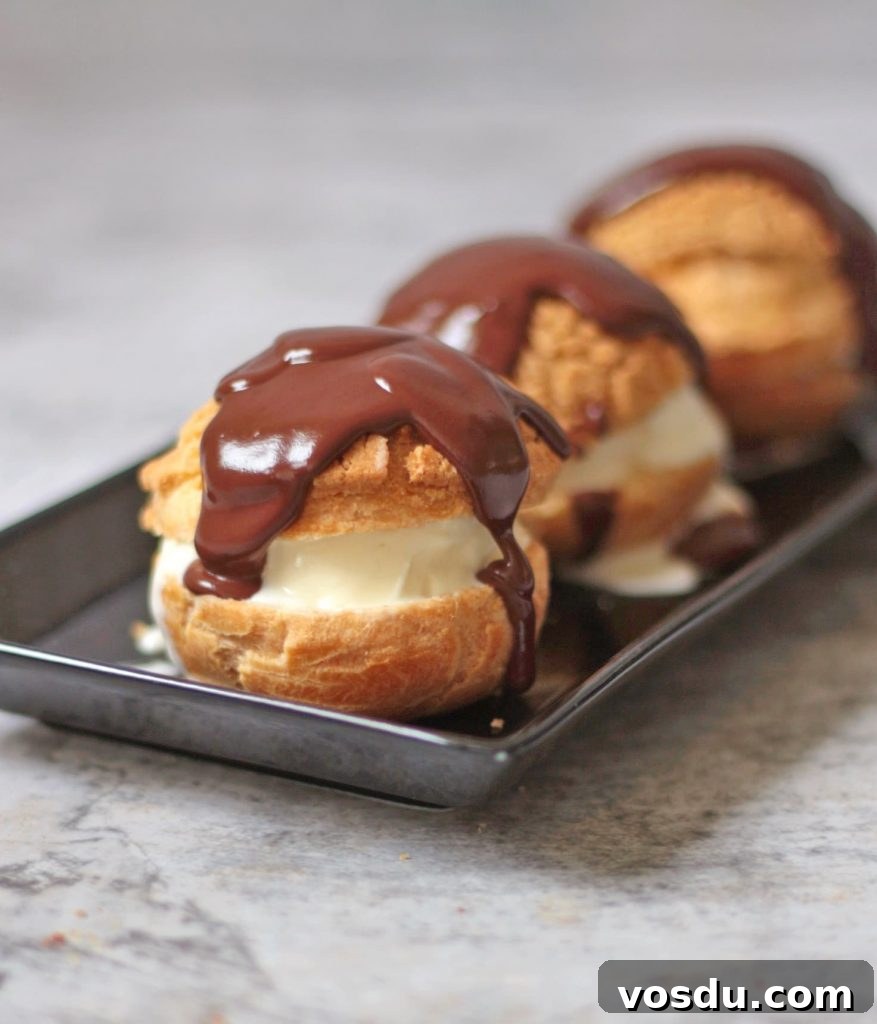
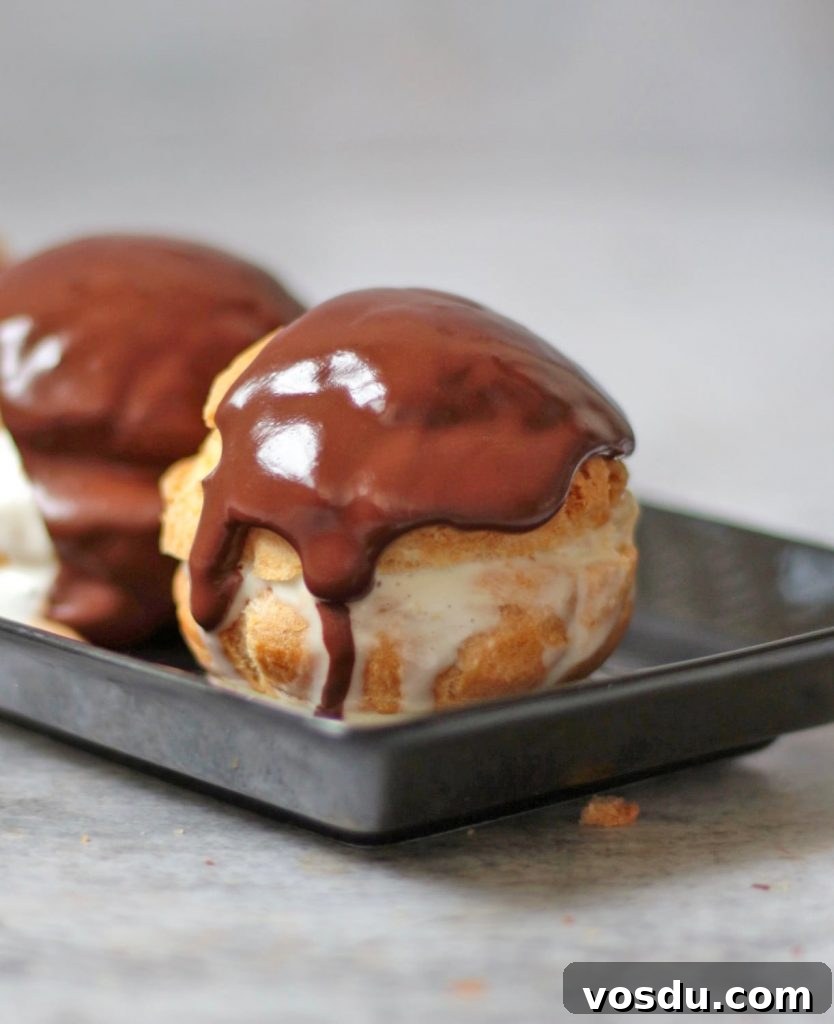
- Slice each choux in half, place a scoop of vanilla ice cream on the bottom half, replace the lid, warm the chocolate sauce if necessary and pour over the profiteroles. Serve immediately.
Notes
Disclaimer: For best results, use the gram and millilitre measurements rather than cups and spoons.
To ensure the choux puffs well, press the paste against the pan when drying so it loses moisture. Adjust eggs carefully — the batter should fall back in an oval when lifted. If chocolate isn’t fully melted, finish it over a bain-marie to avoid burning.