Last week we took a short road trip up the West Coast of South Africa, and it was fantastic. I call it a mini-trip because we left at 8 a.m. on Wednesday and were home by about 6 p.m. on Thursday. My fiancé and I prefer trips like this: two full days of exploring, minimal downtime, and big savings on hotels, meals, and sometimes fuel. We’ve used this approach for trips to Gauteng, a safari, a quick visit to Vancouver, and even our Victoria Falls trip—though we stayed two nights there. Remember when my fiancé proposed in Las Vegas? That trip was similar: a three-day weekend, a late Saturday flight, and a return home on Tuesday morning so I could be back at work. Exhausting, yes, but totally worth it—especially because I ended up with a beautiful ring on my finger and a fiancé to marry.
These quick trips work really well for us, and we’re trying to fit in as many as possible before we have kids—when spontaneous mini-adventures probably won’t be an option anymore.
The secret to a successful quick trip is a loosely detailed itinerary. Loose enough to accommodate unexpected changes, detailed enough to pack the most into the limited time. Unless the aim is relaxation—in which case bring lots of wine and sit on the beach.
The drive from Cape Town surprised me. Once we passed Paarl, civilization thinned out more than I expected. A thunderstorm kept things interesting, and since driving in South Africa can be stressful, the storm turned me into a nervous backseat driver until we were parked safely.
Our first stop was Paradise Beach in Langebaan. My fiancé found it while browsing Google Maps but didn’t research it further, so we were surprised to find the access route went through a casino’s private property and a gated community. The security guards still let us through after we awkwardly explained we were just going to the beach. Once there, the extra effort was rewarded: the beach was stunning and nearly empty. The storm hadn’t quite arrived, so we had time to walk the shore and I found some of the best shells I’ve ever seen.
For lunch we chose Pearly’s, one of the area’s oldest beachfront restaurants. We ate on a covered patio, watching fishermen and kite surfers while enjoying sandwiches and the sea breeze. It was a lovely, relaxed stop.
After lunch we drove to the West Coast Fossil Park. At first I worried—we seemed to be the only visitors—but that anxiety vanished when the guided tour began. The guide led us to an actual dig site under a large tent, where a massive pit held a jumble of ancient bones. We saw remains of extinct short-necked, long-horned giraffes, multi-tusked elephants, enormous whale vertebrae, and even bones from an African bear, which surprised me. The guide later brought us to a lab area where they sifted soil and examined finds up close; we saw a Megalodon tooth and learned why fossils display different colors. The museum room displayed skulls and fossils—sabre-tooth, elephant, giraffe, and more. If you’re nearby, the West Coast Fossil Park is worth a stop; the tour is far more compelling in person than any summary I could write.
We checked into Bavania Beach Lodge in Jacobsbaai, a small house with the kitchen on the ground floor and the bedroom, living area, and bathroom lofted above, offering an incredible ocean view. The town itself is charming, made up of white Cape Dutch–style houses along the coast, a single grab-and-go store, and one restaurant owned by a well-known South African musician. At the restaurant our server and manager greeted us in Afrikaans first—different from the usual English first contact in Cape Town—but most people are bilingual or trilingual, which made me feel a bit guilty for not practicing my Spanish. The menu was oddly divided, with the first half in English and the second half in Afrikaans; some dishes appeared only in Afrikaans, which made ordering a bit awkward but the food was excellent.
The next morning we headed further north to Paternoster and visited the Cape Columbine Nature Reserve, home to a picturesque lighthouse. The reserve offered beautiful coastal scenery and panoramic views from the lighthouse—reaching the top required climbing ladders, which was a little unnerving but worth it for the vistas.
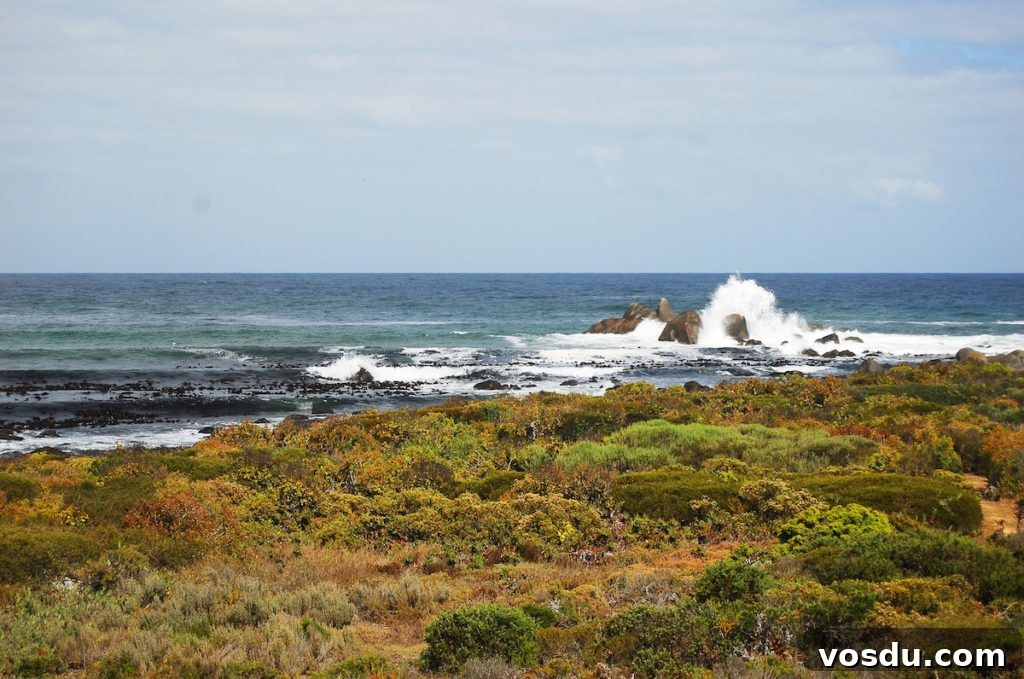
We spent time on one of the reserve’s beaches and, once again, I was struck by how stunning South African beaches are. Whether it’s the secluded boulder-lined coves of Llandudno, Camps Bay with the Twelve Apostles in the background, or the foamy turquoise water at this reserve, the coastline is consistently breathtaking. As much as I love Oregon, South Africa’s beaches have a distinct and dramatic beauty.
Before driving back to Cape Town we stopped at Blikkie Pizzeria, set inside an old tin fishing shed. Their wood-fired oven makes superb pizzas, and we ate outdoors, enjoying sunshine and a perfect beach view.
Overall, it was a wonderful trip and a reminder of how amazing this country is. With three weeks left before we leave, the realization is hitting me hard: I’m excited and anxious to see my family, but also heartbroken to be leaving a place that has become so dear. South Africa’s landscapes, wildlife, culture, history, and people create a unique, vibrant experience that’s hard to describe. Cape Town has claimed a big part of my heart, and thinking about the distance from Portland makes me wistful.
Sorry in advance to anyone who reads my posts over the next few weeks—expect a lot of long, enthusiastic rants about how much I love South Africa!