This post may contain affiliate links. Please read my full disclosure policy.
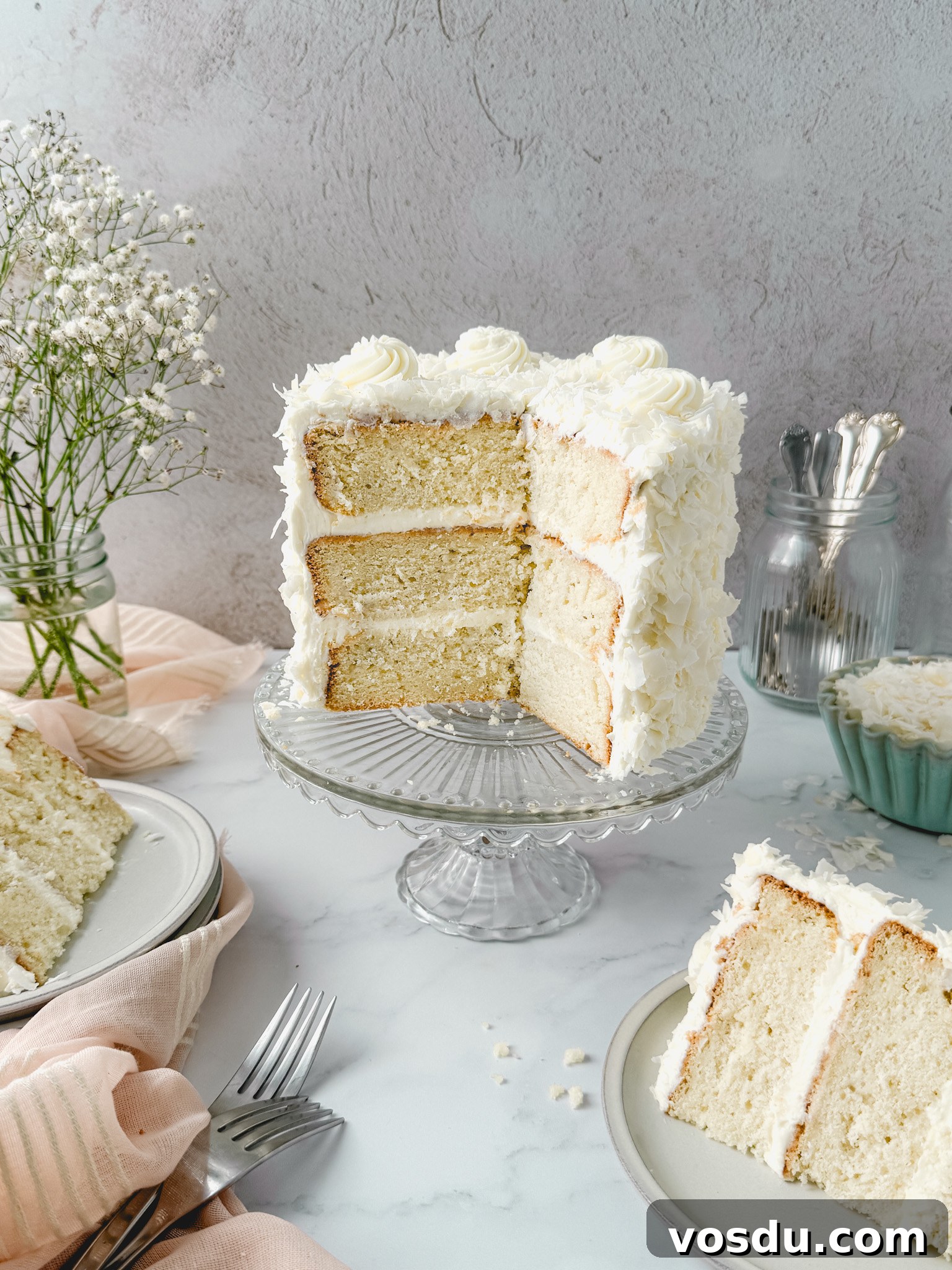
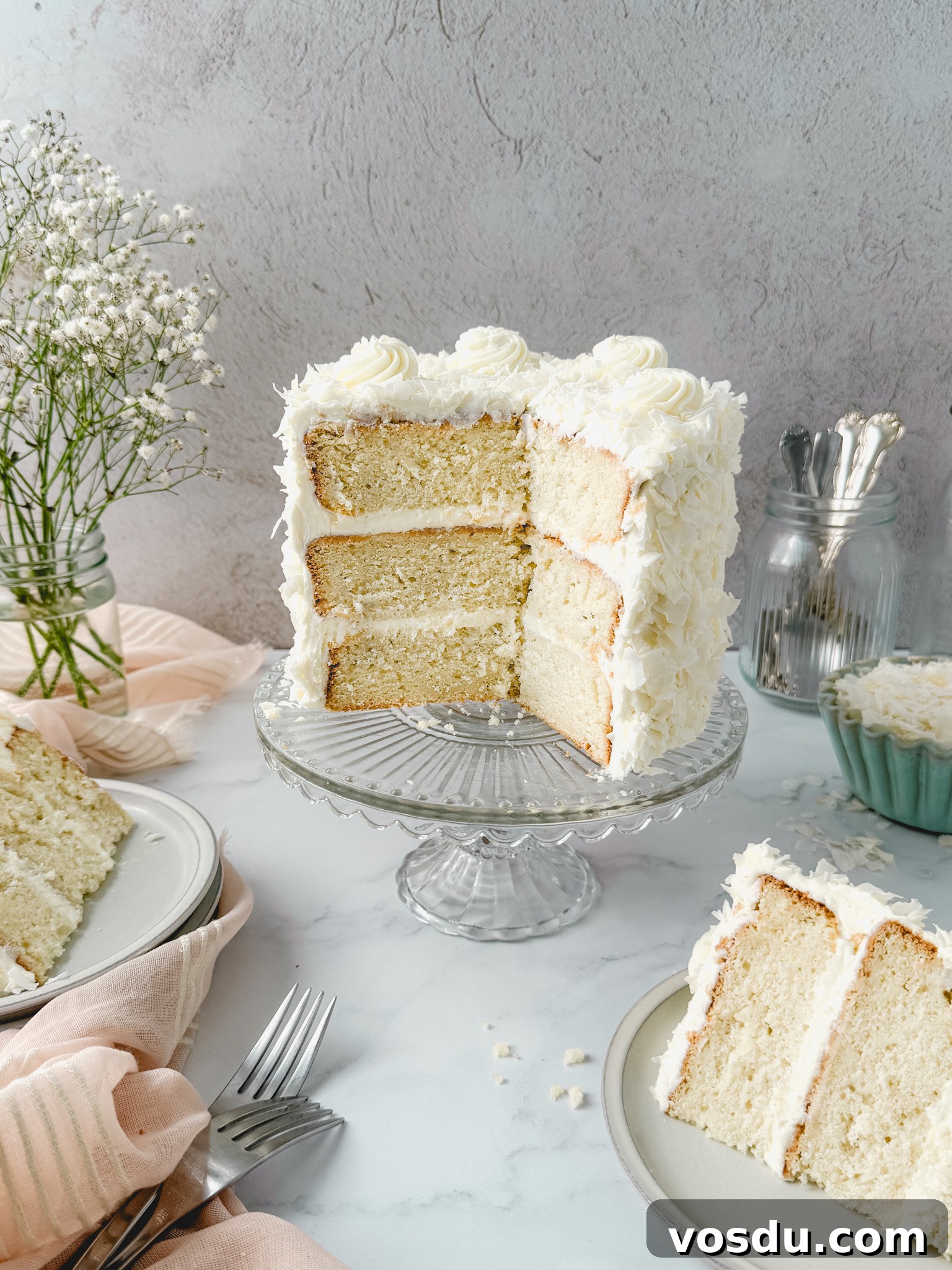
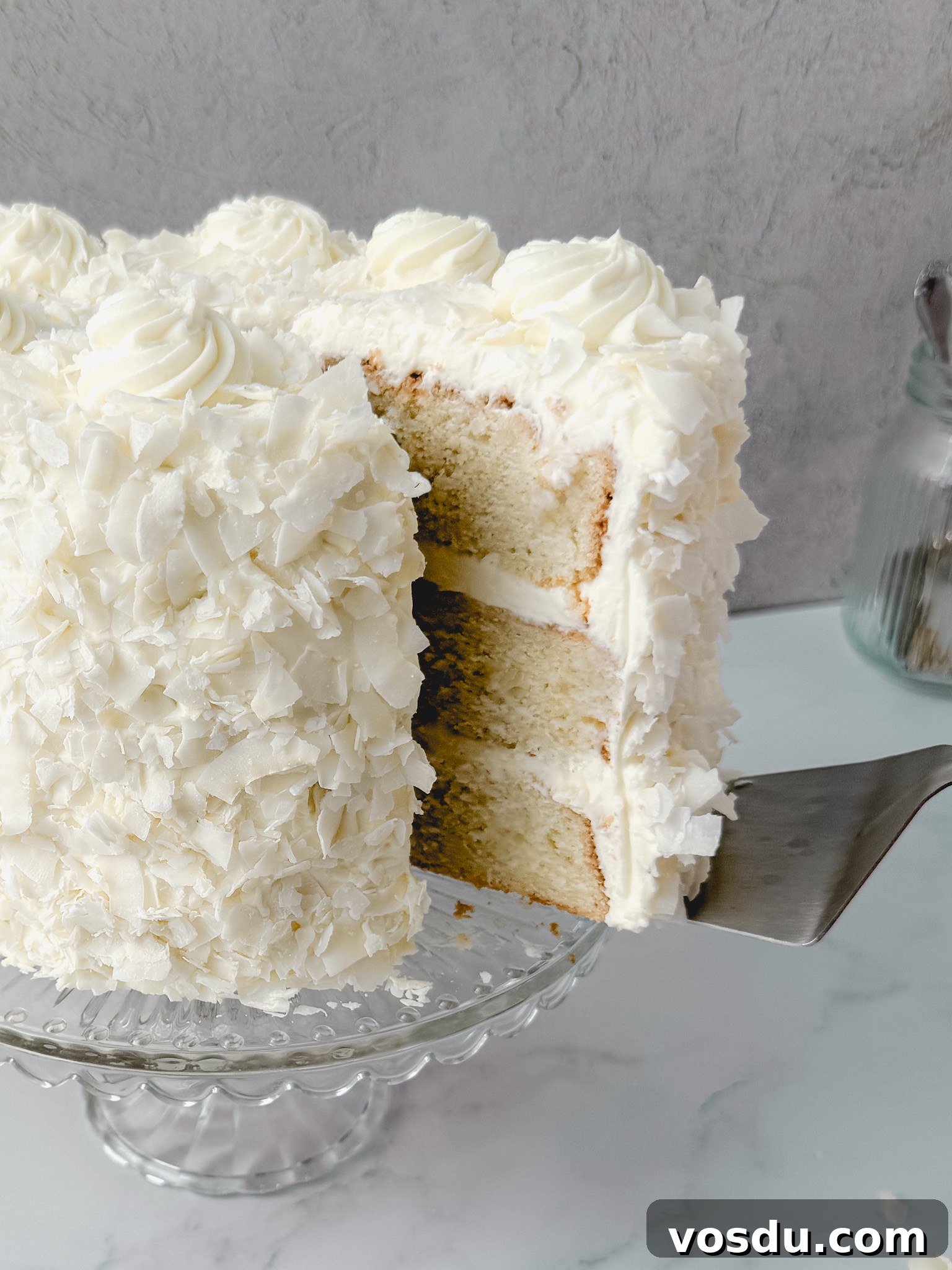
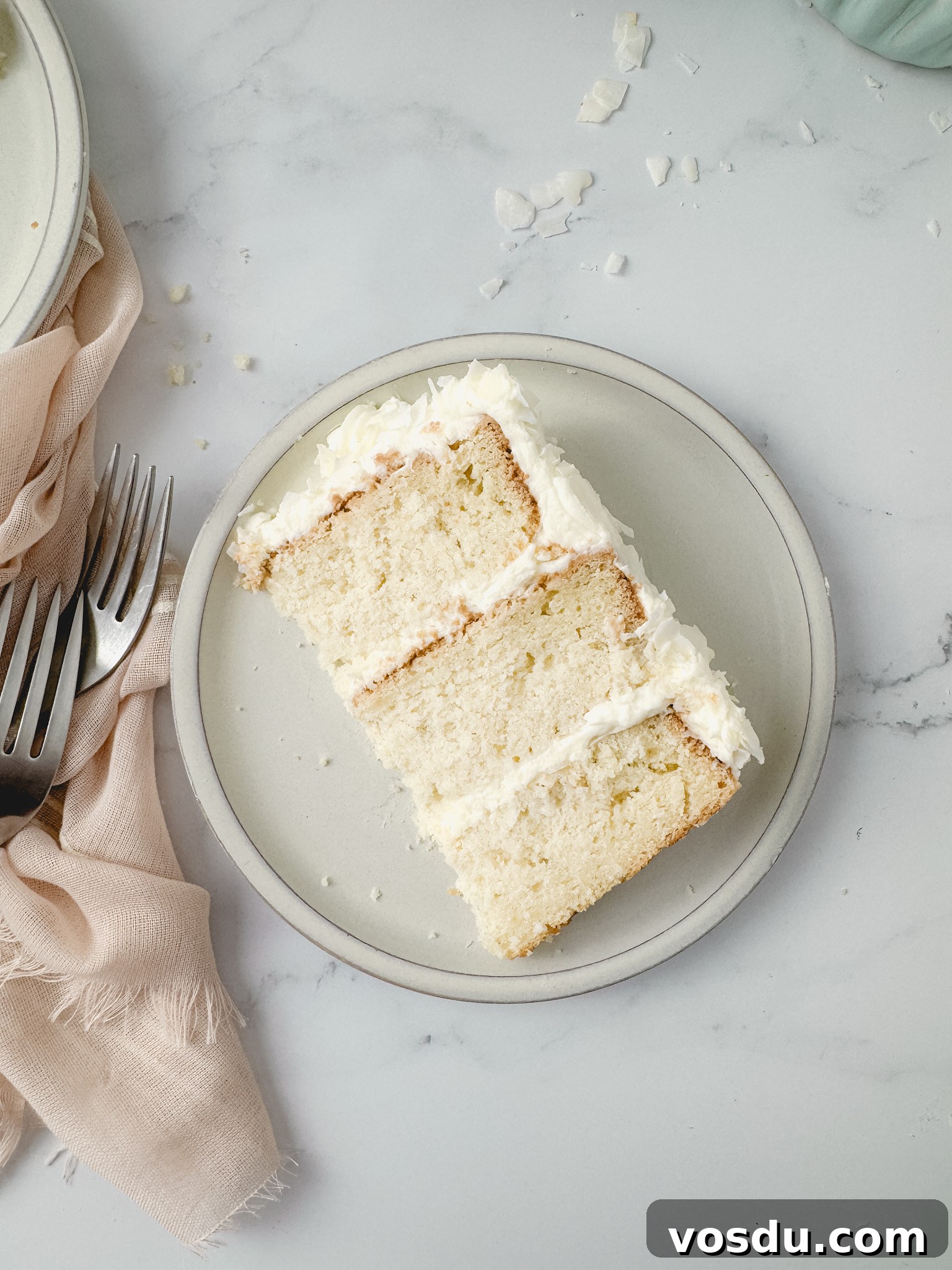
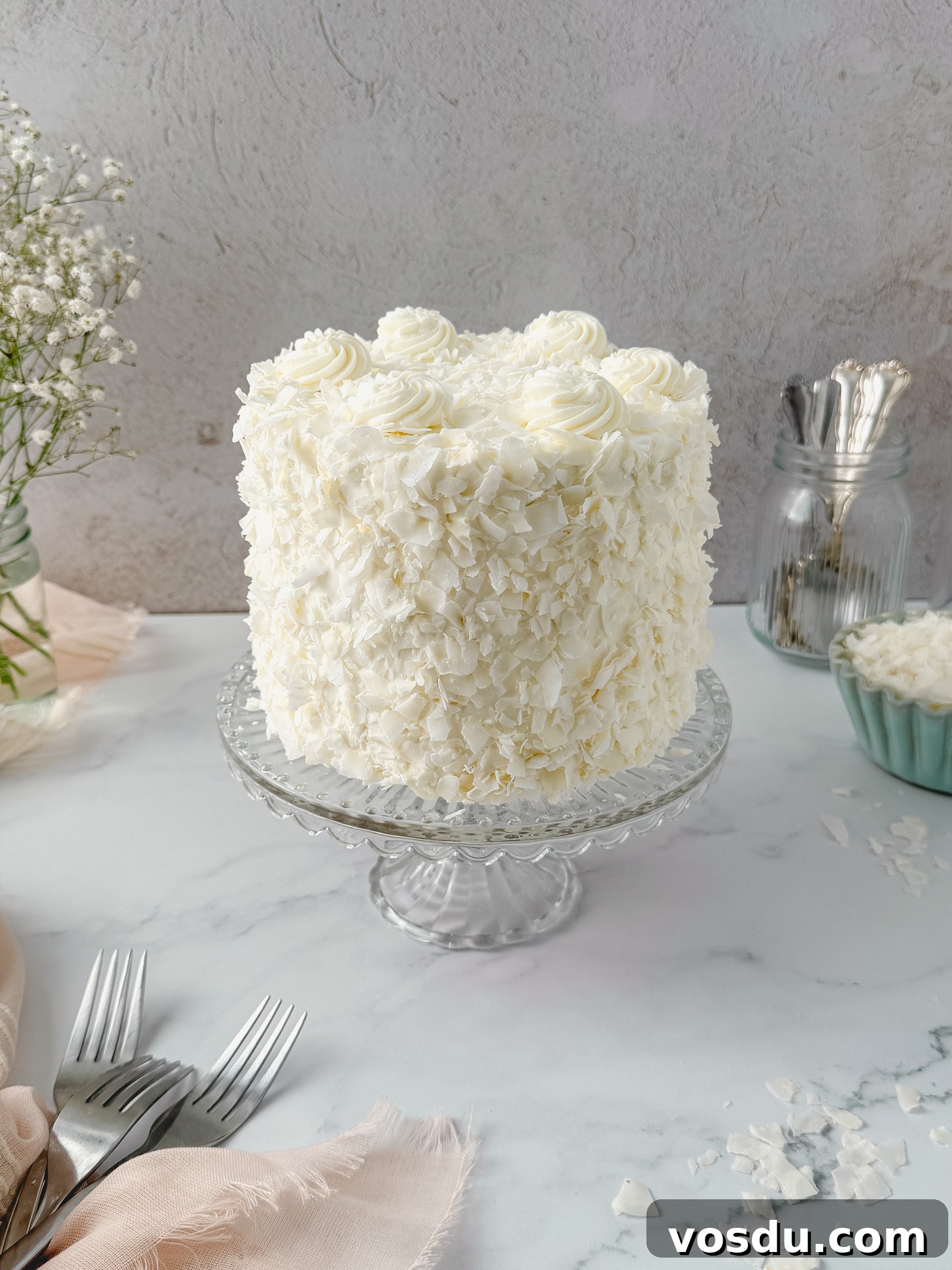
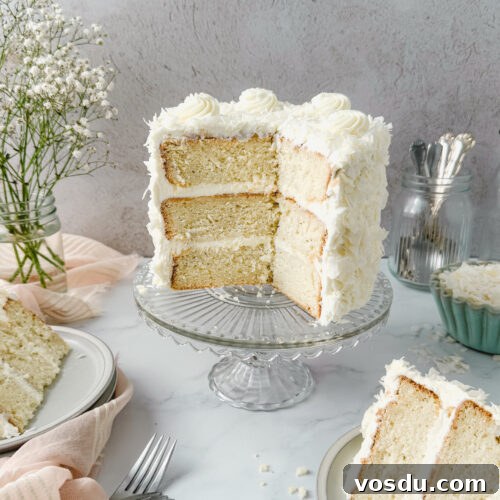
Nothing says spring like a fluffy white coconut layer cake. Three tender coconut cake layers are stacked with a light almond chantilly frosting and finished with generous unsweetened coconut flakes. It’s elegant, delicate, and perfect for Easter or any spring celebration.
For more on making Chantilly frosting, see the Chantilly Frosting post for tips and troubleshooting.
Ingredients for the Coconut Flavor
This cake layers coconut milk and extract into the batter and uses large coconut flakes on the outside for a balanced coconut presence that never overwhelms.
Canned coconut milk (unsweetened) – Use full‑fat canned coconut milk intended for cooking. If it has separated, warm gently and whisk until smooth so there are no lumps.
Large coconut flakes – Also called coconut chips. These create a dramatic exterior. You can substitute coconut shreds, or lightly toast the flakes for a nuttier flavor.
Coconut extract – A small amount in the batter enhances the coconut note without making the cake overly sweet. Omit if you prefer a subtler taste.
Prepping the Cake Pans
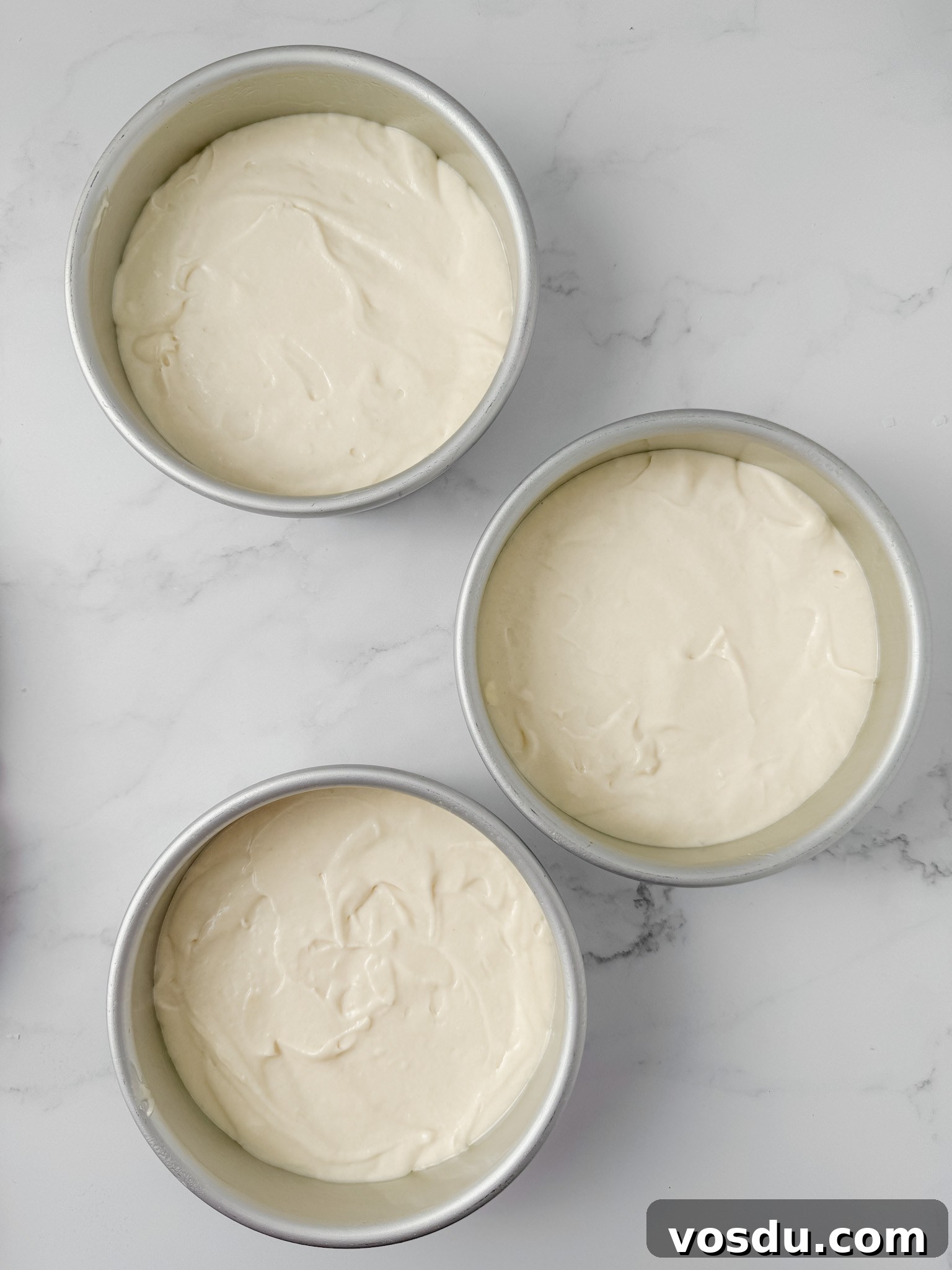
Grease the pans with nonstick spray, then wipe out any excess so the coating is even. Trace the pan onto parchment and cut circles to line the bottoms of each pan—this ensures the cakes release cleanly after baking.
Tips for the Best Coconut Layer Cake
- Use room-temperature ingredients. Bring butter, eggs, and sour cream to room temperature before mixing. This helps produce a smooth, even batter.
- Don’t overmix. Overmixing develops gluten and can make the cake dense. Mix just until ingredients are combined for light, tender layers.
- Weigh your batter. For even layers, weigh the finished batter and divide by three, filling each pan with that amount. A kitchen scale yields consistent results every time.
Coconut Cake FAQs
How should the cake be stored?
Store slices in an airtight container in the refrigerator up to five days. To store a whole cake, wrap it tightly in plastic wrap to prevent drying. Remove from the fridge at least 30 minutes before serving so it can come to room temperature.
Can I add more coconut flavor?
Swap the almond extract in the frosting for coconut extract or toast the coconut flakes before applying them to the cake for a deeper, toasty coconut taste.
What kind of coconut should I use?
Large unsweetened flakes give the best presentation and texture, but shredded unsweetened coconut will also work. If you use sweetened coconut, be aware it will add more sweetness and a chewier texture.
Can I make this into an 8” cake?
This recipe is written for three 6” layers. You can bake two 8” or 9” layers instead, but you will need to adjust the baking time—check for doneness with a toothpick or by pressing the center to see if it springs back.
How do I get coconut to stick to the sides?
After frosting, press handfuls of coconut flakes gently into the sides, working around the cake. Place the cake on a baking sheet to catch excess flakes you can reuse. This works best immediately after frosting while the surface is still tacky.
Baking Tip: Weigh Your Ingredients!
Using a kitchen scale for dry and wet ingredients is the most accurate way to bake. Weighing gives consistent results and reduces dishes. Gram measurements are provided in the recipe for convenience.
More Spring Sweets You’ll Love
- Berry Chantilly Cupcakes
- Carrot Snack Cake with Brown Butter Cream Cheese Frosting
- Lemon Mascarpone Tart
- Mini Oreo Cheesecakes
- Lemon Brulee Bars
If you try this recipe and enjoy it, please leave a comment. Happy baking!
Coconut Layer Cake
Ingredients
For the Vanilla Cake
- ¾ cup (170g) unsalted butter, room temperature
- 1¼ cup (250g) granulated sugar
- 1 large egg + 1 large egg white, room temperature
- 2 teaspoons coconut extract
- 1 teaspoon vanilla extract
- 2¼ cups (280g) cake flour
- 1½ teaspoons baking powder
- ½ teaspoon baking soda
- ½ teaspoon salt
- ½ cup (120g) sour cream, room temperature
- 1 cup (240g) canned unsweetened coconut milk
For the Chantilly Frosting
- 8 oz (226g) cream cheese
- 8 oz (226g) mascarpone cheese
- 1 teaspoon almond extract
- ½ teaspoon vanilla extract
- 2 cups (480ml) heavy cream
- 1½ cups (180g) powdered sugar, sifted
For Decorating
- Unsweetened coconut flakes
Instructions
- Coconut Cake: Preheat the oven to 350°F. Lightly grease three 6″ round pans and line the bottoms with parchment circles.
- Cream the butter and sugar in a stand mixer with the paddle until light and fluffy, about 3 minutes. Scrape the bowl.
- Add the eggs, coconut extract, and vanilla one at a time, mixing well after each addition. Scrape the bowl.
- Sift together cake flour, baking powder, baking soda, and salt. Add half the flour mixture and the sour cream to the mixer, then slowly stream in about half the coconut milk while mixing on low. Mix just until combined and scrape the bowl. Add the remaining flour and slowly stream in the remaining coconut milk, mixing on low until combined. Finish with a few gentle folds by hand.
- Divide the batter evenly among the prepared pans (use a scale for accuracy). Bake 30–32 minutes or until the centers spring back or a toothpick comes out clean. Cool completely.
- Chantilly Frosting: In a clean bowl with a whisk attachment, beat cream cheese and mascarpone until smooth. Add almond and vanilla extracts and powdered sugar; mix until combined. With the mixer at medium speed, slowly stream in heavy cream and mix until slightly thickened. Increase to high and whip until stiff peaks form. Do not overmix.
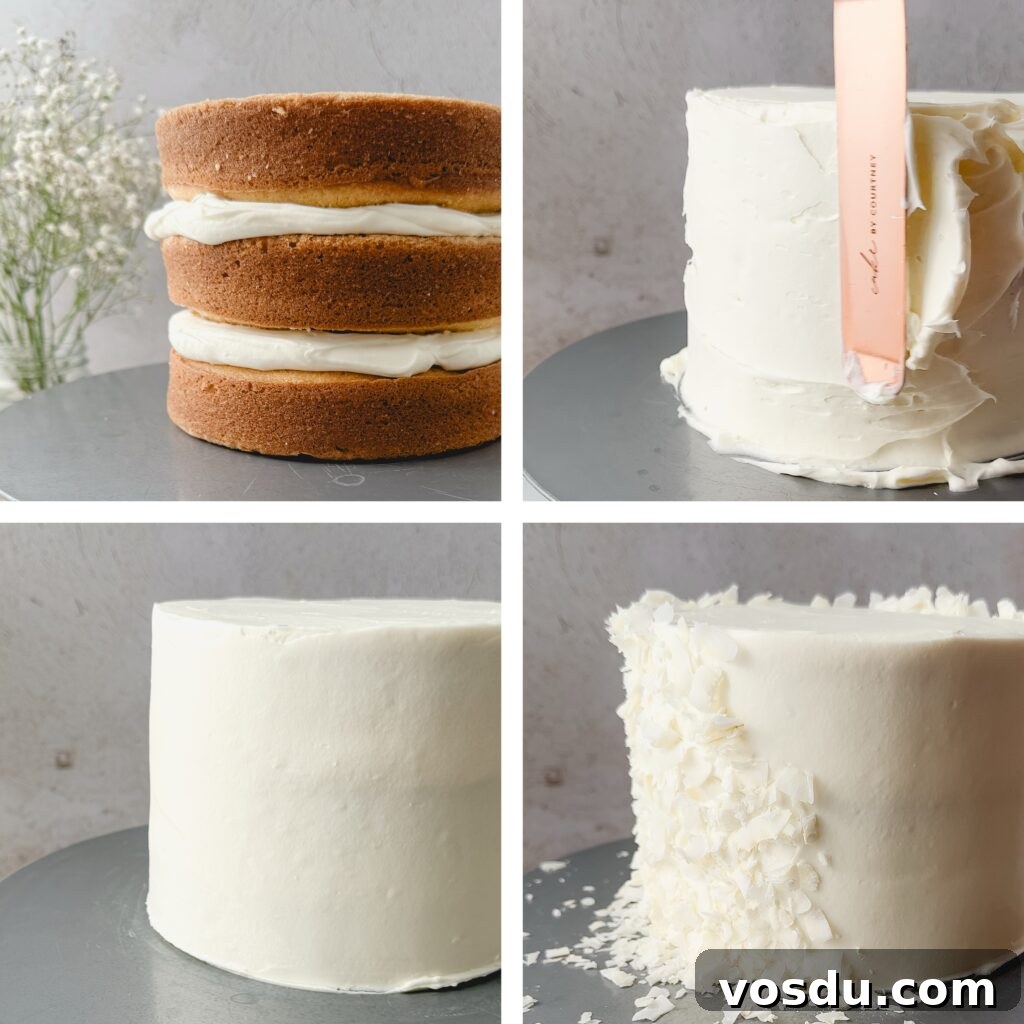
- Assemble: Level the cooled cake layers. Place the first layer cut side up, spread about ½ cup frosting to the edges, then add the next layer cut side down. Repeat for all layers.
- Cover the top and sides with an even layer of chantilly frosting. Use an offset spatula and icing comb to smooth. Press coconut flakes into the sides and top, piping rosettes with remaining frosting if desired. Slice and serve.
Notes
Use full‑fat canned coconut milk for the best texture. If separated, warm gently and whisk until smooth before using.