
Digestive symptoms can seem unpredictable because digestion is influenced by much more than just the food you eat. Your nervous system, immune system, hormones, and overall stress state all shape how your gut functions.
That’s why two people can eat the same meal and have very different reactions. It’s also why an elimination diet can feel “perfect” and still leave you unwell: digestion is a living system that responds to both internal and external factors.

In this article I’ll explain digestion in straightforward terms and show how everything connects using a simple three-layer framework: Body, Mind, Energy. These ideas come from clinical patterns and personal experience and are meant to inform and guide, not replace individualized medical advice.
Digestion has five core jobs
Think of the digestive system as a processing line with five essential tasks:
- Break food down into absorbable parts
- Absorb nutrients into the bloodstream
- Protect you — let nutrients through while keeping threats out
- Move contents along at the right pace
- Eliminate waste comfortably and consistently
When you feel “off,” usually one or more of these jobs is overloaded or out of sync.
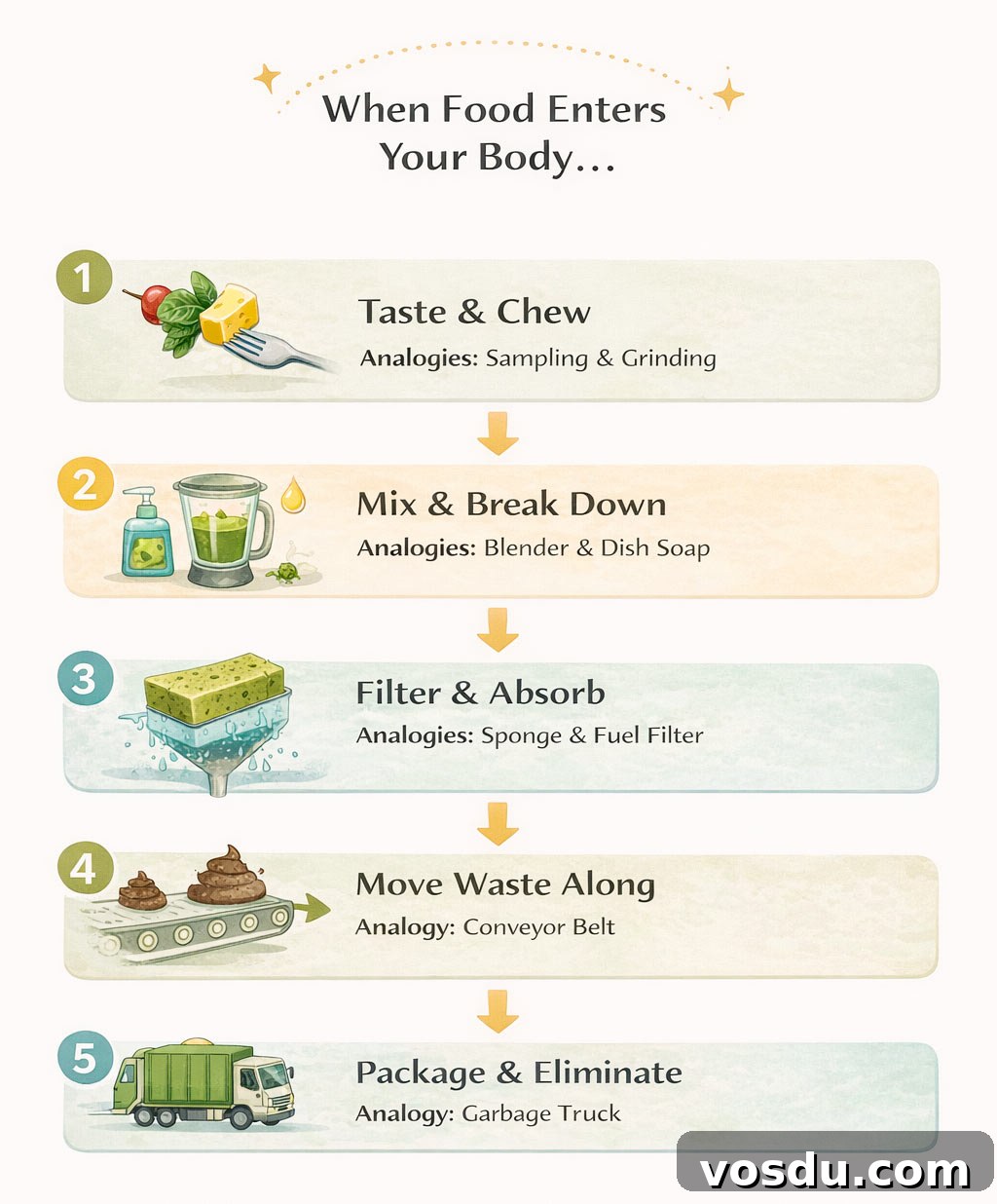
A quick tour of digestion
Mouth: the prep kitchen
Digestion begins before you swallow. Chewing breaks food into smaller pieces and mixes it with saliva, which contains enzymes that start carbohydrate breakdown. Smell and taste trigger signals that prepare the stomach and intestines to receive food.
Esophagus: the conveyor belt
The esophagus moves food to the stomach through coordinated muscle waves. It should not burn or feel obstructed. Disruption here can cause reflux, a lump-in-the-throat sensation, or regurgitation, often worsened by fast eating or lying down after meals.
Stomach: the acid blender
The stomach churns food and mixes it with acid and enzymes. This begins protein digestion, frees minerals, and acts as a microbial filter. It also releases food into the small intestine at a controlled rate—too fast or slow can cause symptoms.
- Low stomach acid or weak churning can cause heaviness, nausea, or later gas.
- Poor timing of gastric emptying can lead to reflux, bloating, or early fullness.
- Irritated stomach lining can make the upper gut sensitive even to small meals.
Small intestine: the nutrient extraction zone
This is where most nutrients are absorbed. It relies on pancreatic enzymes to break macronutrients and bile from the liver and gallbladder to emulsify fats. The lining is covered in villi and microvilli—tiny folds that maximize absorption.
Gut lining: the security gate
The gut barrier includes a mucus layer, tight junctions between cells, nearby immune cells, and beneficial microbes. When that barrier is inflamed or leaky, bacteria, toxins, and undigested particles can reach the bloodstream, provoking immune reactions, increased sensitivities, and lingering inflammation.
Large intestine (colon): microbial composting and water recycling
- Reabsorbs water and electrolytes.
- Gut microbes ferment leftover fibers to produce short-chain fatty acids that support colon health.
- Forms and stores stool for elimination.
If motility is too slow, stool sits longer and can cause constipation and bloating. If motility is too fast, stools are looser and nutrients have less time to be absorbed. Microbial imbalance can lead to excess gas, discomfort, and irregular stool patterns.
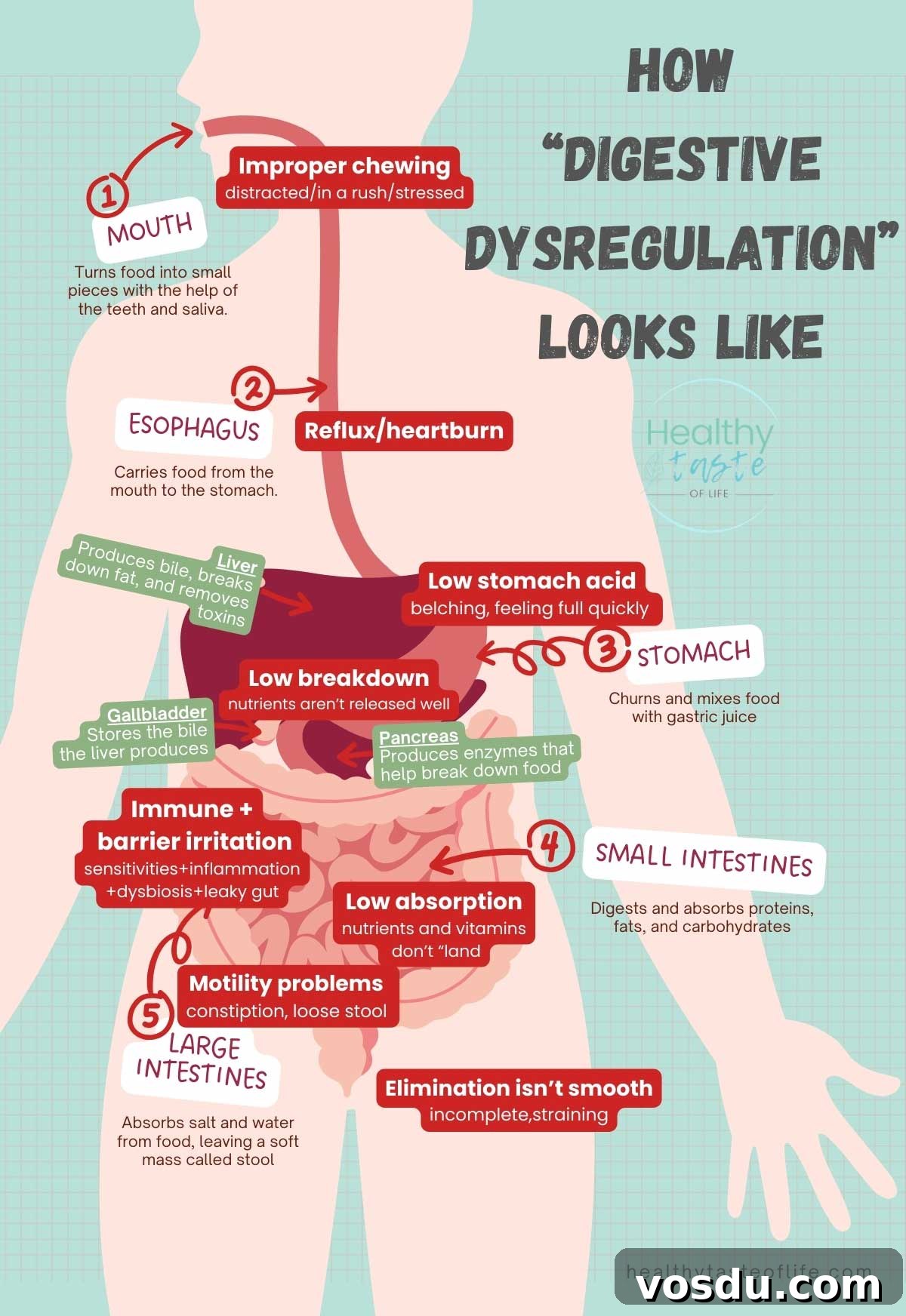
What digestive dysregulation usually looks like
Dysregulation typically maps to one or more of the five jobs above. Common patterns include:
1) Low breakdown
Symptoms: post-meal heaviness, reflux, burping, nausea, early fullness, or greasy stools. Causes include eating too fast, stress while eating, low stomach acid, low pancreatic enzymes, low bile flow, irregular eating rhythms, highly processed diets, or certain medications.
2) Low absorption
You can eat well and still feel depleted if nutrients aren’t absorbed. Signs include low energy, brain fog, muscle cramps, nutrient deficiencies, loose stools, greasy or bulky stools, hair shedding, brittle nails, or trouble maintaining weight. Causes include inflammation, rapid transit, or damage to the lining.
3) A jumpy security gate (immune/barrier irritation)
This shows up as growing food sensitivities, inconsistent reactions, lingering inflammatory symptoms, bloating that feels like irritation, or systemic spillover such as fatigue, skin rashes, joint aches, and brain fog. Drivers include infections, chronic stress, immune conditions, medications, dysbiosis, nutrient depletion, or genetic susceptibility.
4) Motility problems
Too fast motility causes urgency, diarrhea, and cramping; common triggers are acute stress, infections, inflammation, stimulants, and certain foods. Too slow motility causes constipation and bloating and can result from pelvic floor dysfunction, low thyroid function, hormonal states, dehydration, low activity, or some medications.
5) Elimination isn’t smooth
Smooth elimination is regular, without straining, and leaves you feeling complete. Problems arise from low hydration, slow transit, pelvic floor mechanics, or poor timing signals. Patterns can be hard, pellet-like stools, soft stools that are difficult to evacuate, or fluctuating constipation with bloating.
The part most people miss: digestion is more than the body
Use a three-layer lens: Body (hardware), Mind (nervous system), and Energy (overall felt state). They interact constantly, so symptoms usually result from overlapping drivers rather than a single cause.
Body
Includes stomach acid, enzymes, bile, the absorption surface, microbiome, motility, and elimination. When body systems are stressed, classic gut symptoms appear.
Mind
The gut–brain axis controls digestion. When the nervous system is in fight-or-flight, digestion downshifts. Mind factors include stress response, pain sensitivity, rumination, and emotional patterns around food.
Energy
This is your underlying felt sense—safe and soft versus braced and guarded. When energy is tense, the gut becomes more reactive even if life appears normal externally.
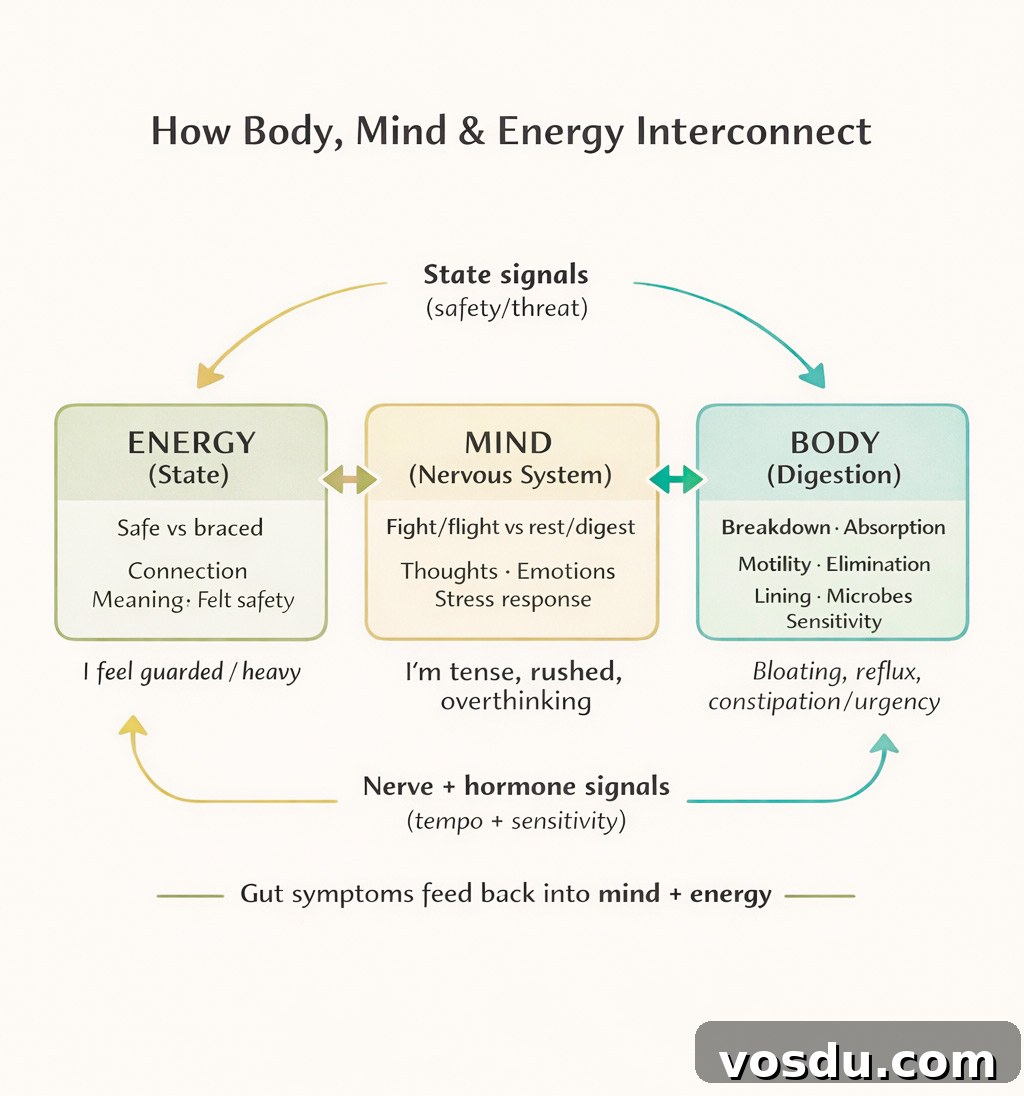
Create the conditions for repair
Healing requires the body to feel safe enough to enter rest-and-digest (parasympathetic) mode. Regulation practices—what I call software support—help shift the nervous system so the digestive hardware can recover. This doesn’t mean symptoms are “just in your head.” The nervous system directly controls saliva, acid, enzymes, motility, and inflammation.
Simple regulation practices
- Pause 60–90 seconds before meals: slow exhales, soften shoulders, relax the jaw.
- Eat slower and chew more. Aim for less rushed meals.
- Create a meal rhythm: fewer snacks, consistent meal times, earlier dinners if possible.
- Gentle post-meal movement: a short 5–10 minute walk supports motility.
- Prioritize light and sleep: regular bedtime, morning daylight exposure.
- Use state-shifters during the day: music, nature, breathwork, humming, or gentle movement.
- Express emotions: journaling, talking, or gentle physical release like stretching.
- Simplify meals and reduce food-related anxiety.
Pick one or two practices and repeat them daily—consistency trains the nervous system faster than sporadic effort.
Where to start
Focus on the loudest driver. If symptoms are predictable after specific foods, start with dietary simplification. If stress and poor sleep dominate, begin with regulation around meals and sleep. If hormones or metabolism are most obvious, create steady rhythms of meals, morning light, and consistent sleep. If inflammation or immune issues are likely, seek medical evaluation while supporting sleep, nourishment, and stress reduction.
Small, consistent changes create the conditions for digestion to normalize—then you can address hardware issues like deficiencies, infections, or other diagnoses with clearer results.
If you found this useful, feel free to comment. New here? Start with a basic “getting started” guide and build from there.
Explore More
©HealthyTasteOfLife. Content and photographs are copyright protected and require permission to reuse. Sharing the link to this article is encouraged and appreciated.