This website uses affiliate links that may earn commission from purchases. This is at no additional cost to you.
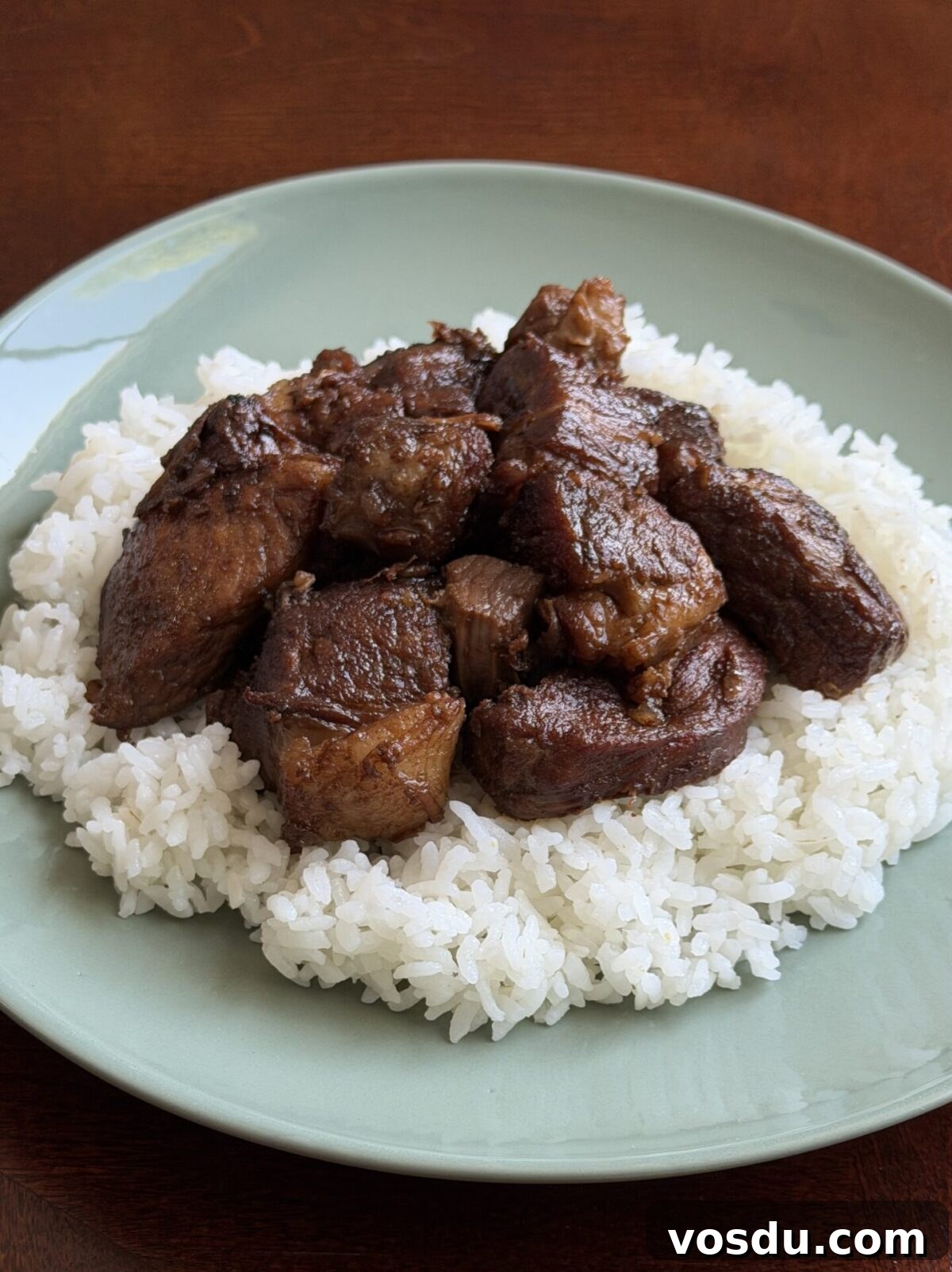
There are countless ways to make adobo, but this Filipino pork adobo is the version I’ve grown up eating. I learned it from my dad, who taught me the simple techniques that make this dish comforting and reliable.
↓ Jump to Recipe ↓
When I left home for college I briefly tired of this easy-to-make staple, but not long after I began craving that tangy soy-and-vinegar stew. The first few times I attempted it, I called my dad for advice — his tip was to add more vinegar if the flavor felt flat, not more soy sauce. Over the years I’ve only refined measurements and technique; the result is not a universal “best,” but it is my favorite.
Adobo Variations
Adobo is often called the national dish of the Philippines, but its preparation varies widely by household and region. The basic profile is soy sauce and vinegar, but many regional versions add unique ingredients that change the character of the dish.
For example, adobo sa gata from the Bicol region uses coconut milk and chiles for a richer, creamier result. Other variations include different vinegars, added aromatics, or even coconut-based and smoky versions.
What Ingredients Do You Need for Pork Adobo
This pork adobo keeps the ingredient list short and focused:
- pork shoulder or pork belly
- soy sauce
- vinegar (fruit vinegars are preferred)
- whole black peppercorns
- garlic
- bay leaves
Serve with steamed white rice. You can swap the protein — chicken is a common alternative — and many people like to add quail eggs for textural contrast. Some recipes include sugar, onions, or other seasonings; this version favors the clean tang of vinegar and the savory depth of soy sauce.
What Vinegar Should You Use In Pork Adobo
Any vinegar will work, but I recommend a sweeter, fruit-forward vinegar. Apple cider vinegar is my go-to, though specialty vinegars like pineapple vinegar can brighten the dish and add a pleasant sweetness. Vinegar is the dominant flavor here, so choose one you enjoy and adjust the quantity to taste.
What Is the Right Soy Sauce to Vinegar Ratio?
A 1:1 ratio of soy sauce to vinegar is a good starting point. My recipe uses 1/2 cup soy sauce and about 2/3 cup vinegar (1/2 cup plus 2 tablespoons), but personal preference matters — some prefer a more sour adobo, others a more balanced one. Taste and tweak.
What kind of Pork Should I Use?
Pork belly or pork shoulder are both excellent choices. Belly yields more rendered fat and richness, while shoulder gives tenderness and meaty texture. Use leaner cuts if you prefer, but part of adobo’s appeal is the flavor that comes from slow cooking fattier pieces.
How to Make Super Tender Pork Adobo
Adobo benefits from time. Letting it rest overnight in the refrigerator allows the vinegar to tenderize the meat and for flavors to meld. While it’s tempting to dig in right away, the dish almost always tastes better the next day.
What to Do With Leftover Pork Adobo
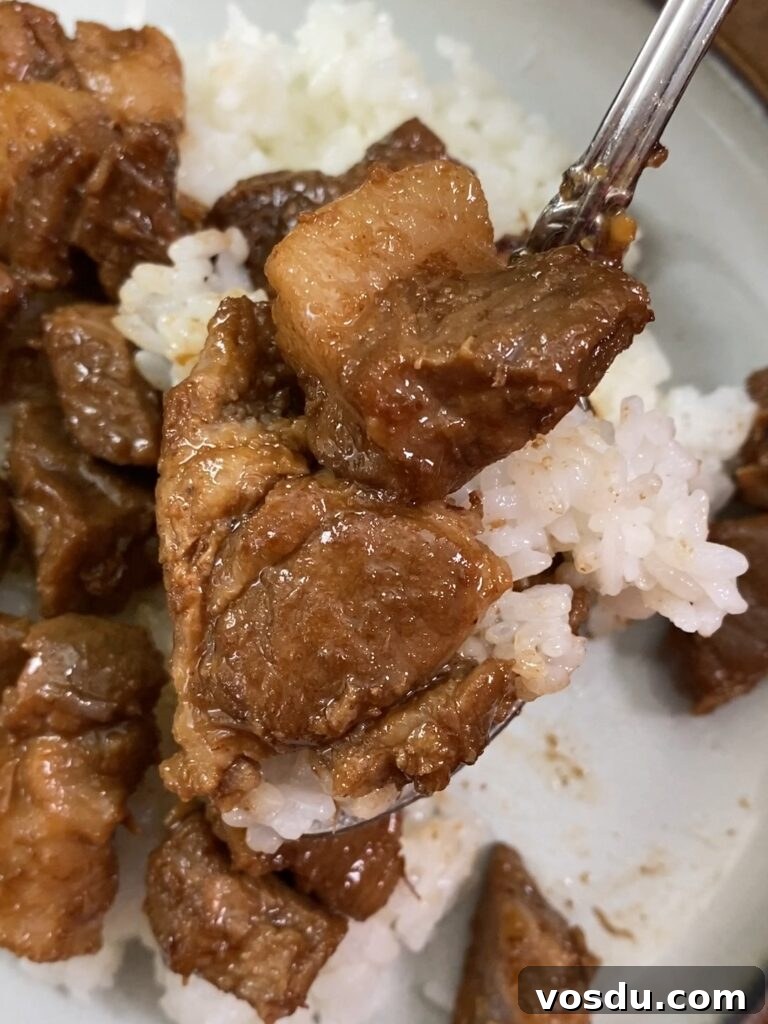
Leftover adobo can be transformed into something even more delicious. After refrigerating overnight, separate the meat from the now-gelled sauce and pan-fry the meat until it develops a crisp crust. Reduce the sauce slightly and pour it back over the fried pork before serving with rice. You can also reheat gently on the stove or in the microwave. Store leftovers in an airtight container in the fridge for up to about three days, or freeze for longer storage.
How to Make Filipino Pork Adobo
The method is simple: brown the pork and garlic, add the vinegar, soy sauce, whole peppercorns, and bay leaves, then simmer until tender. A minimum simmer of one hour is ideal, but longer yields better tenderness and flavor. Serve with rice and vegetables. The full recipe and ingredient list follow below.
Prep your ingredients: cube the pork and smash the garlic.
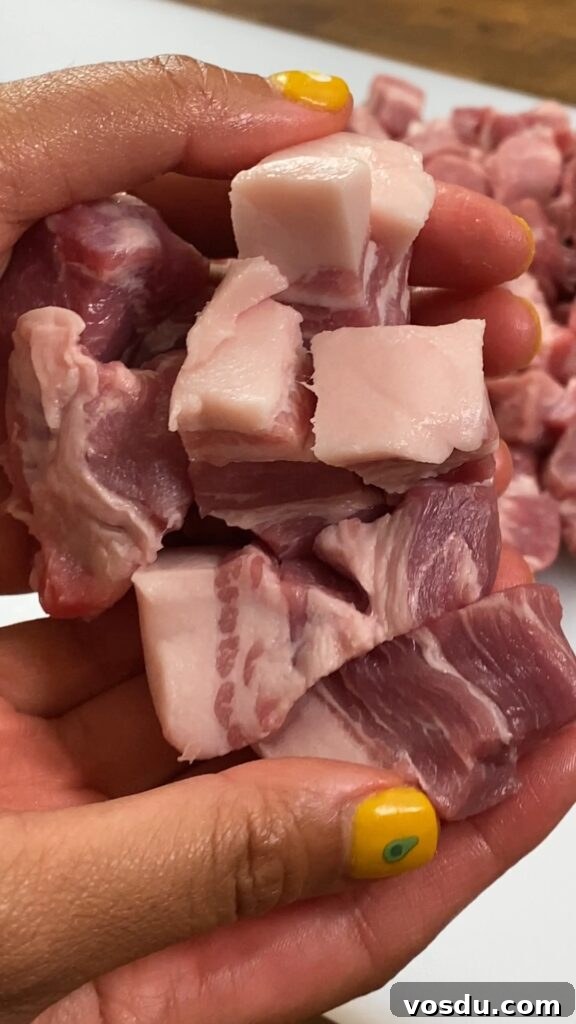
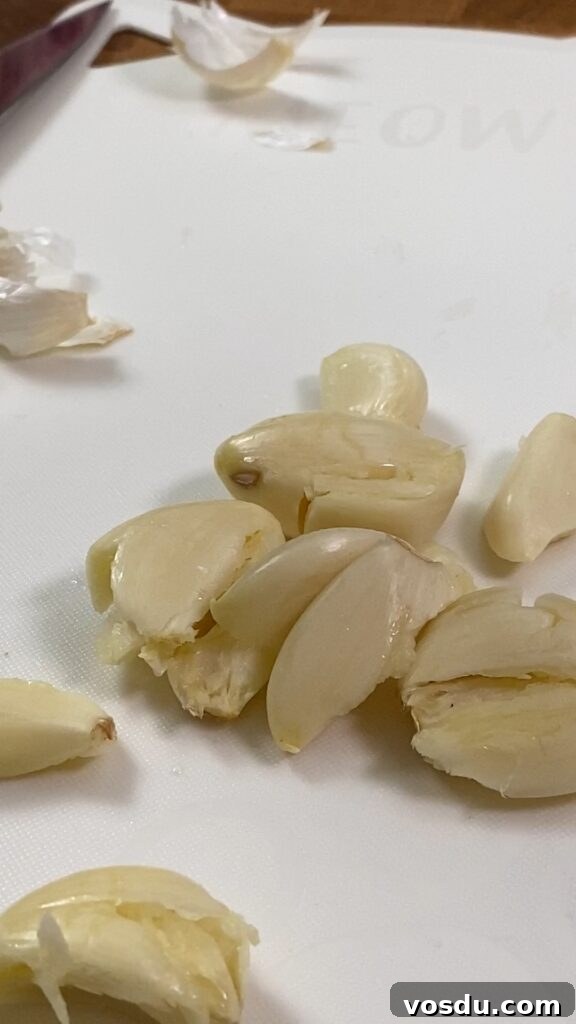
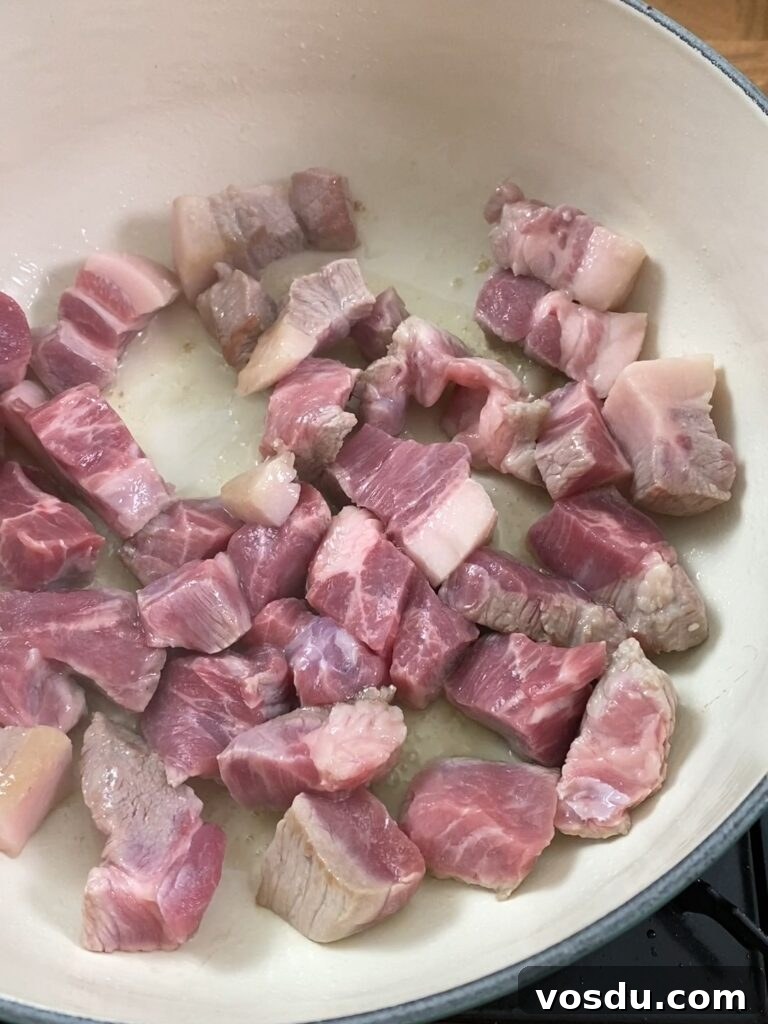
In a large pot, sauté the pork pieces in a little oil until browned and add the crushed garlic. You can sear the meat in batches so pieces brown evenly. Keep any browned bits in the pan—they add flavor to the sauce.
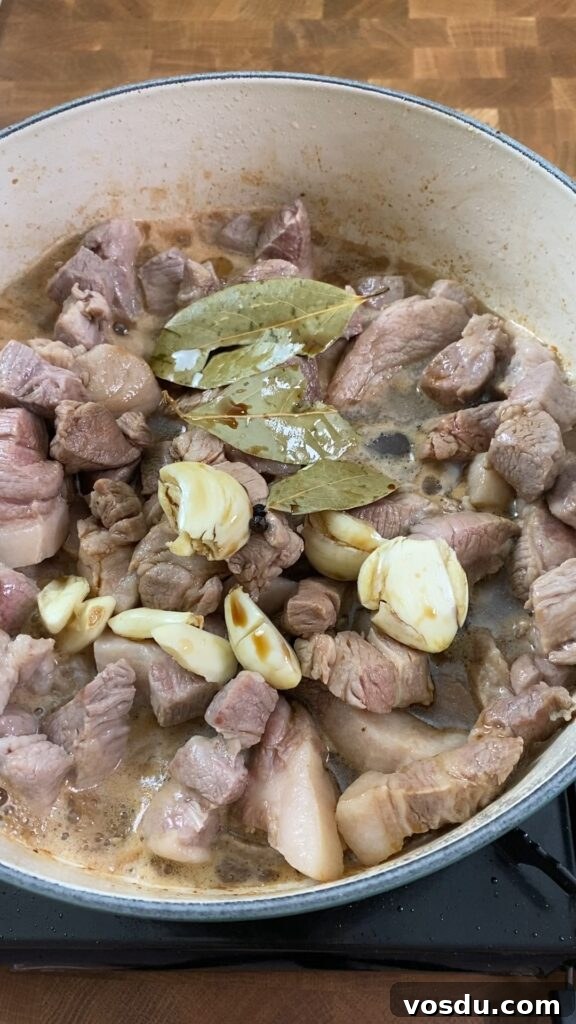
Add the remaining ingredients: whole peppercorns, bay leaves, vinegar, and soy sauce. Bring to a boil, then reduce heat and simmer with the lid on for at least one hour, stirring occasionally. The longer it cooks and rests, the more tender and flavorful the pork will be.
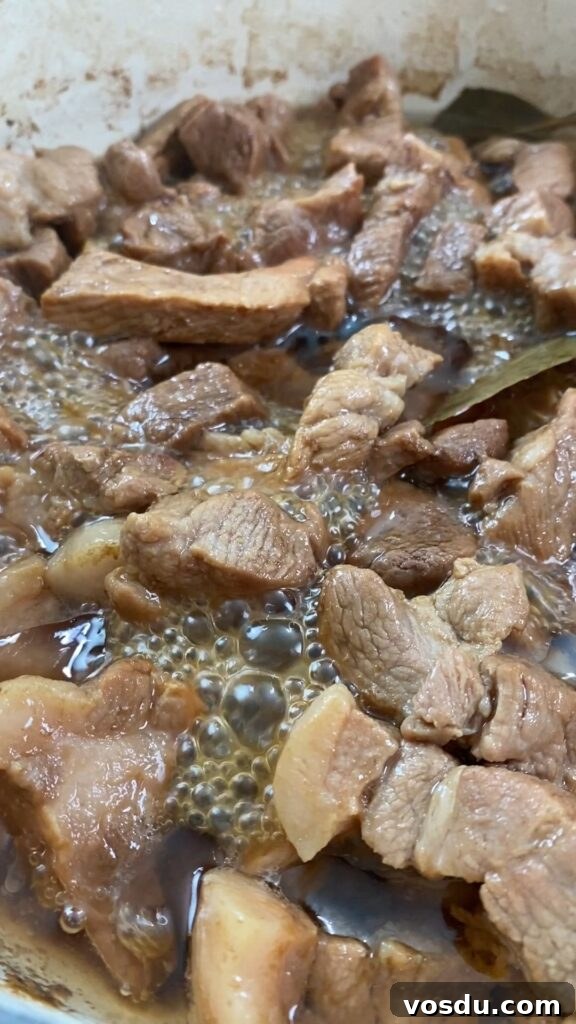
Ideally let the adobo rest overnight so the meat soaks up the sauce and becomes even more tender. If you can’t wait, serve it after the simmer. For a finished texture, pan-fry the chilled meat to crisp the exterior, reduce the sauce slightly, then pour it over the pork and rice.
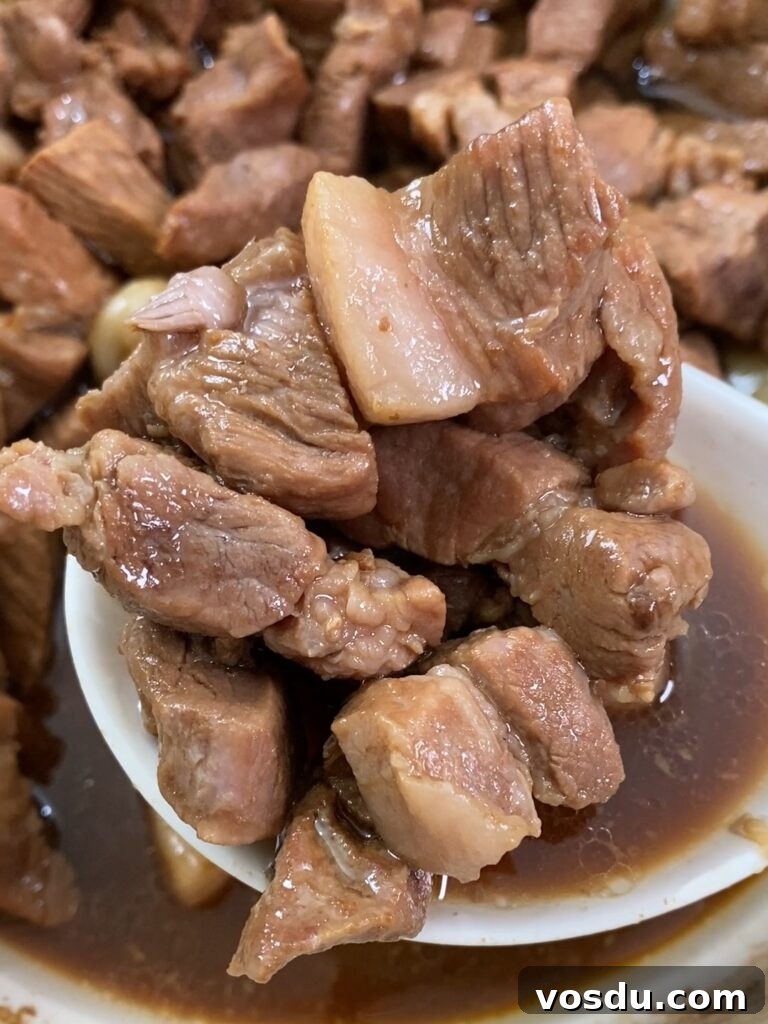
Serve with steamed white rice and enjoy.
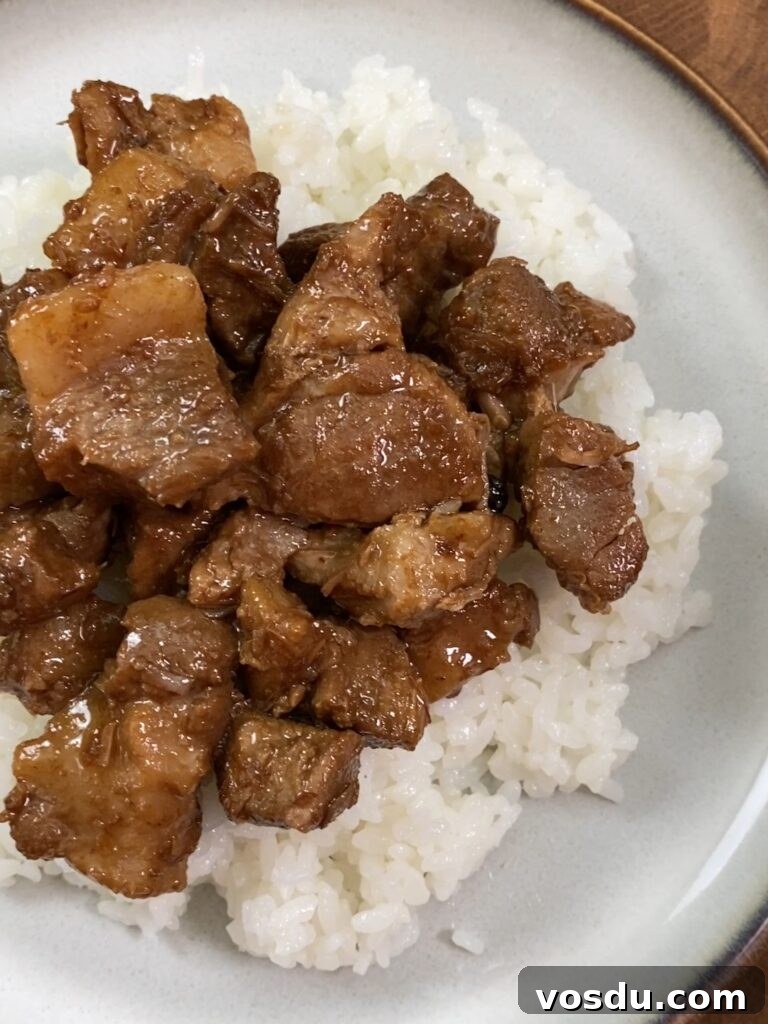
Why Is My Pork Adobo Soupy/Liquidy?
Adobo comes in many textures—some versions are saucy, others reduced and glazed. This recipe leans toward a saucier style because it focuses on the vinegar-soy base without added thickeners or sugars. If you prefer a thicker sauce, simmer longer to reduce the liquid or refrigerate and remove excess fat before gently reheating and reducing the sauce.
Different cooks add ingredients like brown sugar, onions, or herbs, which change the final texture and taste. This recipe keeps things simple to highlight the savory-tangy balance of soy and vinegar.
Recipe
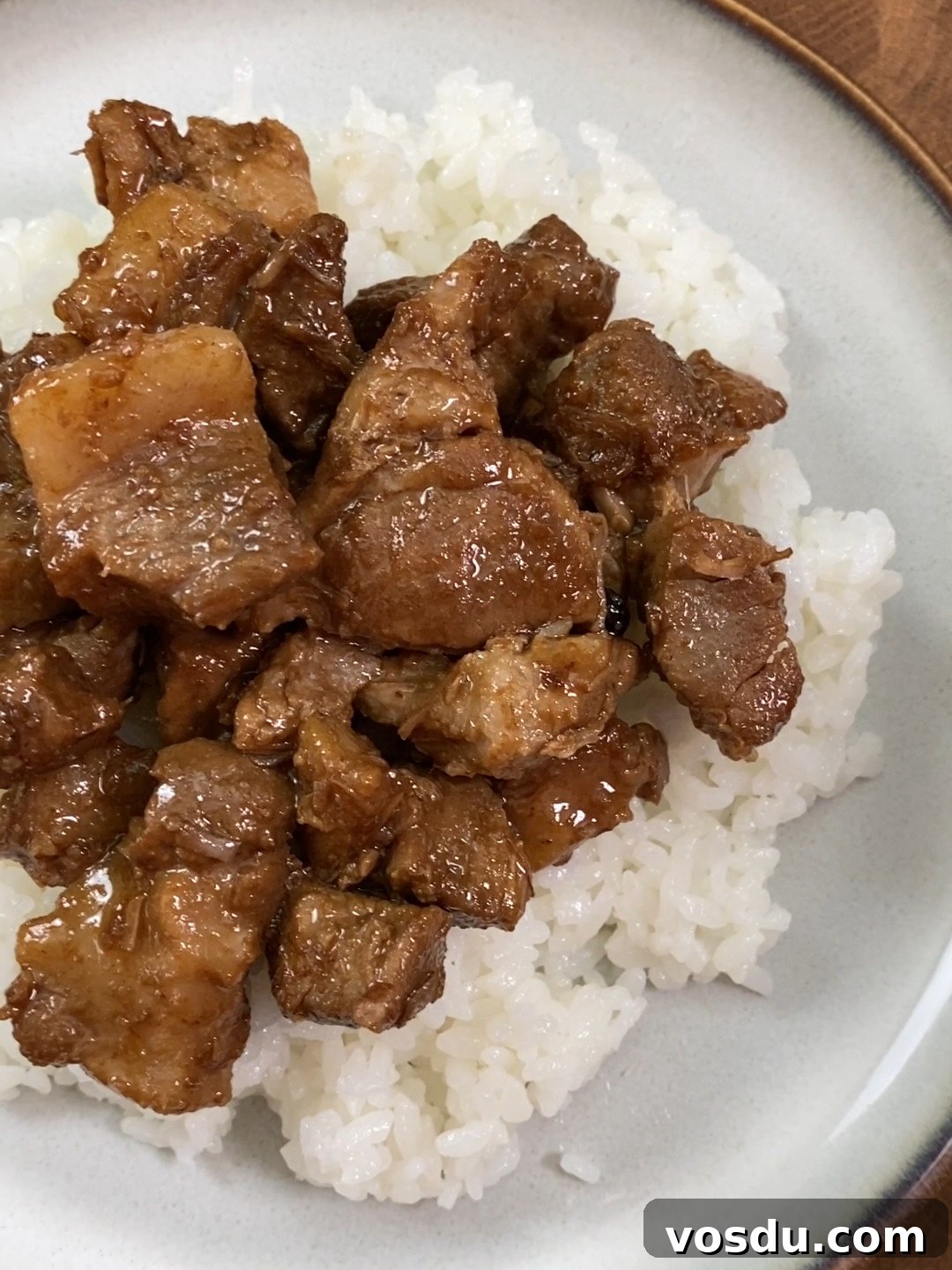
Filipino Pork Adobo
Pin Recipe
Ingredients
- 2 ½ pounds pork shoulder or pork belly
- ½ cup soy sauce adjust to taste
- ¾ cup apple cider vinegar or alternative
- 10 whole peppercorns
- 5 cloves garlic crushed
- 2 bay leaves
- rice to serve
- oil for browning the pork
Method
-
Chop the pork into large cubes. Peel garlic and crush once with the flat side of a knife.
-
In a large oiled and heated saucepan, fry the pork cubes. Do this in batches if needed so the pork browns evenly. Remove any pieces that are fully cooked, but leave the pan uncleaned to keep the browned bits.
-
Add the crushed garlic, peppercorns, bay leaves, apple cider vinegar, and soy sauce. Return any removed pork to the pan. Simmer over low heat for at least 1 hour, stirring occasionally but not constantly.
-
For best results, let the adobo sit overnight so the meat can tenderize and absorb the flavors. If you can’t wait, serve immediately.
-
If refrigerated overnight, separate the meat from the gelatinous sauce and pan-fry the meat over medium heat until it develops a nicely browned crust.
-
Reduce the adobo sauce until slightly thickened, pour it over the fried pork, and serve with rice. Enjoy!
Video
Notes
What vinegar is best for pork adobo?
You can use white distilled vinegar, rice vinegar, or specialty fruit vinegars. Apple cider vinegar works well here, but feel free to experiment. Different vinegars will change the balance, so adjust to taste.
Can I use chicken instead of pork?
Yes. The technique is the same for chicken or other proteins, though cooking times may differ. For a chicken-specific guide, consult a dedicated chicken adobo recipe.
How long does Filipino pork adobo last in the fridge?
Stored in an airtight container, adobo will keep in the refrigerator for a few days; freeze for longer storage.
Is pork adobo better the next day?
Yes. Allowing the dish to rest a day deepens the flavor and improves tenderness.
Other Recipes
There are many Filipino adobo variations worth trying.
- Adobong sa Gata uses coconut milk for a rich, spicy-sweet profile.
- Chicken adobo is a classic alternative with a similar method but different timing.
- Pork adobo musubi offers a portable, Hawaiian-inspired twist on leftovers.
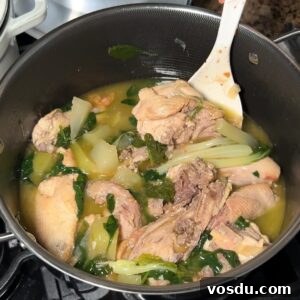
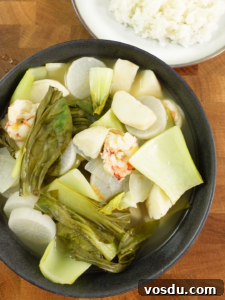
If you want more Filipino recipes, try comforting Chicken Tinola or the sour, vegetable-packed Sinigang for different regional flavors.