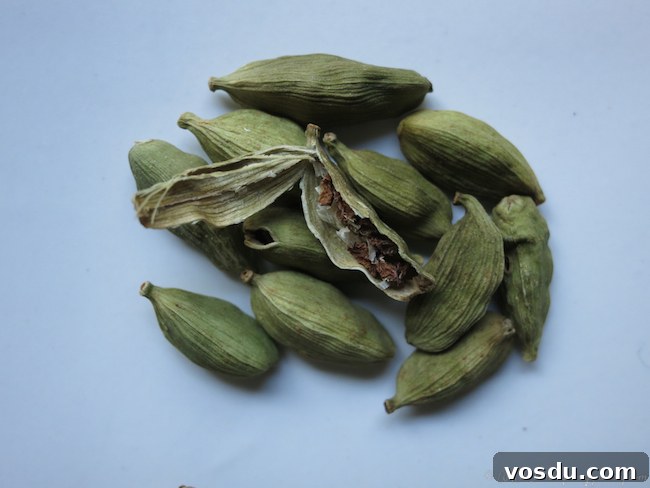
Cardamom Flavor Profile
Cardamom appears in thirteen recipes in Jerusalem: A Cookbook, from salads and main courses to desserts and condiments. This versatile spice adapts to many flavor combinations, enhancing depth and character without dominating when used judiciously.
On the nose, cardamom is floral with hints of nutmeg and ginger. It belongs to the warm-spice family alongside cinnamon and allspice: aromatic, slightly pungent, and potent. A little goes a long way—too much can overwhelm a dish.
Types of Cardamom
At the market you’ll find green pods, ground cardamom, and loose seeds. Green cardamom is widely used in India and Western Asia for sweets, tea, and some savory dishes. In Arab countries it often flavors coffee; in Scandinavia and Germany it appears in baked goods. Many people also chew green pods as a natural breath freshener and digestive aid.
Black cardamom is larger and smokier, with a camphor-like aroma. It suits hearty, savory preparations—stews, roasted vegetables, pickles, and rice pilafs—more than desserts, though chefs sometimes experiment across categories. Both black and green cardamom can be components of garam masala and other blended spices.
Origin of Cardamom
Cardamom is native to southern India and is now cultivated in Sri Lanka and Guatemala. In Guatemala, production has grown to the point that cardamom outpaces coffee as a major export. Pods are picked by hand before full ripeness to preserve their volatile oils, a labor-intensive process that contributes to the spice’s cost. Still, cardamom remains affordable in small amounts and worthwhile for a well-stocked spice cabinet.
March Cardamom Recipes from the Cookbook Include:
Spiced chickpeas and fresh vegetable salad, page 56: Chickpeas are coated in a spice mixture that includes cardamom and dressed with a sherry vinegar vinaigrette. The result is a bright, textured salad that pairs well with grilled or roasted dishes.
Falafel, page 99: Cardamom appears in the spice mix for falafel, adding a warm background note. Variations include adding fava beans for a different texture and flavor profile.
Basmati rice and orzo, page 103: The base recipe is simple, though the headnote mentions a Bukharan pilaf variation rich in spices, including cardamom, for a fragrant, layered rice dish.
Cannellini bean and lamb soup, page 135: Crushed cardamom pods flavor the broth; you can leave the pods in while serving or remove them. They are technically edible but many prefer to fish them out before plating.
Lamb-stuffed quince with pomegranate and cilantro, page 155: Cardamom-scented lamb pairs with tart pomegranate. If quince are unavailable, sturdy pears or apples are suitable substitutes; alternatively, sauté the fruit instead of stuffing for a quicker method.
Ruth’s stuffed Romano peppers, page 165: Ground cardamom is mixed into the stuffing. The recipe also references baharat, a spice blend that may include whole cardamom pods ground with other spices for deeper aroma.
Chicken with caramelized onion and cardamom rice, page 184: This popular recipe prompted discussion about rice-to-liquid ratios, cooking times, and whether to remove whole pods before serving. Overall feedback emphasizes its balanced flavors and repeatability.
Lamb shawarma, page 211: The pods are dry-roasted then ground with other spices to form a rub for the lamb, producing a rich, aromatic crust. This preparation highlights cardamom’s ability to complement savory, slow-cooked meats.
Grilled fish skewers, page 226: Fish is coated in Hawayej, a Yemeni spice blend that can include cardamom, lending a warm, fragrant note to grilled seafood.
Graybeh, page 260: While the basic cookie recipe does not require cardamom, one Yemenite variation does include it. Similar Persian cookies also use cardamom, illustrating the spice’s cross-cultural reach in baked sweets.
Poached pears in white wine and cardamom: A straightforward, elegant dessert that calls for many pods to infuse the poaching liquid with a delicate floral warmth.
Cardamom rice pudding with pistachios and rose water, page 270: This comforting dessert combines three regional ingredients—pistachios, rose water, and cardamom—yielding a creamy pudding with floral and nutty layers.
Walnut and fruit crumble cream, page 276: A hybrid dessert that blends fruit crisp, creamy parfait elements, and Middle Eastern flavors. Cardamom in the cream works with star anise and other aromatics to create an unexpected, international profile.
Helbeh (fenugreek cake), page 290: This cake doesn’t include cardamom, but the authors note that people who enjoy cardamom often appreciate fenugreek’s savory-sweet character as well.
Baharat, page 299: The book’s baharat recipe includes eight spices, among them cardamom pods, showing how the spice contributes to complex blended-seasoning profiles.
Zhoug, page 301: This condiment’s version is lighter on garlic and incorporates cumin, cardamom, and cloves in modest amounts. Those subtle spices add a surprising twist to the bright, herb-forward sauce.
Welcome to Tasting Jerusalem
If you’re new to the project, the only real guideline is to cook, experiment, and share your experience. Tasting Jerusalem is a virtual cooking community exploring the vibrant flavors of the Middle East through Jerusalem: A Cookbook. Participants meet the pace they prefer and post photos and impressions to social channels or the group’s blog. The goal is shared learning—trying new recipes, swapping tips, and celebrating what happens in your kitchen.
Group Guidelines:
- Schedule: New recipes are chosen monthly to give everyone time to cook and source ingredients.
- Participation: Cook as many or as few recipes as you like; the variety lets you tailor choices to time, taste, and availability.
- What you need: The cookbook plus curiosity and a willingness to try new flavors. Monthly posts are shared on the community blog and social channels.
- Sharing: Everybody is welcome. Photographs and notes are encouraged whether you blog or simply post on social media with the group hashtag.
- Publishing recipes: Please avoid reposting full, verbatim recipes from the book unless publisher permission is granted. Summaries, adaptations, and impressions are welcome—credit the source when you adapt a recipe.
- Questions: Organizers and members monitor group channels and will help answer questions. Community knowledge and collaboration are part of the fun.
- When you write: If you publish about a recipe, let the group know so it can be shared. Posts that summarize your experience, link to the cookbook, and credit the authors enrich the community.