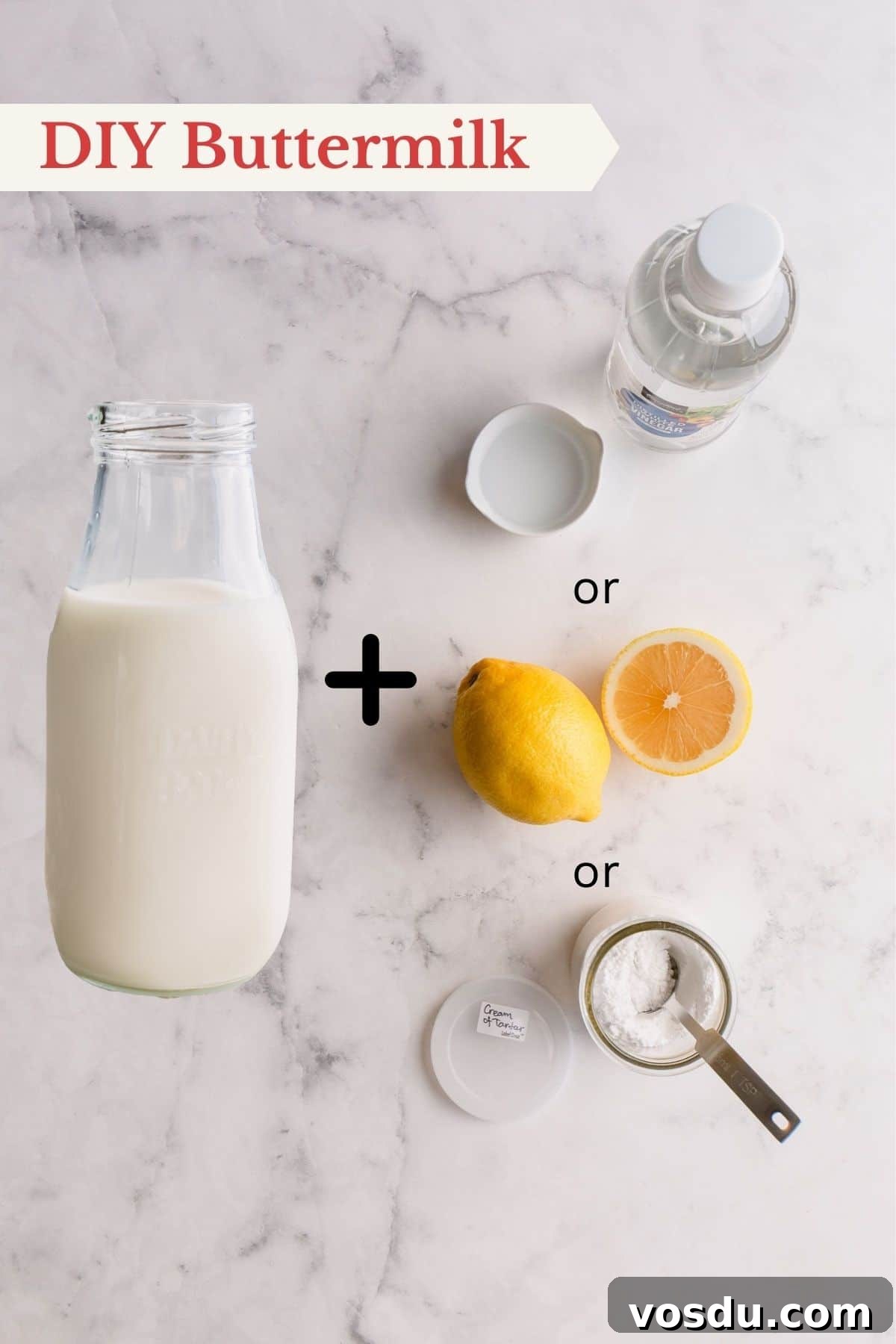
Two quick and easy ways to make a buttermilk substitute with just two ingredients or less. Learn which method works best for baking, pancakes, and marinating.
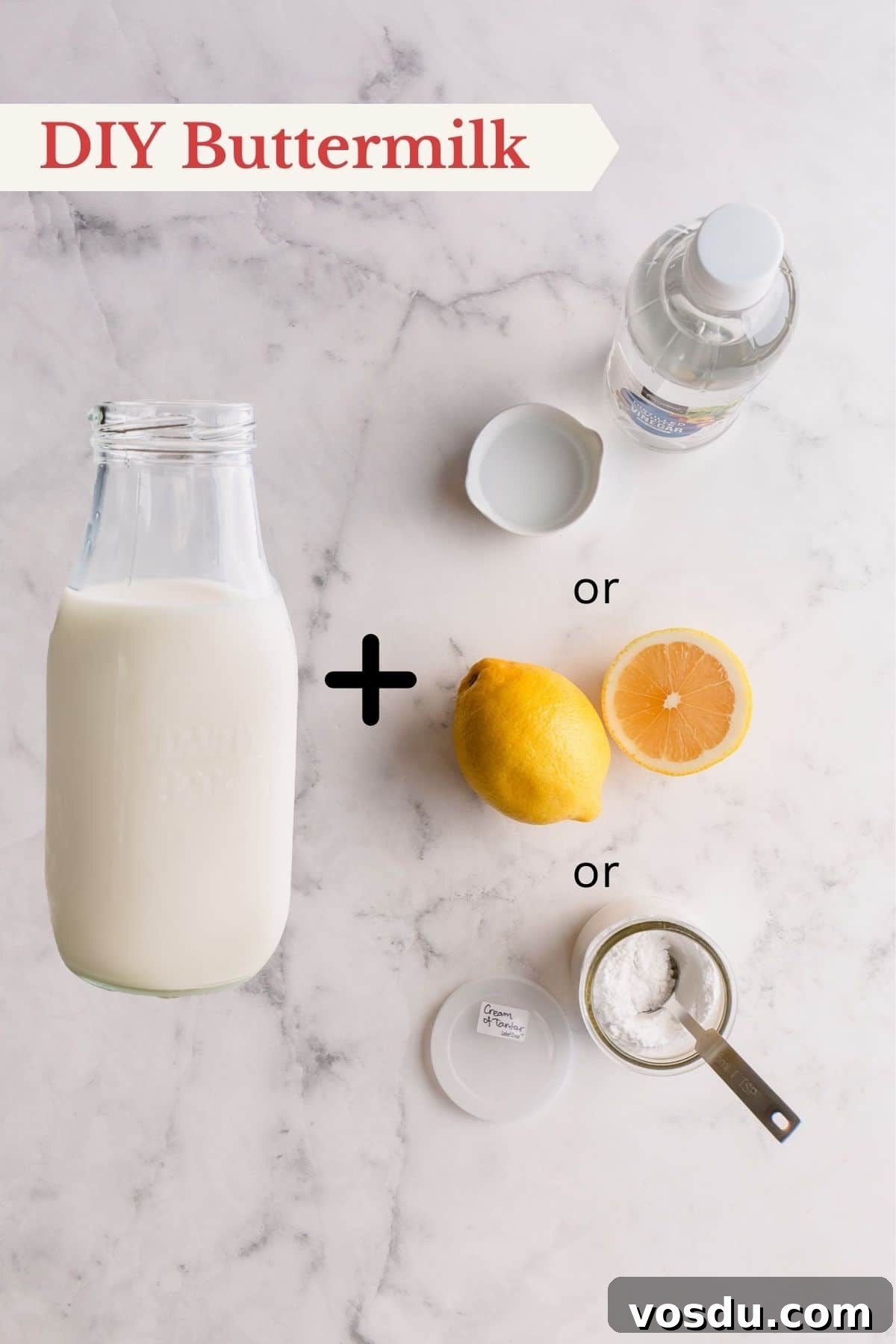
What is buttermilk?
Buttermilk is a cultured dairy product made when lactic acid bacteria ferment milk. Fermentation thickens the milk and gives it a pleasantly tangy, slightly sour flavor. The acid also reacts with baking soda to create lift in cakes, pancakes, and other baked goods.
In recipes, buttermilk adds flavor, tenderizes baked goods, and helps batters brown. Common uses include pancakes, cakes such as red velvet, muffins, dressings, and marinades for chicken.
How to Make a Buttermilk Substitute
Buttermilk is useful but sometimes not on hand. Below are two reliable substitutes you can make quickly with common pantry items. Both are easy, effective, and work in most recipes that call for buttermilk.
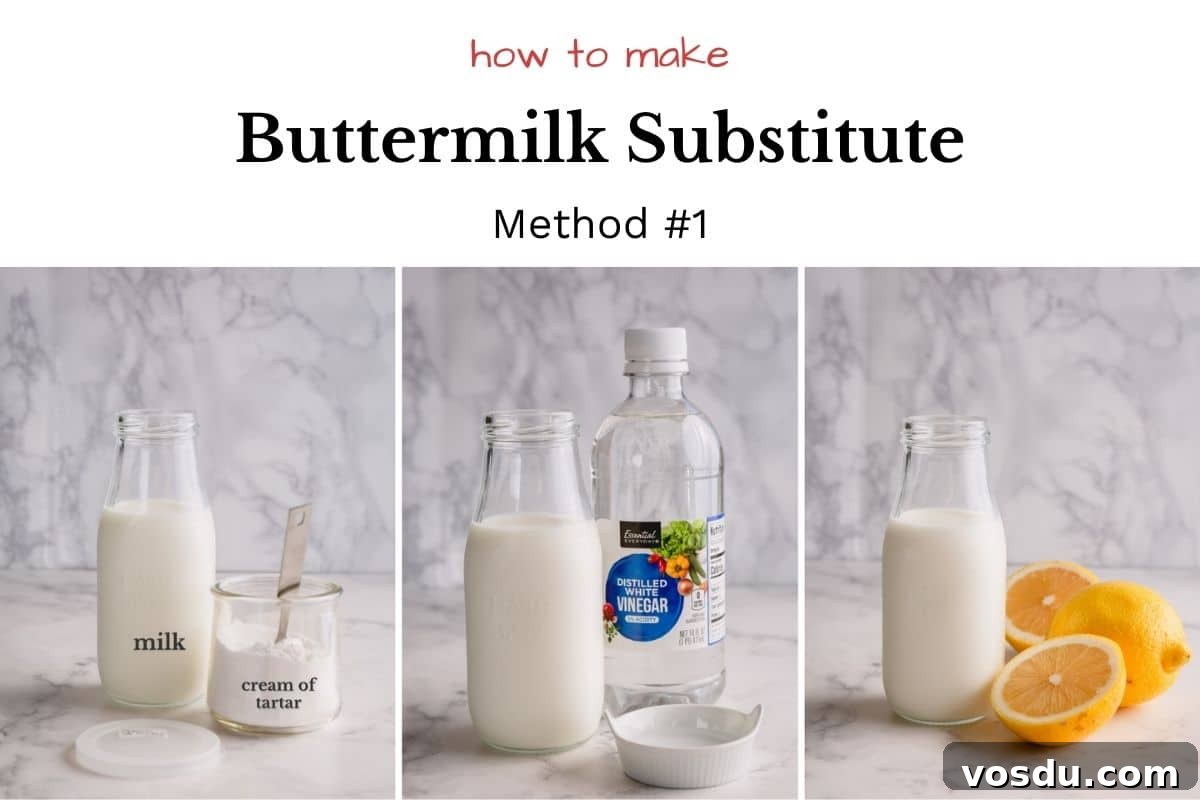
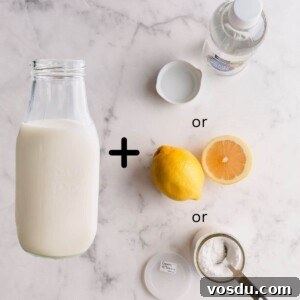
Method 1: Make Buttermilk with Vinegar or Lemon Juice
This is the classic and most common substitute. It creates the acidity bakers need to react with baking soda and add tenderness and tang to cakes and quick breads.
- Stir the acid into milk and let the mixture rest for 5–10 minutes. The milk will curdle slightly and thicken—this is normal and indicates it’s ready to use.
- 1 cup milk + 2 tablespoons liquid acid (white vinegar or fresh lemon juice)
- Or 1 cup milk + 2 teaspoons cream of tartar as an alternative powdered acid
This method is best for…
Method 1 is ideal for cakes and cupcakes where you want a thin, acidic liquid to react with leavening. It’s a reliable choice for many baked goods, including red velvet cakes.
Method 2: Make Buttermilk Substitute with Sour Cream or Yogurt
This method produces a thicker, creamier substitute that works especially well for pancakes, waffles, and batters where you want body and richness without thinning the batter.
- Whisk sour cream or plain yogurt with a splash of milk or water until smooth and pourable.
- 3/4 cup sour cream or plain yogurt + 1/4 cup milk or water
This method is best for…
Method 2 works perfectly for pancakes, fritters, and breading chicken. The thicker texture yields a richer mouthfeel and helps maintain batter thickness, producing tender, evenly textured results.
How to Store Buttermilk Substitute
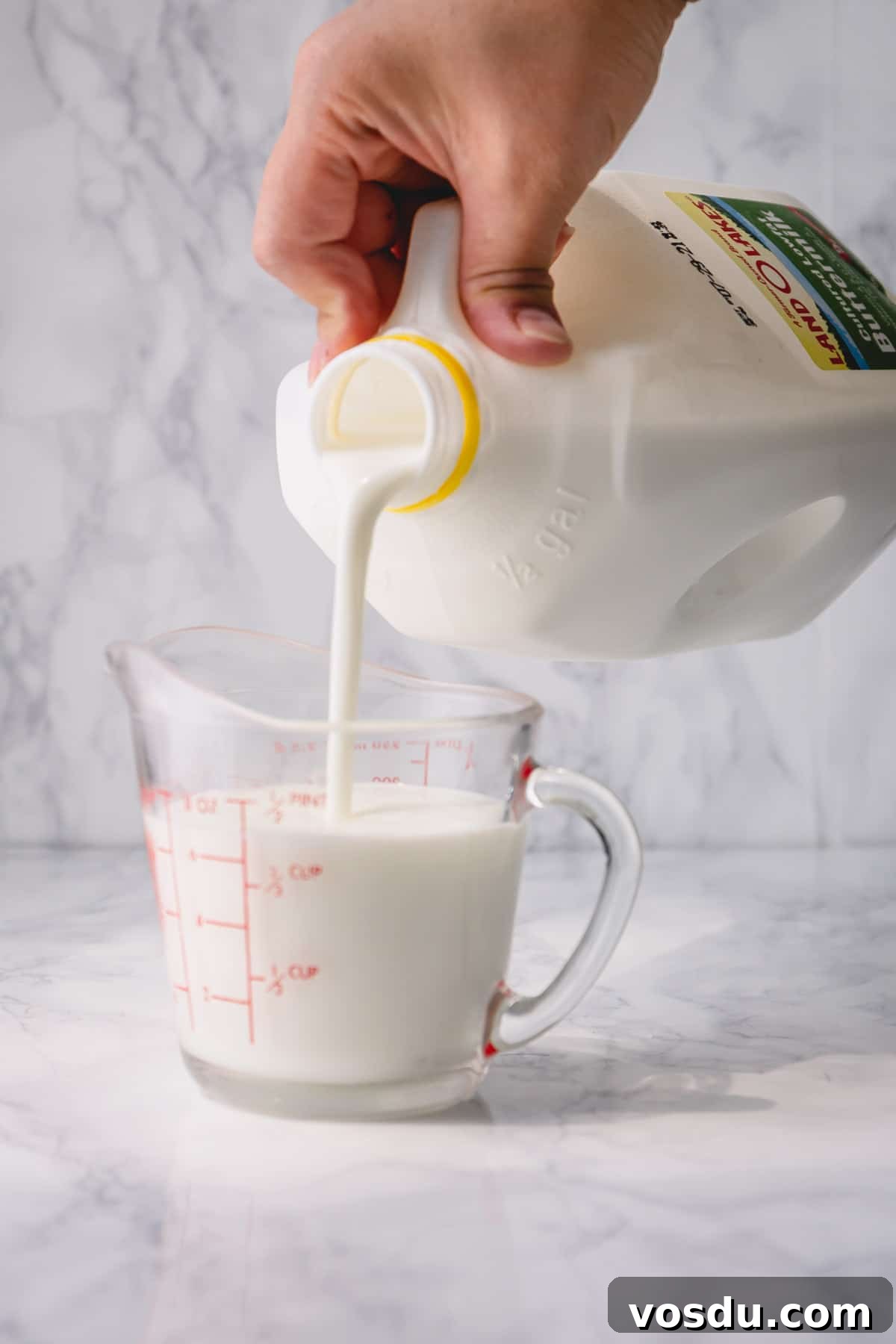
Store homemade buttermilk substitute in an airtight container in the refrigerator for up to 48 hours. Give it a good stir before using, as separation can occur. For the yogurt or sour cream version, shake or whisk to recombine.
Can you freeze buttermilk?
Yes. You can freeze buttermilk substitute in measured portions for later use. Freezing preserves the acidity and is convenient for baking.
- Freeze in 1/2-cup silicone molds or in small freezer-safe containers for convenient defrosting.
- Alternatively, pour the desired amount into freezer bags, lay them flat to freeze, then stack for compact storage. Thaw in the refrigerator and stir before using.
Buttermilk FAQs
Yes. To mimic buttermilk, combine 1 cup of milk with 1 tablespoon of vinegar or lemon juice and let it sit for about 5–10 minutes. The milk will thicken slightly and become tangy, providing similar acidity and flavor to buttermilk in most recipes.
The yogurt or sour cream method produces a thicker, creamier substitute that keeps pancake batter from becoming too runny and yields fluffy pancakes with good texture.
Yes. Use unsweetened non-dairy milk (such as soy, almond, or oat) and add the acid as with regular milk. Coconut yogurt can also be used to make a dairy-free buttermilk substitute; adjust thickness if using Greek-style or strained yogurts.
Buttermilk Replacement
Ingredients
Method #1:
- 1 cup milk
- 2 tablespoons distilled white vinegar or lemon juice
Method #2:
- 3/4 cup sour cream or plain yogurt
- 1/4 cup milk or water
Instructions
Method #1:
- Stir the vinegar or lemon juice into the milk. Let sit for 5–10 minutes until slightly curdled and thicker. Use immediately in your recipe.
Method #2:
- Whisk sour cream or plain yogurt with milk or water until smooth and pourable. Use in place of buttermilk in pancakes, batters, or for breading.
Did you make this? Please leave feedback and a rating to let others know how it worked for your recipe.
Tips & Notes
Note 1: Any milk works—whole, 2%, skim, or unsweetened non-dairy milks can be used. For dairy-free, choose plant-based milk and plant-based yogurt if using method 2.
Note 2: Distilled white vinegar gives a neutral flavor; apple cider vinegar or fresh lemon juice also work. Adjust to taste if your recipe is delicate.
Note 3: If using Greek yogurt, reduce the yogurt amount to 1/2 cup and add 1/2 cup milk or water because Greek yogurt is thicker.
Freezing: Freeze in measured portions such as 1/2-cup molds or small containers for convenience. Thaw in the fridge and stir before using.
Nutrition
Servings: 1 cup • Calories: 152 kcal • Carbohydrates: 12 g • Protein: 8 g • Fat: 8 g • Sugar: 12 g • Sodium: 105 mg
Leave a rating and your feedback. Thank you!