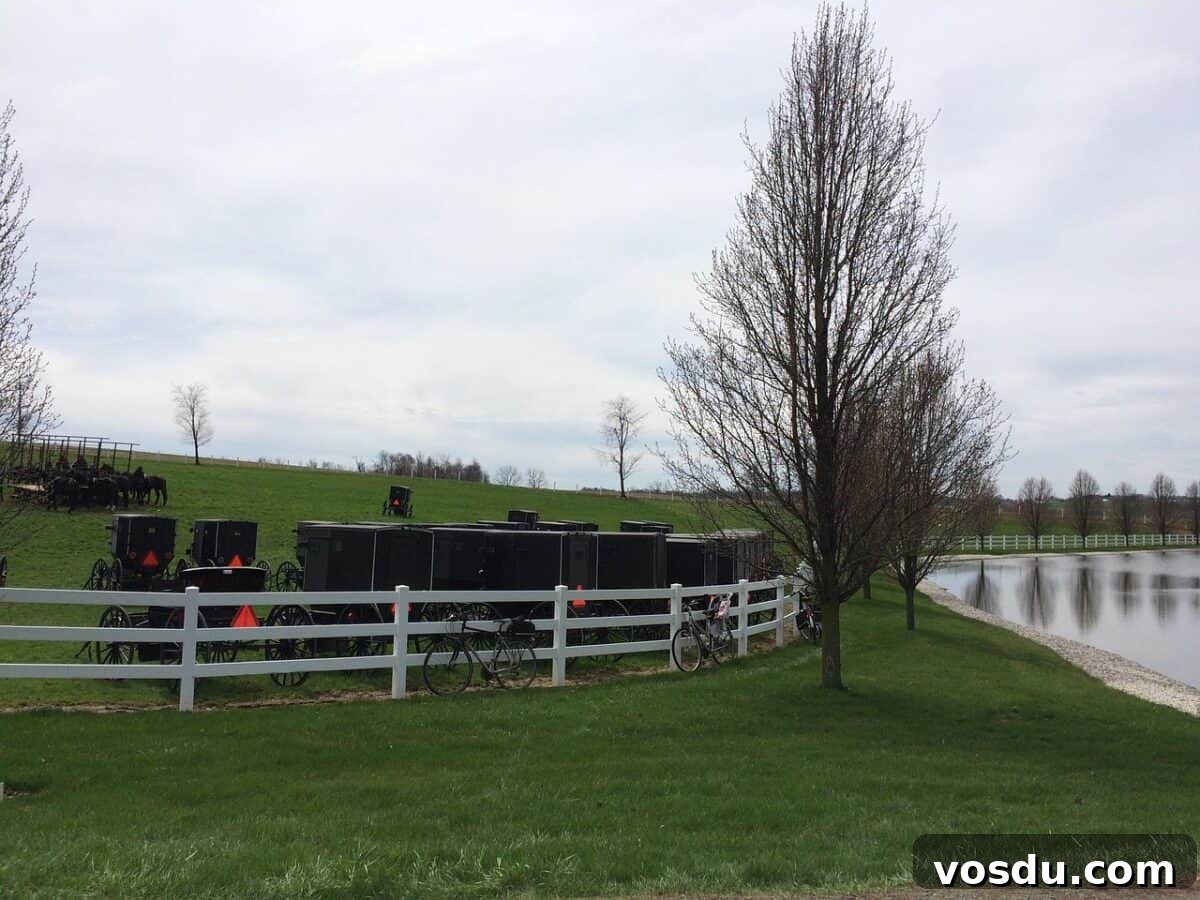
Amish Church Service
I grew up in an Amish home and attended Amish church services weekly until I was twenty-two, so I know firsthand how these gatherings work. Not every congregation is the same, however; practices vary between groups. Still, many elements are similar across most Amish communities.
Amish Have Church Every Two Weeks
Most Old Order Amish hold church every other Sunday. In my New Order background we met every Sunday: one week for the main service and the alternate week for Sunday School. Old Order families usually stay home, visit neighbors, or attend a neighboring district on the off Sunday.
No Church Building
Except for a few New Order districts, the Amish do not use dedicated church buildings. Services are hosted in homes, barns, or workshops—wherever there’s enough seating. Many houses are built with removable doors or open plans on the main floor so rooms can be combined into a larger meeting space.
Hosting rotates among families in a district, which often contains around twenty-five households, so each family typically hosts about once a year. When a district grows too large for homes to accommodate, members may form a new district to keep gatherings manageable.
Lots of Work to Get Ready for Church
Preparing to host church takes considerable effort. When I was a child it felt exciting, but as I got older the workload became overwhelming. Hosts often start preparing weeks in advance to make sure everything is clean and presentable.
Preparation includes cleaning barns and houses thoroughly, washing windows, trimming the yard, and moving furniture to make room for benches. When services were held at our home, we sometimes had two consecutive Sundays to host, which left the house disrupted for the week between. One positive outcome was that the farm received a thorough annual cleaning.
What Is an Amish Church Service Like?
Most attendees arrive by horse and buggy unless they live within walking distance. Hosts or neighbors help unhitch and secure the horses. Men typically gather in the barn while women assemble in the house; older members often arrive first and then everyone files in to take seats by age.
Younger people usually arrive closer to service time. Girls gather in a side room and greetings follow a customary pattern—our group used a handshake plus a peck on the cheek. Youth enter by age and sit where assigned by the host, a practice that often made young people feel scrutinized for proper dress.
Seating
Seating is gender-segregated: men on one side and women on the other. Depending on the room layout, people may face each other or sit with an aisle between. In larger outbuildings the setup can resemble a conventional church, but in homes seating often faces inward. Youth are usually seated in front where they are more visible during the service.
Singing
Singing is traditionally in German, using hymnals such as The Ausbund in many communities. Services often begin with two slow, drawn-out songs while ministers step aside briefly. One of the congregational songs is repeated weekly and is sung very slowly in the main service; on Sunday School weeks it may be sung at a quicker pace.
For many attendees, the German lyrics are sung without full comprehension, but the music and ritual remain important parts of worship.
Church Service
When the ministers return, one offers an opening message, followed by a kneeling prayer and a Scripture reading. A longer sermon follows, then another prayer. Afterward, the preacher may invite several men to give short testimonies related to the message. The service typically closes with one or two songs and the youth file out first.
Services can last around three hours, with most people seated on hard, backless benches; preachers and a few older individuals may have chairs. Services are commonly conducted in German or Pennsylvania Dutch, depending on the district.
Amish Church Dinner
After worship the hosts always serve a communal lunch. Men often convert benches into tables while women bring out the food. In some regions, such as Holmes County, Ohio, people stand around tables to eat, while in other places they sit. Men and women may have separate tables, and after the adults finish the youth take their turn.
Menus vary by community but share common staples: homemade white bread or buns, a sweet creamy peanut butter spread, lunch meats like bologna, and melted cheese spreads. Pickles and pickled beets frequently accompany the meal. Though that combination may seem unusual to outsiders, it’s a beloved classic in many Amish districts.

Church Dinner Menu
Dessert is typically pie or cookies. In some areas Apple Schnitz pie—whose filling is similar to apple butter—is common, while other districts prefer traditional or Dutch-style apple pies. If baking many pies isn’t feasible, plates of assorted cookies are provided instead.

Church Cookies
When cookies are served, neighbors and friends often contribute, resulting in a variety of choices. Popular favorites include soft gingersnaps, monster-style cookies, oatmeal cookies, and chocolate chip cookies. These treats, along with the hearty bread-and-spread meal, made post-church dining simple, filling, and sociable.

New Order Amish Sunday School
In New Order districts, Sunday School meets on the alternating weeks. The service begins with two German hymns sung at a normal pace, a short devotional by a preacher, and then attendees split into age-based classes. Teachers are chosen by church vote, and while men often teach, women and older girls may lead classes for younger children.
Sunday School services are shorter and less formal than main services, and after classes hosts commonly invite a smaller group—friends, visitors, and youth—to share a hot, home-cooked meal. Hosting duties keep families busy for the two-week cycle, so most are relieved when their year’s hosting rotation is complete.
If you have questions about Amish church practices, feel free to ask in the comments section where this article is posted.
More Articles About the Amish
What Bible Do the Amish Use?
Do the Amish Believe in Jesus?
Where Do the Amish Originate From?
Growing Up as an Amish Child
My Amish Childhood (My Story – part 1)
Can Amish Marry Non-Amish?