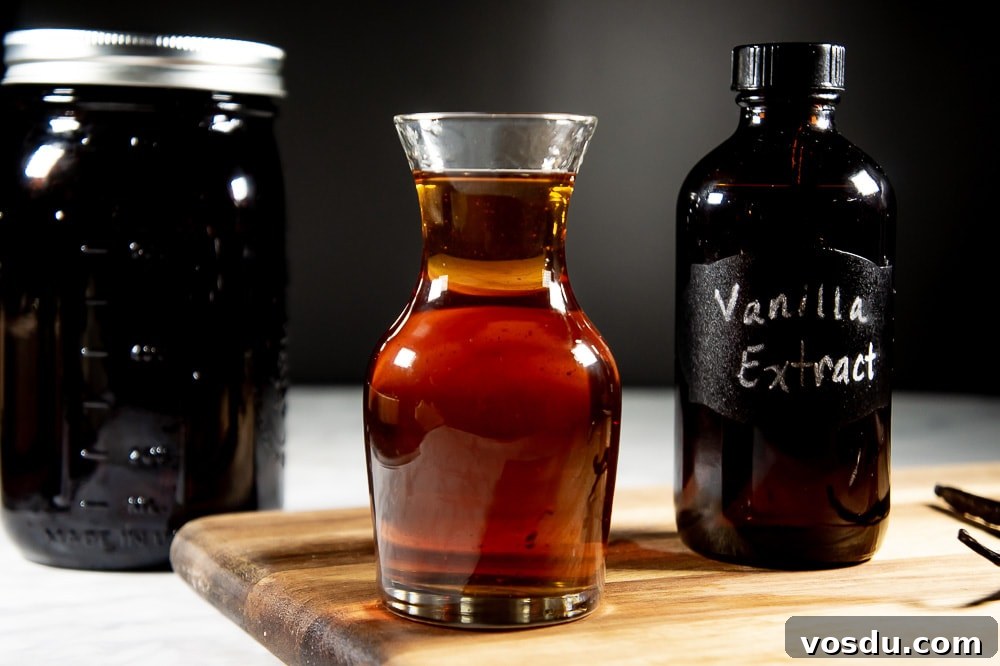
Homemade vanilla extract is far more economical than store-bought options. This guide explains the ingredients, step-by-step process, tips for getting the best flavor, and how to store your homemade vanilla for long-term use.
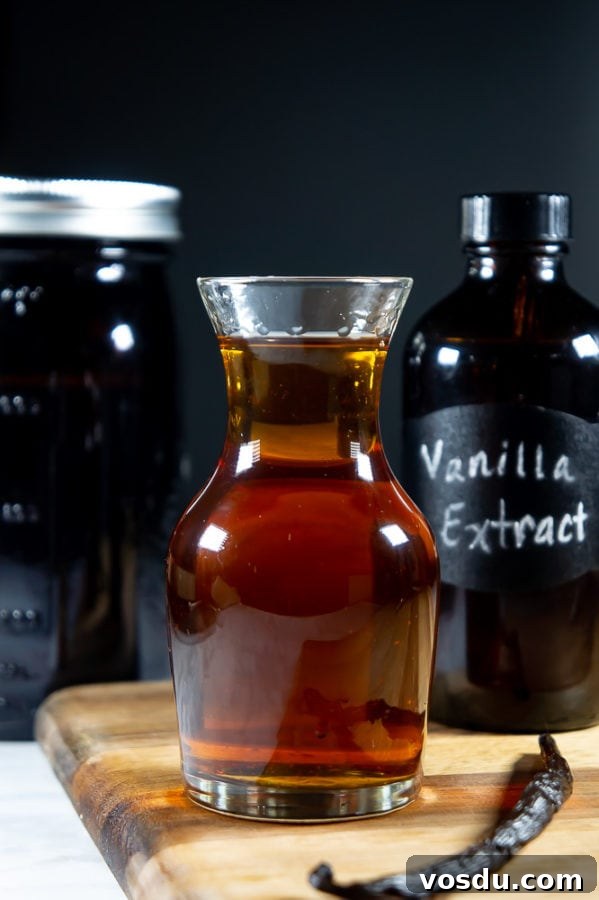
A friend introduced me to homemade vanilla extract as a Christmas gift, and it transformed my baking. The jar she gave me was already aged for several weeks, so I could use it right away. After that first bottle ran out, I quickly learned how simple it is to make more.
It really is EASY. The “recipe” is just two ingredients and patience. Once you see how straightforward it is and how much money you can save, you’ll be making batches regularly.
Let’s Chat About Vanilla
Vanilla is the second most expensive flavoring after saffron. If you bake at all, you know how often a bottle of vanilla extract is used. Natural vanilla’s complex aroma and taste come from more than 200 different chemical compounds, which create that warm, rich flavor we love.
Growing and curing vanilla is labor intensive and concentrated in a few regions—many beans come from Madagascar and Indonesia where flowers are hand-pollinated and pods are cured over time. No wonder commercial extract can be pricey. The good news: you can make a high-quality extract at home for a fraction of the cost.
Vanilla Extract Ingredients
Making homemade vanilla extract requires only vodka (or another alcohol), vanilla beans, a knife, and a bottle. That’s it.
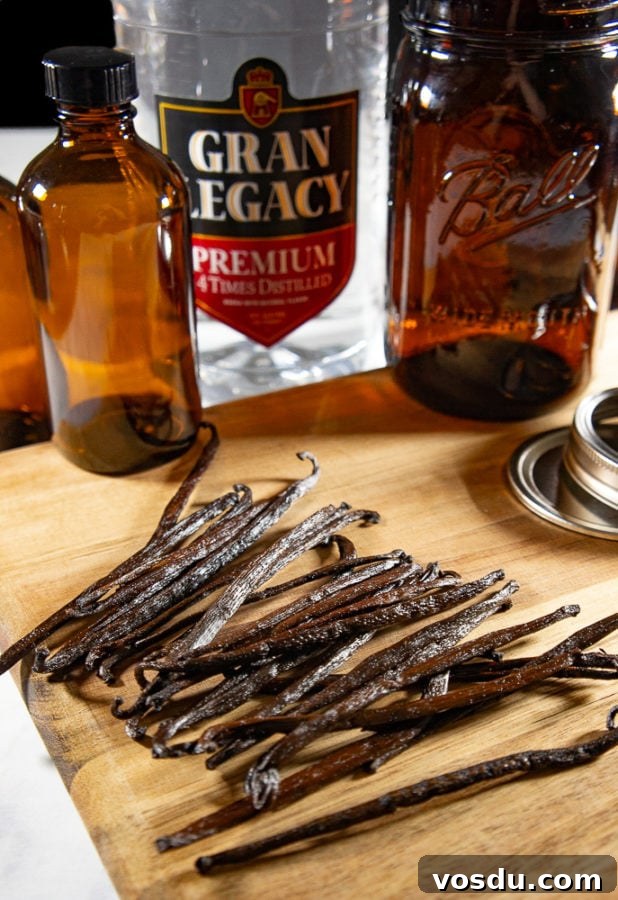
Vanilla Beans
There are several types and quality grades of vanilla beans. Choose based on flavor profile and cost.
Types of vanilla
- Bourbon / Madagascar – The most common choice. Rich and full-bodied, it produces an extract similar to many store brands.
- Indonesian – Slightly lower vanillin content; extract may be less intense.
- Mexican – Often more floral or fruity, with less vanillin than Madagascar beans.
- Tahitian – Rare and expensive, with a floral, perfumed character from a different vanilla species. Usually unnecessary for extract unless you want that unique profile.
Vanilla grade (quality)
- Grade A — Whole, plump beans best used when you’ll scrape and use the seeds. More expensive.
- Grade B (extract grade) — Often split or shorter but still flavorful and ideal for making extract. These are cost-effective and commonly sold in bulk.
Buying Grade B beans in bulk online is usually the best value. Store beans in a cool, dry, dark place; they will keep well for about a year.
Vodka (or alcohol)
Alcohol extracts the flavor compounds from the beans. You don’t need a premium spirit—just a suitable alcohol.
- Choose 80 proof (40% ABV) or stronger hard liquor.
- Vodka is neutral and lets vanilla shine; it produces an extract similar to what you buy in stores.
- For a different profile, try bourbon, rum, or brandy—these add complementary flavors and make a special gourmet extract.
Equipment
Any clean container will work, but light and heat affect shelf life and flavor. Follow these simple tips for storing extract.
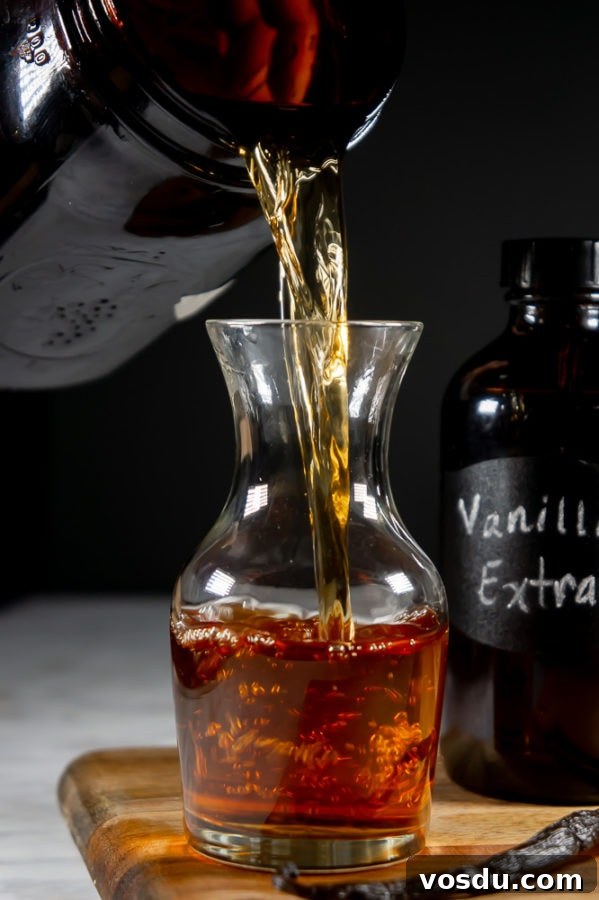
- Use dark amber glass bottles to protect the extract from light. Making a large batch in a wide-mouth jar and decanting into smaller bottles for daily use is convenient.
- Store in a cool, dark place away from heat sources like ovens or stoves.
- High alcohol content prevents spoilage, but avoid prolonged exposure to heat and light to maintain flavor.
Making Vanilla Extract
With ingredients and equipment ready, the process is very simple.
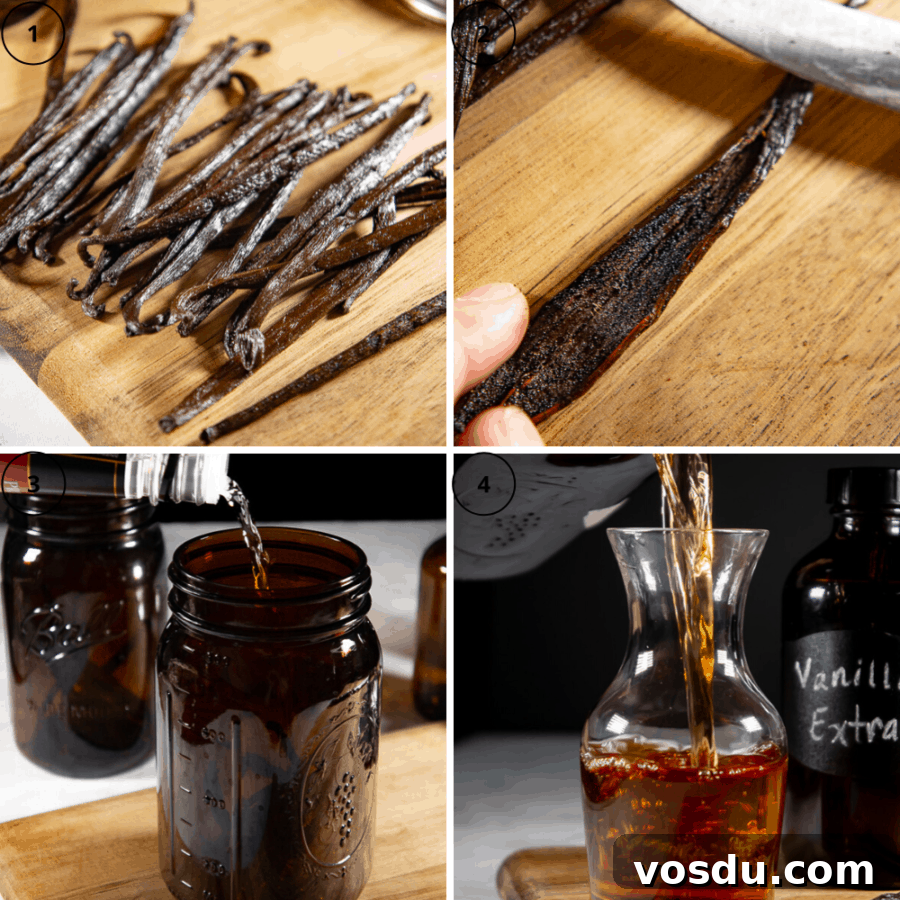
- Use a sharp knife to split the beans lengthwise to expose the interior. There’s no need to scrape out the seeds—their flavor will infuse into the alcohol.
- Place the split beans into your chosen container. Cut beans to fit if necessary.
- Fill the container with vodka or your chosen spirit, ensuring the beans are fully submerged.
- Seal the bottle and give it a gentle shake.
- Store in a cool, dark place for at least 8 weeks before using. Flavor continues to improve for up to two years; after that the beans are mostly spent.
Tip: Make a large master jar to age and a smaller bottle for everyday use. Refill the small bottle from the large jar, and top the master jar up with fresh alcohol as needed to keep the infusion going.
Bean to Alcohol Ratio
A practical ratio to use:
- About 12–15 beans per 32 ounces (1 quart) of alcohol.
- When replenishing, add fresh alcohol to the master jar as it’s used. Replace beans after around two years or after several refills for best flavor.
- Keep one or two beans in the daily-use bottle to continue extracting as you use it.
Cost Comparison
Homemade extract is significantly cheaper. For example, buying bulk beans, mason jars, and a modest vodka can yield many ounces of extract at a small fraction of retail cost. Making your own is an economical choice and an excellent gift idea.
FAQ’s
Imitation vanilla typically contains a single synthetic compound that mimics one aspect of natural vanilla’s flavor. While useful in some contexts, it doesn’t replicate the full complexity of natural vanilla extract.
Historically, castoreum (from beaver glands) was used in flavoring, but commercial imitation vanilla is today produced synthetically and is not derived from beavers.
Stored properly in a cool, dark place, homemade vanilla extract can last essentially indefinitely; the flavor can continue to develop for years.
You control the bean quality and ratio, and homemade extract typically contains little to no added water. That concentrated, customizable flavor is why many prefer it to commercial options.
Other Recipes
Your homemade vanilla will shine in many recipes, such as shortbread cookies, coffee creamer, sugar cookies, peanut butter cookies, spice cupcakes with cream cheese frosting, microwave peanut brittle, quick breads, and chocolate desserts.
You are now ready to make your own vanilla extract. It’s simple, cost-effective, and yields rich, lasting flavor. Large batches make thoughtful homemade gifts any home cook will appreciate. Happy baking!
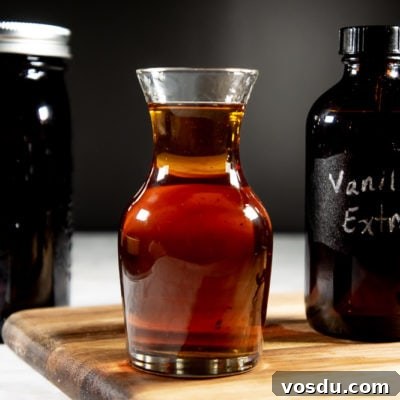
Homemade Vanilla Extract
Mikayla M.
Equipment
- Glass bottle, preferably dark glass
- Knife
Ingredients
Ingredients
- 32 ounces Vodka (or any 80 proof or stronger alcohol)
- 15 Vanilla beans, Grade B (extract grade)
Tools
- Glass bottle, preferably dark
- Knife
Instructions
- Slice open each vanilla bean to expose the inner pod.
- Cut beans to a size that fits your bottle.
- Place beans in the bottle and fill with vodka or chosen alcohol.
- Cap and let sit in a dark, cool place for at least 8 weeks before using.
- Shake before use and enjoy as you would store-bought vanilla.
Notes
- Requires at least 8 weeks to become usable; flavor improves with age.
- Shake before using.
- Store in a cool, dark place.
- 15 beans to 32 ounces is a recommended ratio; adjust for smaller bottles (about 4 beans for 8 ounces).
Let us know how it was!
Originally published 2/28/19, Updated 11/8/19