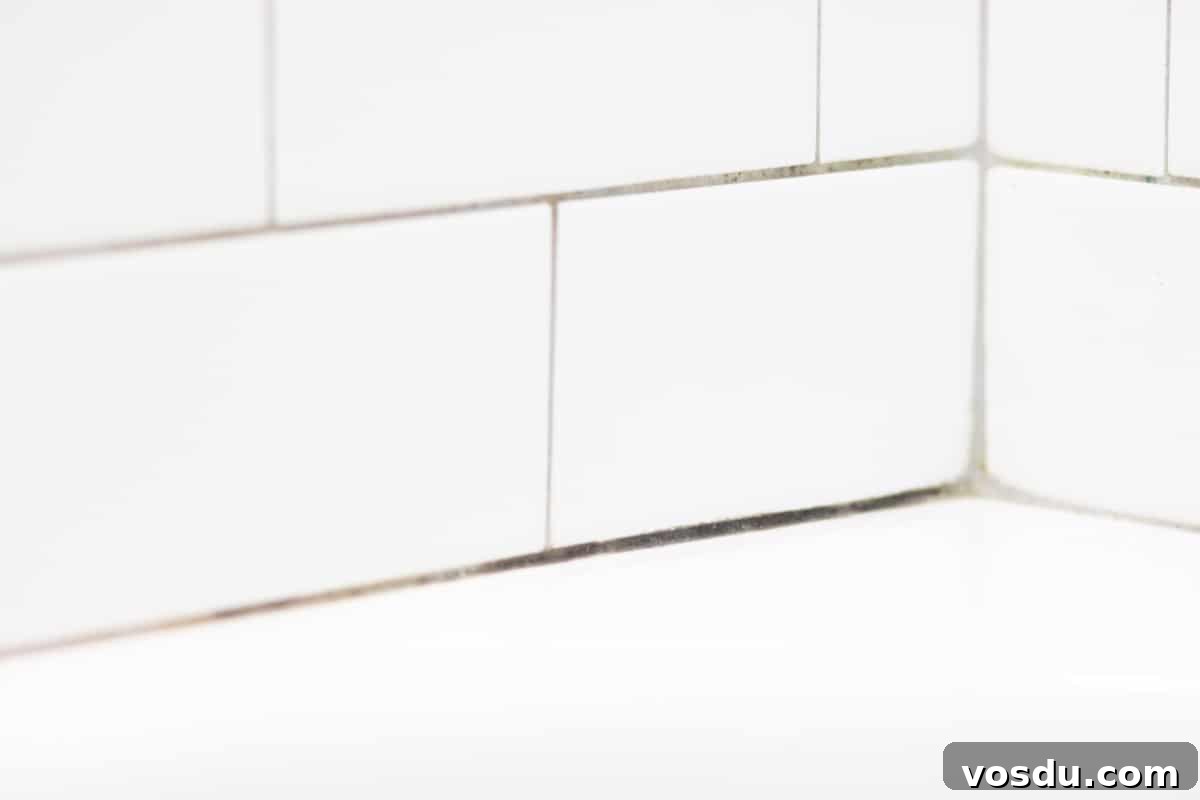
This post explains how to remove mold from shower grout naturally using vinegar and baking soda.
You don’t need harsh commercial cleaners to tackle mold in the shower. Often the simplest, most natural solutions are also the most effective and least harmful to your home and family.
This post contains affiliate links; I may earn a small commission at no extra cost to you. Full disclosure available on the blog.
What you need to clean mold in shower grout naturally:
- Vinegar – White distilled vinegar is a readily available, natural mold killer. Studies and practical experience show vinegar can eliminate a large percentage of common mold species. Hydrogen peroxide is another option if you prefer, though it’s a different chemical.
- Baking soda – Baking soda is mildly abrasive, absorbs moisture, deodorizes, and helps lift dirt and mold from grout. Combined with vinegar, the foaming action helps loosen spores for easier removal.
- Spray bottle – Use a spray bottle to apply vinegar evenly to the grout. Any clean spray bottle will work.
- Old toothbrush – A toothbrush is ideal for working paste into grout lines and scrubbing small areas.
- Stiff bristle scrub brush – For larger grout areas, a bigger brush speeds the process.
- Soft rag – A clean cloth to wipe away residue and dry the tiles after rinsing.
How to clean mold in shower grout naturally
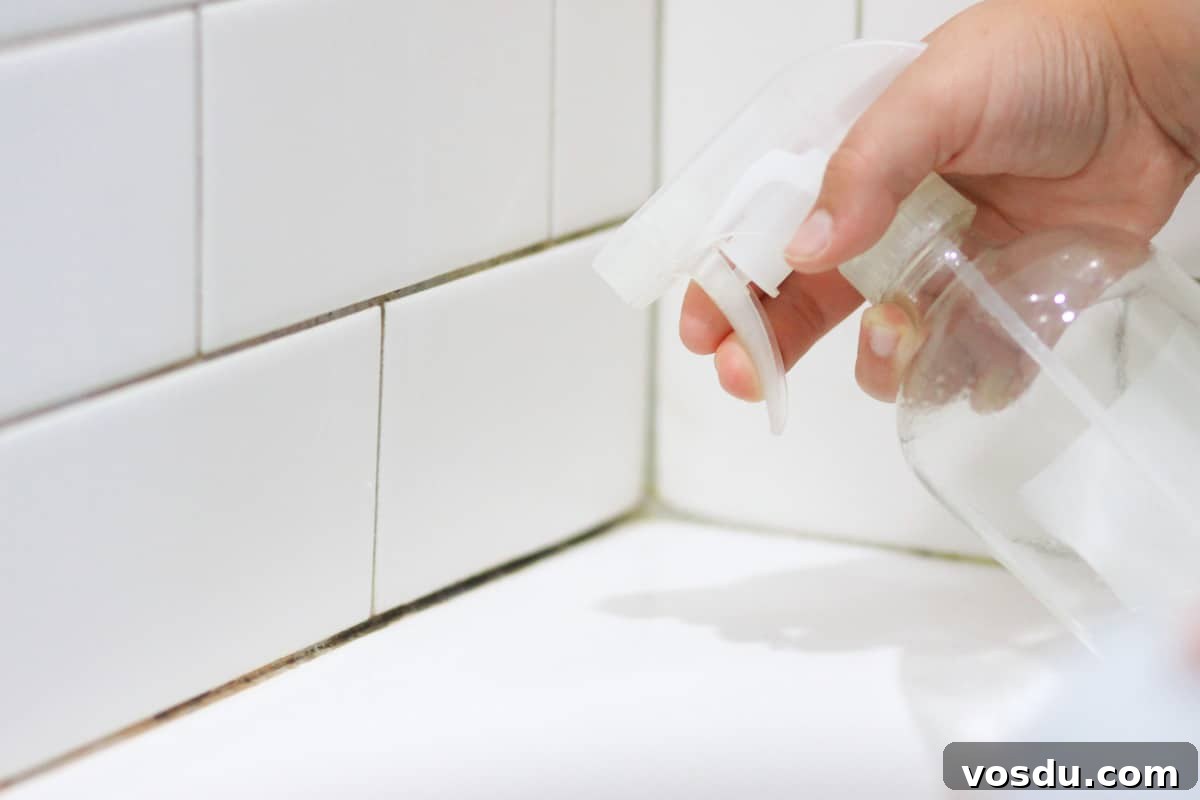
Spray: Start by spraying the affected grout with undiluted white vinegar. Allow it to sit for at least 30 minutes so the vinegar can penetrate and help kill mold.
Mix: In a small bowl, combine about 1/2 cup baking soda with 1/4 cup water to create a thick paste. Adjust the ratio slightly if you need a firmer or softer paste.
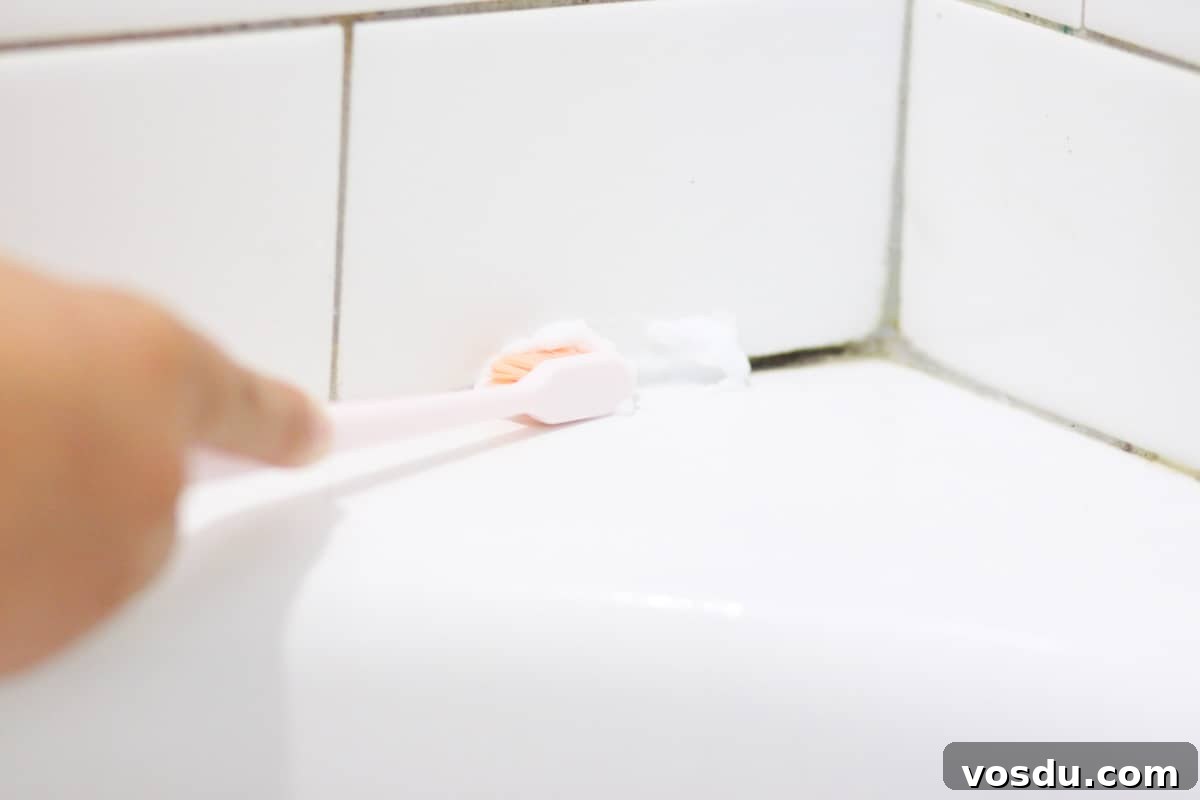
Apply: Use an old toothbrush to spread the baking soda paste into the moldy grout lines. The paste helps the vinegar cling to the surface and adds abrasive cleaning power.
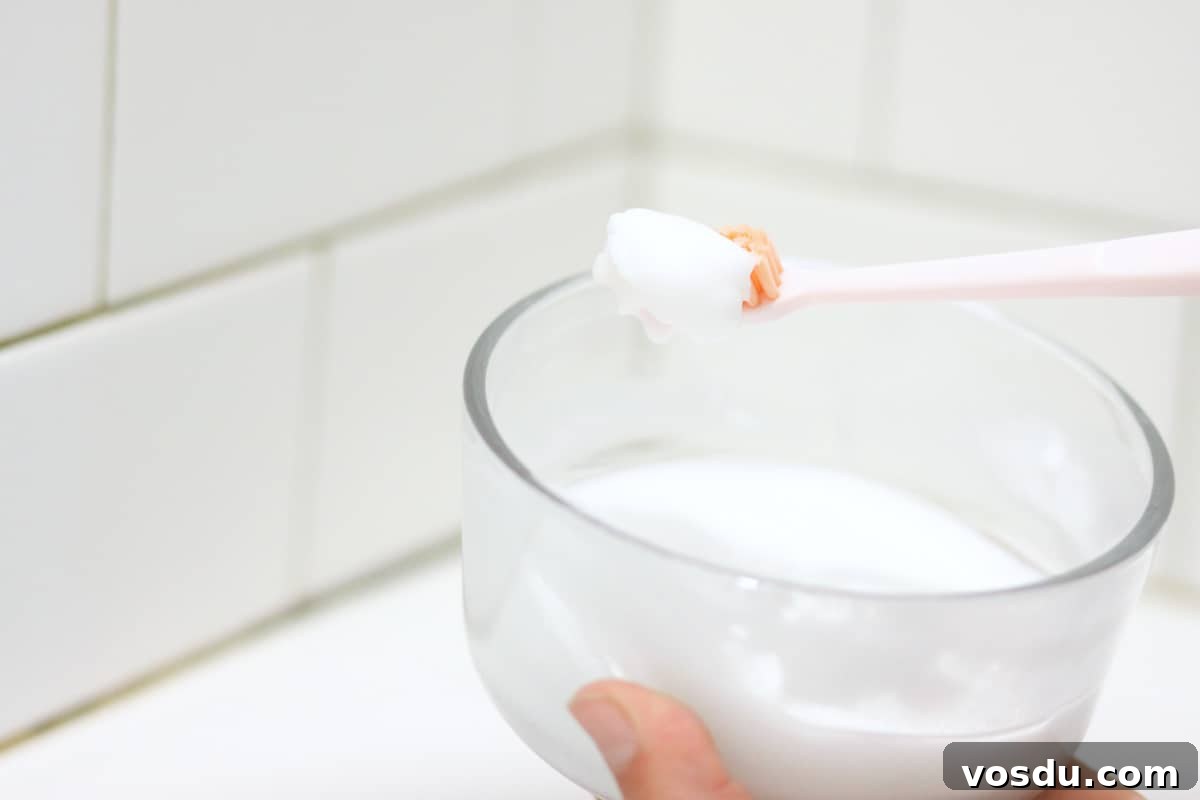
Scrub: Work the paste into the grout with the toothbrush or a stiff brush, focusing on discolored areas. Apply more paste as needed.
Let set: Let the paste sit on the grout for another 20–30 minutes to allow the cleaning action to continue, then scrub again to lift remaining mold and residue.
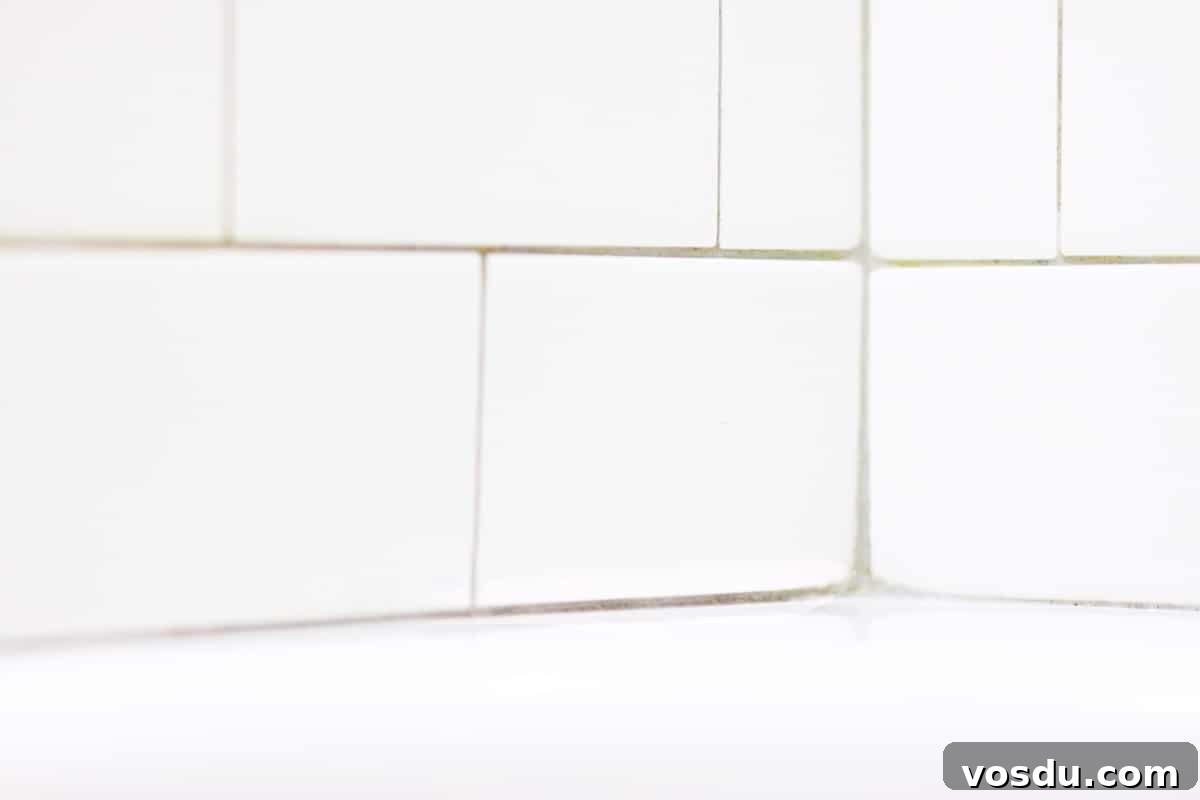
Rinse: Rinse thoroughly with warm water and wipe the tiles and grout dry with a clean rag. Drying prevents moisture from encouraging new mold growth.
This method is ideal for small or localized mold outbreaks. If mold is widespread or persistent throughout your home, contact a professional to assess the situation and address underlying moisture issues.
About this method for cleaning shower grout
Simple and accessible
You only need two common household ingredients: vinegar and baking soda. Spray, apply paste, scrub, rinse, and dry. It’s straightforward and effective without the hazards of strong chemicals.
All-natural cleaning
Many store-bought grout cleaners contain harsh ingredients that can irritate skin, eyes, and lungs. Using vinegar and baking soda avoids those toxic chemicals and is a safer option, especially in homes with children and pets.
Both ingredients are food-safe, so they’re safe to use on most surfaces when used responsibly.
Effective mold removal
Undiluted white vinegar has been shown to kill a high percentage of common mold species. Following a vinegar soak with a baking soda paste provides additional scrubbing action and deodorizing benefits. The bubbling foam that occurs when the two meet helps dislodge mold from grout pores.
Long-term exposure to mold can pose health risks, so addressing mold promptly and preventing recurrence is important for household health.
FAQ: Cleaning mold in shower grout naturally
Can you use vinegar on shower grout?
Yes. Vinegar is an effective, multi-purpose cleaner for tiles and grout. It helps break down soap scum, brightens tile, and reduces mold when used undiluted on affected areas.
Do baking soda and vinegar cancel each other out?
Because baking soda is alkaline and vinegar is acidic, they react when combined. The reaction produces foaming that helps agitate and lift mold, but mixing large amounts together can neutralize acidity. That’s why the recommended approach is to soak with vinegar first, then apply a baking soda paste afterward. This sequence preserves the cleaning benefits of both.
Baking soda also adds mild abrasiveness, helps keep the cleaning paste in place on vertical surfaces, and neutralizes odors.
Is vinegar better than bleach for cleaning grout?
Vinegar can be more effective than bleach at removing mold from porous surfaces like grout because bleach often only kills the surface layer of mold. Vinegar penetrates and can reduce regrowth. Never mix bleach with vinegar or other cleaners, as dangerous gases can form.
How do you get rid of bathroom mold without bleach?
Spray grout lines with straight white vinegar and let it sit for 20–30 minutes. Prepare a baking soda and water paste (roughly 1/2 cup baking soda to 1/4 cup water), apply with a toothbrush, scrub, let the paste sit again, scrub once more, then rinse and dry. Repeat as needed for stubborn spots.
How to prevent mold in shower grout
Preventing mold is just as important as removing it. Addressing the conditions that allow mold to thrive will keep grout cleaner longer:
- Improve ventilation: Run an exhaust fan or open a window during and after showers to reduce humidity and speed drying.
- Wipe down surfaces: Use a dry towel to remove excess water from tiles and grout after showering.
- Seal grout: Applying a grout sealer helps block water from penetrating grout pores and makes cleaning easier.
More cleaning tips and tricks on the blog
If this natural method appeals to you, there are other practical cleaning guides and DIY cleaners available on the blog, covering sinks, stovetops, furniture care, and more.
- How to clean a white kitchen sink
- DIY cleaners from scratch
- How to clean a black glass stovetop without scratching
- DIY leather couch cleaner
- How to clean fruit with vinegar
I hope you find this guide helpful. If you try this method, please come back and share your experience in the comments so others know how it worked for you.
Save these steps to try later and share your results on social media if you like!