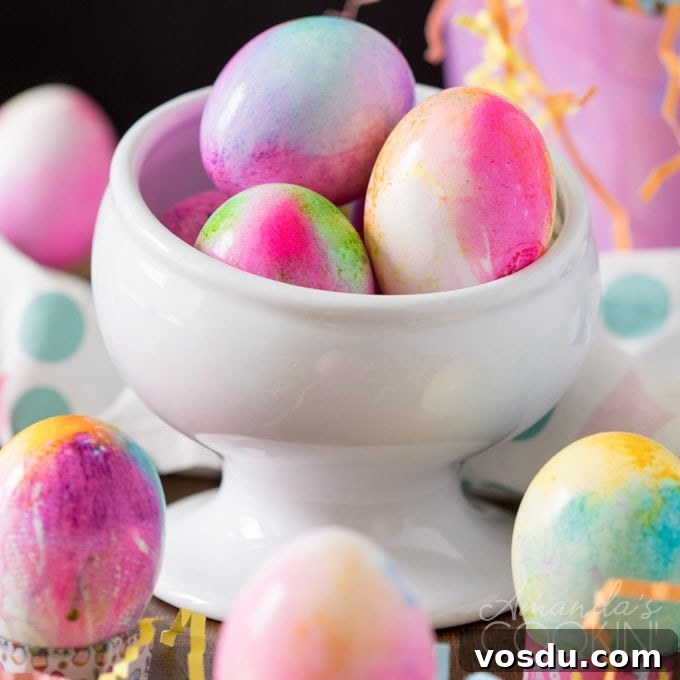
Making tie-dye Easter eggs is a fun, creative twist on traditional egg decorating. This method produces vibrant, blended colors and is great for doing with kids—just be prepared to get a little messy. Put on an apron, gather your supplies, and enjoy experimenting with color.
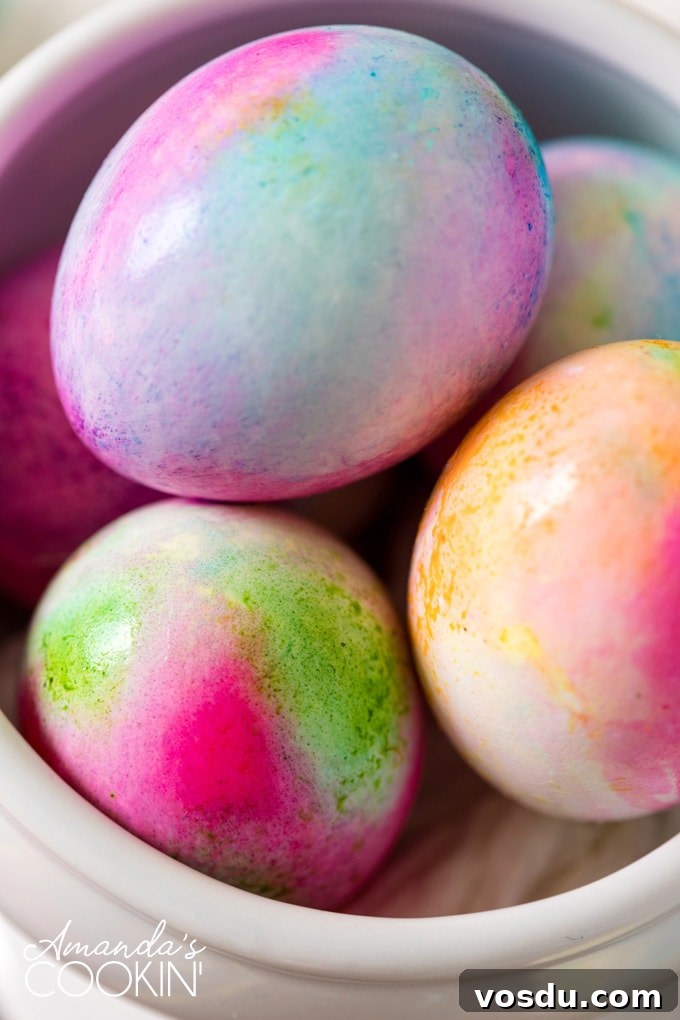
Tie Dye Easter Eggs: Two Easy Methods
As children grow, it’s fun to try new ways to decorate beyond the usual pastels. Tie-dye eggs add a playful, painterly look to your Easter basket. Below are two simple methods—one using cheesecloth and one using sturdy paper towels—so you can pick the approach that works best for your group.
Supplies You Will Need
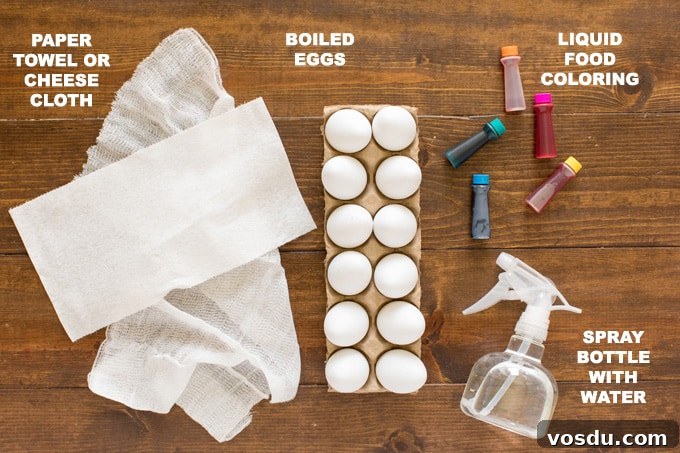
Gather the following items before you start. Quantities depend on how many eggs you plan to decorate.
- Plastic wrap to cover your work surface
- Cheesecloth OR sturdy paper towels
- Liquid food coloring in a few colors
- A small spray bottle filled with water (or a small cup of water)
- Rubber bands
- An empty cardboard egg carton for drying and holding eggs
Helpful Kitchen Tips
- Dry eggs in a cardboard egg carton or use a cool hairdryer to speed drying.
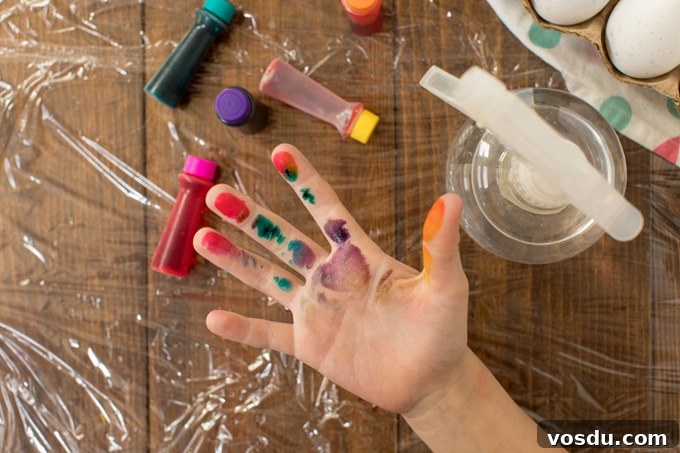
- To avoid stained hands, have children wear gloves while working with food coloring.
- To remove food coloring from skin: rub hands with lotion first, then use a paste of white vinegar and salt, scrub, rinse, and repeat as needed.
- If using paper towels, choose a sturdy brand or layer multiple sheets for extra strength so the towel doesn’t tear when damp.
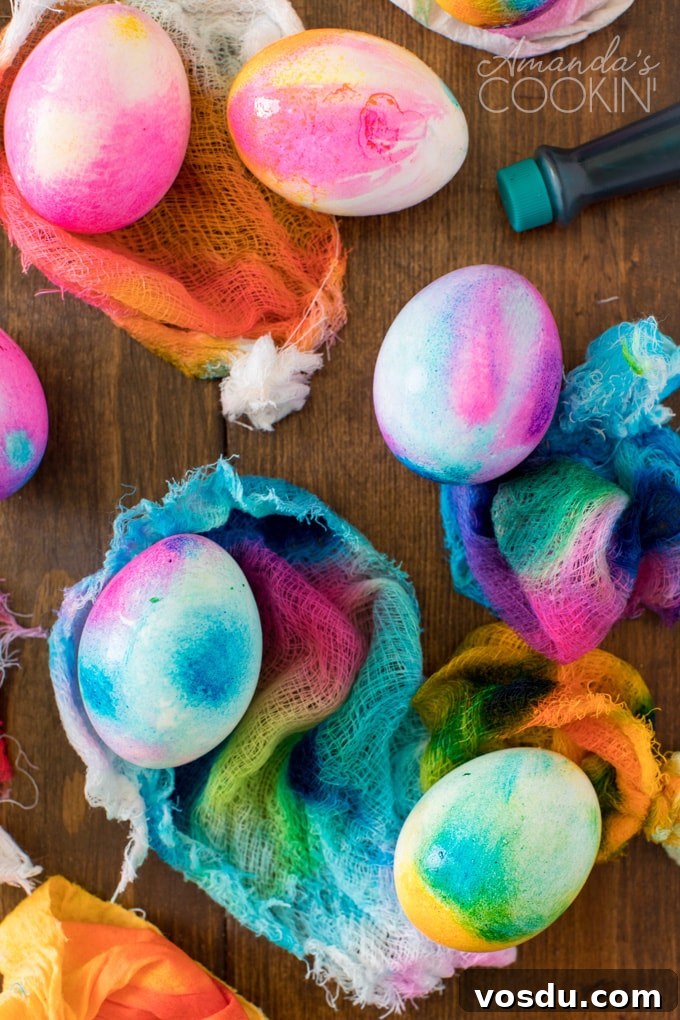
Cheesecloth Method
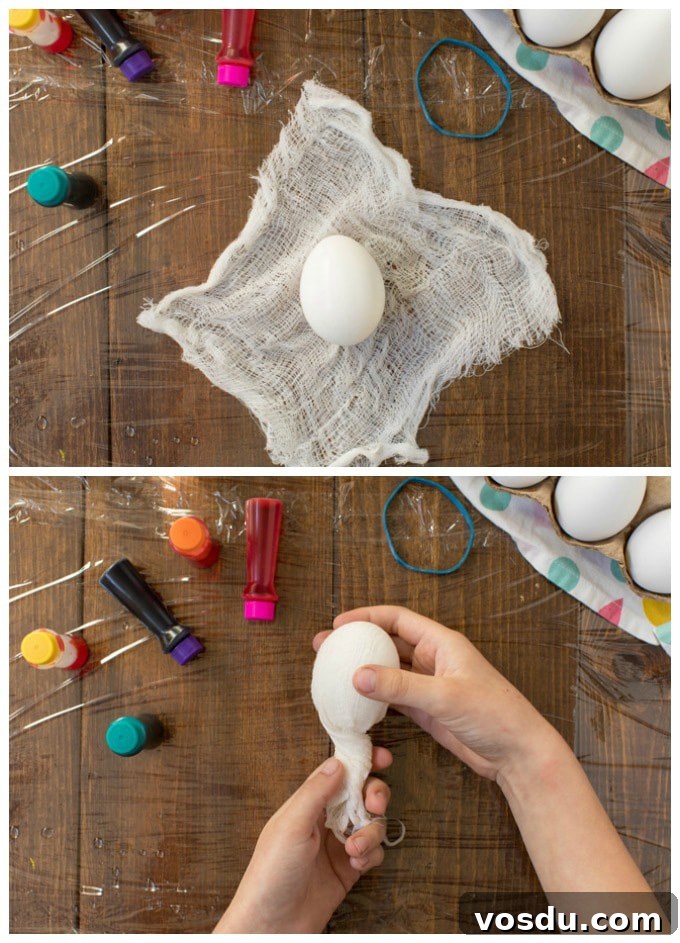
- Cover your counter with plastic wrap. Cut cheesecloth into roughly 6-inch lengths.
- Wet each piece of cheesecloth and wring out the excess so it’s damp but not dripping.
- Place a hard‑boiled egg in the center of the damp cheesecloth.
- Gather the edges of the cheesecloth around the egg and secure the bundle with a rubber band.
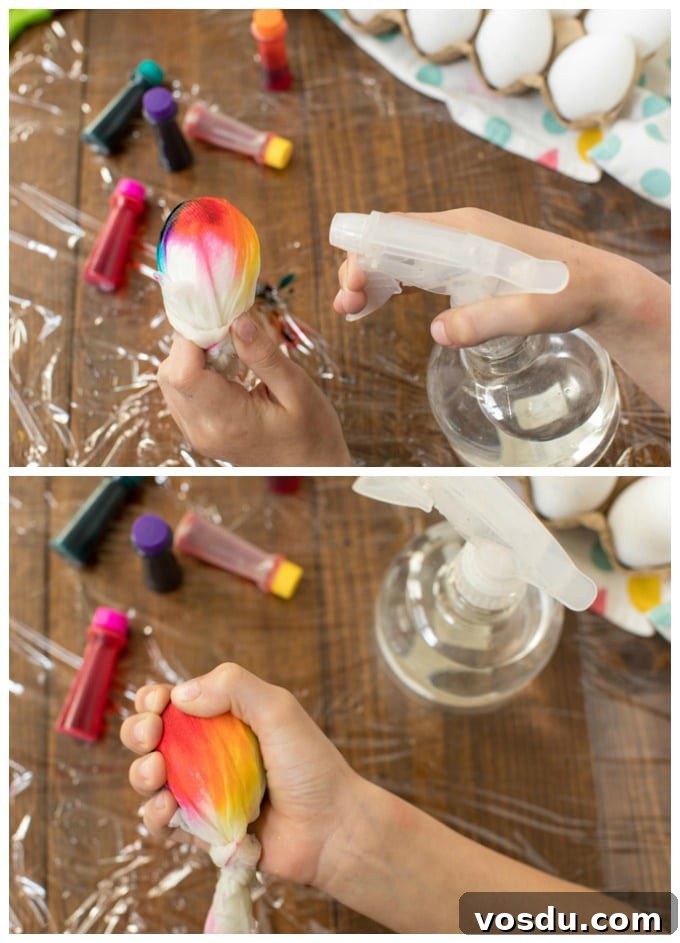
- Hold the egg by the rubber-banded end and add small drops of liquid food coloring onto the damp cheesecloth. Leave some white space—this gives the tie-dye effect.
- Lightly spray the wrapped egg with water. Use less water for more saturated colors and more water for softer, blended tones. The goal is to let the colors bleed slightly without fully mixing into one color.
- Gently squeeze the cheesecloth bundle to remove any excess liquid and color, then set the eggs in a cardboard egg carton to dry.
Once dry, unwrap the cheesecloth and admire the unique patterns and color blends you created.
Paper Towel Method
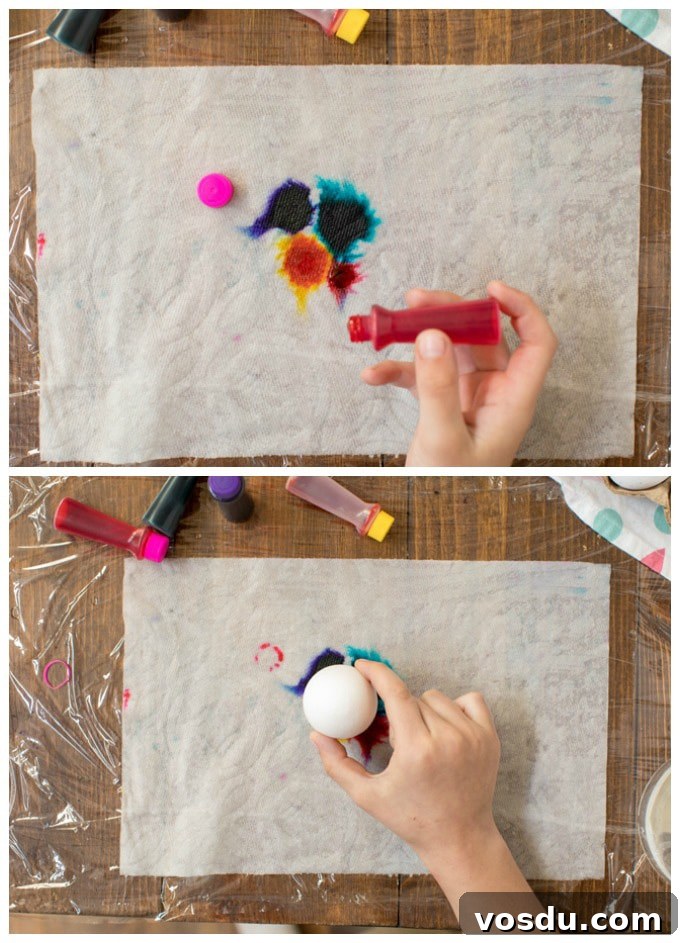
- Cover the work surface with plastic wrap. Dampen a sturdy paper towel and wring out most of the water so the towel is only slightly damp. Lay it flat on the plastic-wrapped counter.
- Drop food coloring into the center of the paper towel in a few spots, using different colors if you like.
- Place a boiled egg in the center of the colored area, then gather the paper towel around the egg so the colors surround it.
- Use a spray bottle to mist the wrapped egg with water. The moisture will spread and blend the colors into a tie-dye pattern.
- Carefully squeeze out excess liquid, then place the wrapped eggs in a cardboard egg carton to dry.
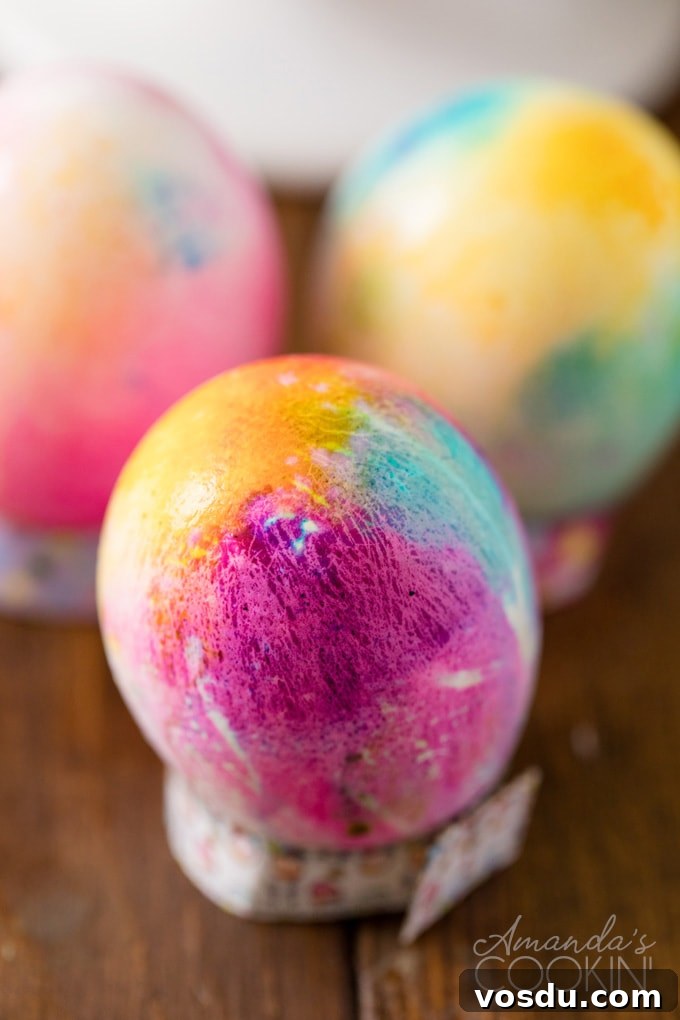
These colorful eggs make lovely decorations and gifts. Display them in egg cups, tuck them into baskets with handmade tags, include them in an Easter egg hunt, or use them as clues in a scavenger hunt.
Ingredients / Supplies (Quick Checklist)
- Plastic wrap for the counter
- Cheesecloth OR paper towels
- Liquid food coloring
- Small spray bottle of water (or cup of water)
- Rubber bands
- Empty cardboard egg carton for drying
Before You Begin
- Dry eggs in a cardboard carton or use a cool hairdryer to speed drying.
- Have kids wear gloves if you want to prevent stained hands.
- To remove food coloring: rub lotion on stained areas, then use a paste of white vinegar and salt; scrub and rinse until stains fade.
- If the paper towel method is used, consider doubling or tripling layers for durability.
Instructions Summary
Cheesecloth method: Wet and wring cheesecloth, wrap each egg, secure with a rubber band, add drops of food coloring, mist with water, squeeze out excess, and let dry. Paper towel method: Dampen a sturdy paper towel, add drops of food coloring, place the egg on the colors, wrap, mist with water, squeeze, and dry.
This post originally appeared on Mar 3, 2014.